








Rising insecurity in key maritime corridors is disrupting trade flows and forcing India to recalibrate shipping, logistics, and seafarer safety mechanisms
Our Bureau
New Delhi / Dubai
The escalating conflict in West Asia, particularly around the strategically critical Strait of Hormuz, is emerging as a serious stress test for India’s shipping ecosystem, exposing vulnerabilities in trade routes while prompting a coordinated government response to safeguard seafarers, stabilise logistics, and maintain supply chains.
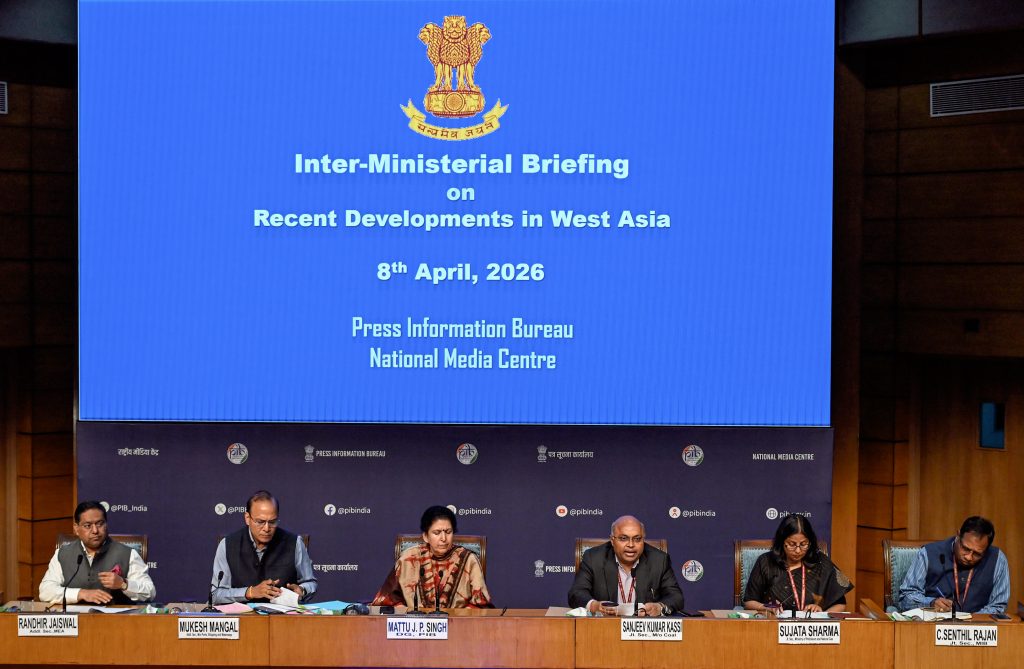
At the heart of the crisis lies a paradox: while Indian-flagged vessels have largely avoided direct attack, the risks to Indian seafarers—many of whom serve aboard foreign-flagged ships—have surged sharply. “In the past 24 hours, there were certain incidents of firing on the foreign-flag vessels. Although none of the Indian vessels came under fire, we are worried for the Indian seafarers on these vessels,” said Additional Secretary Mukesh Mangal, underscoring the indirect exposure India faces despite limited direct targeting.
This distinction is crucial. India’s maritime workforce is globally dispersed, meaning geopolitical instability in distant waters can quickly translate into domestic anxiety and operational disruption. Mangal confirmed that all Indian crew members on affected vessels—including 21 aboard Euphoria and one on Epaminondas—are safe, adding, “None of the Indian seafarers has been injured.”
Yet, the broader pattern of incidents—including reported firing on vessels such as VLCC Samnar Herad and bulk carrier Jag Arnav, which were forced to turn back—highlights the unpredictability of the region. Even successful passages, like that of the tanker Desh Garima, which carried 31 Indian seafarers through the corridor, are now seen less as routine operations and more as calculated risks.
The implications for India’s trade are immediate and structural. The Hormuz corridor handles a significant share of India’s crude oil and gas imports, making any disruption a direct threat to energy security. Jan Noether, Director General of the Indo German Chamber of Commerce, pointed to the wider economic fallout: “Trade has been affected since both India and Germany depend on supplies through the Strait of Hormuz, including oil and gas, which form the basis of energy supplies.”
He added that the ripple effects are already visible globally: “Prices are up… fuel prices and general prices of daily consumption have increased,” reflecting how maritime insecurity translates into inflationary pressure across economies.
For India, the crisis initially triggered severe logistical bottlenecks. When the conflict began, “shipping line operations were disrupted, and many containers accumulated at the ports,” Mangal noted. These “back to town” containers—cargo returned to ports due to uncertainty—peaked at 3,383 on March 8 along India’s western coast.
The government’s response has been notably interventionist and coordinated. By March 19, the number of stranded containers had dropped to just 99—a 97 percent reduction—thanks largely to policy relief measures. “This reduction was made possible by the great cooperation of the ports, which waived their demurrage and extra rent… providing significant relief to exporters,” Mangal said.
This approach reflects a broader crisis-management strategy combining real-time monitoring, financial mitigation, and diplomatic coordination. The Ministry of Ports, Shipping and Waterways has been working closely with the Ministry of External Affairs, Indian missions, and maritime stakeholders to ensure both operational continuity and personnel safety.
A key pillar of this response is the maritime control room, which has become a central communication hub. Since its activation, it has handled over 7,200 calls and around 15,000 emails, including more than 150 calls in the last 24 hours alone. This surge illustrates the scale of concern among seafarers and their families, as well as the government’s attempt to maintain transparency and responsiveness.
Evacuation and repatriation efforts have also been significant. The Directorate General of Shipping has facilitated the return of over 2,600 Indian seafarers from the Gulf region so far, including dozens in recent days. “The safety and security of Indian seafarers remains the top priority. We are monitoring the situation continuously and are committed to extending all possible help,” Mangal said.
Operationally, there are tentative signs of stabilisation. Of the 14 vessels (13 Indian-flagged and one Indian-owned) in the Persian Gulf region, 10 have already transited safely. Additionally, since late February, multiple LPG and crude carriers have navigated the corridor without incident, suggesting that maritime traffic, while cautious, has not halted.
In effect, the Iran-linked conflict has evolved into more than a regional security issue—it is now a test of India’s maritime resilience. While swift government action has mitigated immediate disruptions, the crisis underscores the urgent need for diversification of trade routes, strengthened maritime security frameworks, and long-term energy supply strategies.
For now, India’s shipping sector remains afloat—but navigating increasingly turbulent waters.