








With a sweeping regulatory framework, the government seeks to curb financial drain from online money games while promoting safer digital gaming sectors.
Our Bureau
New Delhi / Mumbai
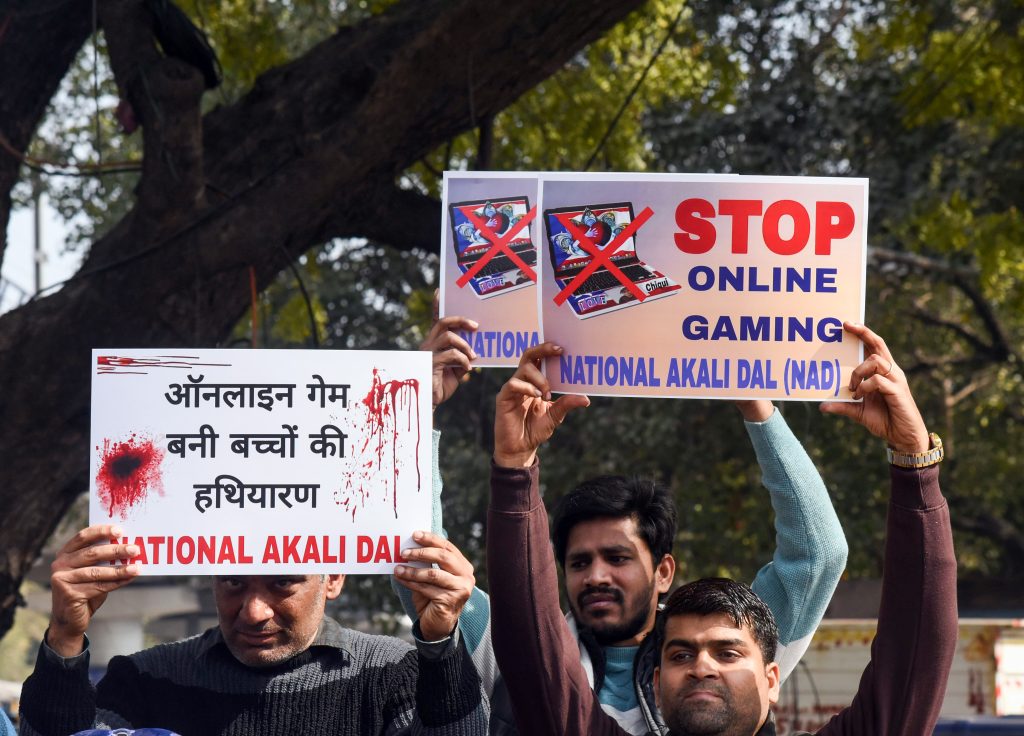
India is set to fundamentally reshape its online gaming ecosystem as the Promotion and Regulation of Online Gaming Act, 2025, along with its operational rules, comes into force on May 1, 2026. The move reflects a calibrated government strategy: crack down on online money gaming that is seen as draining household finances and hurting the broader economy, while still encouraging innovation in e-sports and social gaming.
At the core of the new framework is a clear and uncompromising stance—online money gaming is now explicitly banned across the country. According to MeitY Secretary S. Krishnan, “money games have been banned completely in India and online money games are no longer permitted.” This marks one of the most decisive policy interventions in India’s fast-growing but loosely regulated digital gaming sector.
The government’s concern stems from the economic and social impact of unregulated betting-style platforms. These platforms, often operating in legal grey zones, have been associated with significant financial losses among users, capital outflows, and rising concerns around addiction and financial distress. The new law aims to plug these leakages by eliminating the legal space for such games to operate.
A major pillar of enforcement lies in bringing the financial system into the regulatory net. Banks and financial institutions are now directly accountable under the law. Any entity “participating in promoting this activity or providing financial transactions for such activity will also be guilty of an offence,” Krishnan said. This effectively transforms banks into frontline enforcers, responsible for blocking or scrutinising transactions linked to online money gaming platforms.
This financial chokehold is expected to significantly disrupt the business models of illegal gaming operators. By cutting off payment gateways and banking support, the government is targeting the economic lifeline of these platforms, thereby reducing their reach and impact.
At the same time, the government has been careful not to stifle the legitimate segments of the gaming industry. In fact, the rules explicitly adopt what Krishnan described as a “regulation-light” approach for permissible categories such as online social games and e-sports. “We wanted to keep this entire thing as regulation-light as possible,” he said, underscoring the intent to reduce compliance burdens and support industry growth.
Under the new system, most online social games can operate without mandatory registration or classification. This is designed to encourage startups and developers while avoiding excessive bureaucratic hurdles. However, e-sports—seen as a high-growth and globally competitive segment—will require mandatory registration, reflecting their increasing economic significance.
To manage the ecosystem, the government has established the Online Gaming Authority of India, a centralised regulator with a multi-ministerial structure. Its expanded membership includes representatives from the Ministry of Home Affairs, Finance, Law, Sports, and Information and Broadcasting, ensuring a coordinated approach to enforcement and policy oversight.
The Authority’s responsibilities include maintaining a public list of prohibited games and conducting classification processes. This classification, known as “determination,” will assess whether a game falls under banned money gaming or permissible categories. The process is triggered in limited scenarios—either by the Authority itself, through applications by e-sports providers, or via government notifications—keeping with the broader light-touch philosophy.
Importantly, the law lays down objective criteria for classification. These include whether a game involves staking money, offers monetary rewards, or allows external monetisation of in-game assets. Such clarity is expected to reduce ambiguity and legal disputes that have historically plagued the sector.
Beyond economic considerations, the framework also addresses user protection—another area where unregulated gaming has raised alarms. The rules mandate “user safety features” such as age-gating, time limits, parental controls, and fair-play monitoring. These safeguards aim to protect vulnerable users, especially minors, from excessive gaming and financial exploitation.
To ensure accountability, a two-tier grievance redressal mechanism has been introduced. Users can first approach the gaming platform and, if unsatisfied, escalate complaints to the appellate authority. A further appeal can be made to the MeitY Secretary, creating a structured dispute resolution system.
The government has also streamlined regulatory procedures to improve ease of doing business. Registration certificates, where required, will now be valid for ten years instead of five. Additionally, companies are guaranteed a fair hearing before any suspension or cancellation of registration, addressing industry concerns about arbitrary enforcement.
As the May 1 deadline approaches, the success of this ambitious framework will depend on enforcement—particularly the cooperation of financial institutions—and the industry’s ability to adapt. If implemented effectively, the new rules could not only curb economic losses but also bring long-term stability and credibility to India’s digital gaming market.