








Failure of the Constitution (131st Amendment) Bill has ignited a fierce confrontation between the BJP and Opposition, with both sides accusing each other of betraying women’s rights
Our Bureau
Kolkata /New Delhi /Chennai/Lucknow
The collapse of the Constitution (131st Amendment) Bill in Parliament has spiralled into a bitter political showdown, with the ruling Bharatiya Janata Party (BJP) and Opposition parties locked in a war of words over who is responsible for denying women greater representation in legislatures. What began as a legislative defeat has now evolved into a defining political narrative ahead of key elections, exposing deep fault lines over intent, timing, and the linkage of women’s reservation with delimitation.
The Bill, which sought to expand the strength of the Lok Sabha and operationalize 33 per cent reservation for women, failed to secure the required two-thirds majority, with 298 members voting in favor and 230 against. Its defeat has allowed both sides to sharpen their political messaging, each portraying itself as the true champion of women’s empowerment while accusing the other of deception.
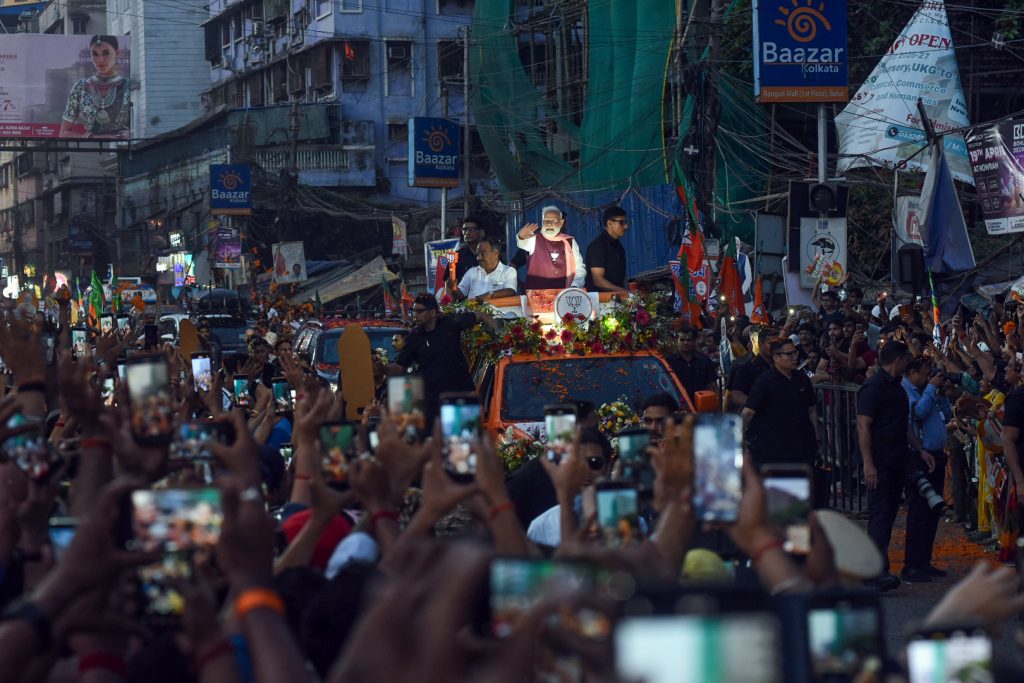
Prime Minister Narendra Modi has led the charge for the BJP, framing the Bill’s rejection as a historic injustice to women. Addressing rallies in West Bengal, he accused Opposition parties—particularly the All India Trinamool Congress (TMC)—of actively undermining women’s rights. “TMC voted against it. The TMC usurped the rights of the women of Bengal,” he said, adding that “women may forget everything else, but they never forget an insult to their pride.”
Modi has also sought to convert the issue into an electoral weapon, linking the Bill’s defeat to broader allegations of misgovernance and injustice. He claimed that women in Bengal are “among the biggest victims of this insensitive government” and asserted that their participation in large numbers at rallies signalled a “wave of change.” By tying the legislative setback to local political grievances, the BJP is attempting to mobilize women voters as a decisive electoral bloc.
Union Minister Srinivasa Varma echoed this line, accusing the Opposition of deliberately blocking reforms. He said the government had introduced the Women’s Reservation Bill in 2023 “with good intentions,” but “Congress and its allied parties obstructed the bill and did not allow it to be passed.” He went further, alleging that the Opposition not only blocked the legislation but “even celebrated its defeat,” calling it an “injustice and insult to women.”
Senior BJP leader Basavaraj S Bommai reinforced the narrative of betrayal, claiming that Opposition parties had delayed women’s reservation for decades. “Congress, along with DMK, are doing injustice to women,” he said, adding that their stance also harmed southern states by complicating the delimitation process.
However, the Opposition has mounted an equally forceful counterattack, rejecting the BJP’s framing and arguing that the Bill itself was flawed. Leaders across parties insist they support women’s reservation in principle but opposed what they describe as the government’s attempt to “club” it with delimitation and seat expansion—moves they claim could distort federal balance and representation.
Congress leader KC Venugopal accused the Prime Minister of misrepresenting the Opposition’s position and abusing his office. In a breach of privilege notice, he described Modi’s post-defeat address as “unethical and a blatant abuse of power,” alleging that attributing motives to Opposition MPs violated parliamentary conventions. He stressed that Opposition members had “categorically stated that they unanimously supported reservation for women,” but opposed provisions that “struck at the root of the basic structure of the Constitution.”
Congress MP Jairam Ramesh sharpened the critique, questioning the government’s intent and timing. “For the BJP, it was a matter of the BJP’s preservation and remaining in power, not women’s reservation,” he said. He also pointed out that the earlier women’s reservation framework passed in 2023 had not been implemented, asking, “What was the hurry?” in introducing a new, more contentious Bill.
Ramesh further argued that the real issue was delimitation, not gender representation. “The politics of the bulldozer and delimitation stood defeated. The issue was about delimitation, not women’s reservation,” he said, portraying the Bill’s defeat as a “victory of democracy” and Opposition unity.
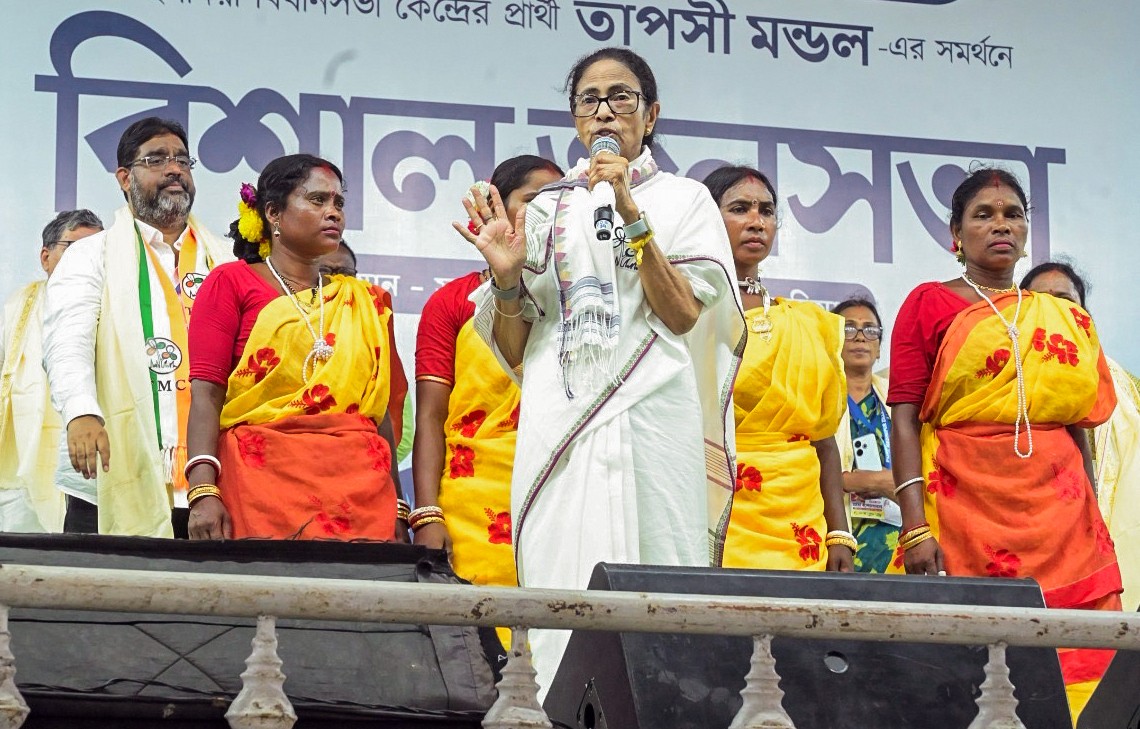
Regional parties have added their own dimensions to the debate. TMC leader Jay Prakash Majumdar dismissed the Bill as a “tactical step” driven by electoral calculations rather than genuine commitment to women’s empowerment. He pointed to West Bengal Chief Minister Mamata Banerjee’s record, noting that the state had already implemented 50 per cent reservation for women in local bodies. “Women’s empowerment is not the sole idea of this bill,” he said, calling it a “mischievous ploy” by the BJP.
Similarly, Samajwadi Party chief Akhilesh Yadav accused the BJP of misleading the public and avoiding substantive reforms. He claimed the ruling party was “unwilling to grant women their rightful reservation” and was using the issue for political messaging rather than meaningful change. Drawing a broader ideological contrast, he alleged that the government was using institutions for “propaganda” while sidestepping demands such as a caste census.
The BJP, however, has countered these claims by framing the Opposition’s objections as obstructionism rooted in political self-interest. Leaders like Andhra Pradesh Chief Minister N Chandrababu Naidu argued that Opposition parties had historically resisted the Women’s Reservation Bill since the 1990s. He described them as “anti-reform forces” that delayed justice to women for nearly three decades, while defending the current proposal as a balanced approach that would increase representation without disadvantaging states.
At the core of the dispute is the contentious issue of delimitation—redrawing parliamentary constituencies based on population changes. Opposition parties fear that linking women’s reservation to a future delimitation exercise could disproportionately benefit northern states with higher population growth, reducing the political weight of southern states. BJP leaders, on the other hand, argue that expanding the total number of seats would offset such concerns and ensure equitable gains.
This divergence has turned a policy debate into a broader ideological clash over federalism, representation, and governance. The Opposition’s insistence on separating women’s reservation from delimitation reflects concerns about constitutional safeguards, while the BJP’s approach seeks to integrate structural reforms with gender representation.
Beyond parliamentary arguments, the political rhetoric has intensified sharply. Modi’s assertion that the Opposition’s actions constitute a “sin” that will be punished by voters contrasts with accusations from leaders like Jairam Ramesh, who described the Prime Minister’s remarks as “unabashed partisan demagoguery.” CPI MP P Sandosh Kumar has even alleged that the Prime Minister’s address violated the Model Code of Conduct, claiming it was aimed at influencing voters during ongoing elections.
The escalating rhetoric underscores how the issue has transcended legislative boundaries to become a central electoral battleground. With states like West Bengal and Tamil Nadu in the midst of elections, both sides are using the Bill’s failure to shape voter perceptions—particularly among women, who are increasingly seen as a decisive constituency.
Analytically, the episode reveals three key dynamics. First, there is broad political consensus on the principle of women’s reservation, but deep disagreement on its implementation. Second, the linkage with delimitation has introduced a layer of regional and constitutional complexity that has fractured potential unity. Third, the failure of the Bill has provided both the BJP and Opposition with potent political ammunition, allowing each to frame the narrative to its advantage.
For the BJP, the focus is on portraying the Opposition as anti-women and obstructionist. For the Opposition, the emphasis is on questioning the government’s intent and defending constitutional safeguards. This dual narrative ensures that the issue will remain politically charged, with little room for immediate consensus.
As calls grow for an all-party meeting to revisit the legislation, the path forward remains uncertain. What is clear, however, is that the failure of the Women’s Reservation Bill has not ended the debate—it has intensified it, turning a long-standing policy goal into one of the most contentious political flashpoints in recent times.