








Our Bureau
Elmont, NY
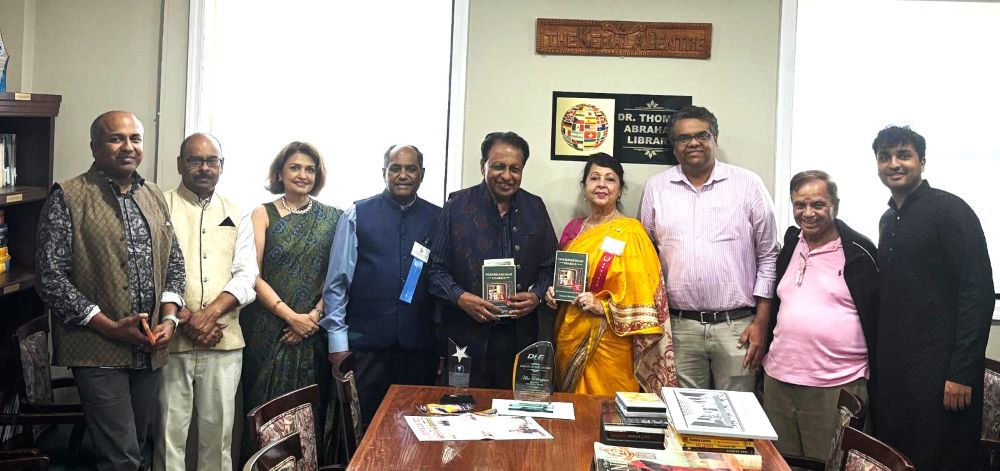
The Indian Diaspora Center at the Dr. Thomas Abraham Library, in collaboration with the Global Organization of People of Indian Origin–Manhattan Chapter (GOPIO-Manhattan) and the Indian American Kerala Cultural and Civic Center, hosted its 2026 Annual Symposium on Sunday, June 28, at the Kerala Center in Elmont, New York.
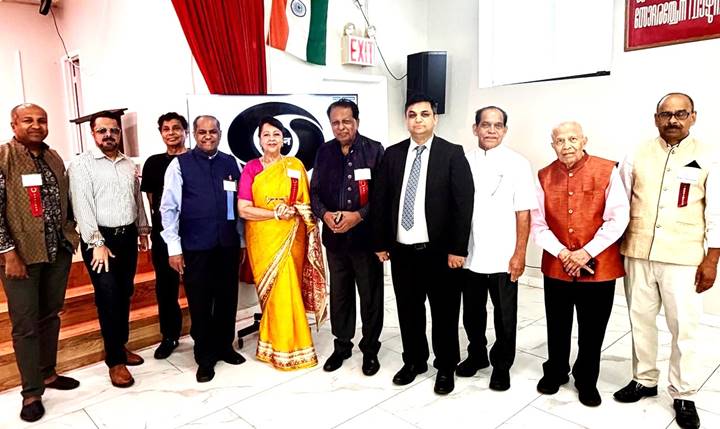
The symposium, “Indian Television – Yesterday, Today and Tomorrow,” brought together distinguished veterans of Indian television and journalism for an engaging panel discussion and interactive session. The panel featured former Doordarshan news presenters Sheila Chaman and Ramu Damodaran, former Indian Ambassador T.P. Sreenivasan, who currently hosts the television program Around and Inside on Asianet TV, and Sree Sreenivasan, noted digital media expert, journalism professor, host of the Sunday NYT Readalong, and co-founder of the South Asian Journalists Association (SAJA).
The program began with a networking tea and coffee reception, followed by opening remarks from Kerala Center President Alex Esthappan, who welcomed the audience and expressed pride in the Kerala Center serving as the home of the Dr. Thomas Abraham Library and the Indian Diaspora Center.
Dr. Thomas Abraham, Founder of the Indian Diaspora Center, spoke about the Center’s mission to preserve the history, achievements, and contributions of the global Indian diaspora. He noted that the Center houses an extensive collection of books and publications on the Indian diaspora, alongside works on India and Indian civilization. Dr. Abraham also highlighted GOPIO’s initiative to establish India Collections in public libraries across the New York metropolitan area through book donations from the Consulate General of India and members of the Indian American community, making information on India and its diaspora more accessible to the public.
As June 28 also marked the birth anniversary of former Indian Prime Minister P. V. Narasimha Rao, the symposium began with a special tribute delivered by Ramu Damodaran, who had served in Prime Minister Rao’s office before joining the United Nations.
Paying tribute to the late Prime Minister, Damodaran observed, “P. V. Narasimha Rao is rightly remembered for launching India’s economic liberalization. Equally significant, however, was his commitment to liberalizing the human mind. One visible expression of that vision was opening Indian television to new channels and new opportunities, giving viewers a genuine choice in what they could watch.”
Damodaran noted that Prime Minister Rao recognized India’s greatest strength as its vast reservoir of human talent and professional skills. Economic liberalization, he said, was driven by the belief that Indians, both at home and abroad, should have greater opportunities to innovate, compete, and realize their full potential. By opening the economy and expanding the media landscape, Rao helped lay the foundation for India’s emergence as a global center for technology, entrepreneurship, and communications.
Reflecting on the transformation of Indian television, Damodaran remarked that the evolution from a single government broadcaster to a vibrant and diverse media ecosystem mirrored India’s broader economic and social transformation unleashed by the reforms of the early 1990s.
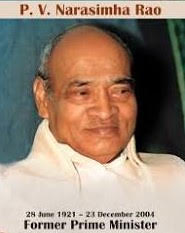
Damodaran further observed, “Mr. Rao was perhaps the first Indian Prime Minister to fully appreciate how effortlessly the United States attracted and benefited from the world’s finest minds. He believed that, irrespective of politics, India should learn from that example by creating an environment where talent could flourish and innovation could thrive.”
Moderator Sree Sreenivasan then introduced veteran Doordarshan news presenter Sheila Chaman, who spoke about her recently published book, Doordarshan Diaries: The Golden Era of Television. The book, co-authored by ten former Doordarshan colleagues from different departments, chronicles the evolution of Indian television through the experiences of those who helped shape its formative years. Chaman described it as both a nostalgic memoir and an important historical record of India’s pioneering television era.
Recalling the early years of broadcasting, Chaman explained that news presenters wrote or edited much of their own scripts and delivered them entirely from memory, as teleprompters and autocue systems did not yet exist. The demanding process required exceptional preparation, discipline, and memory—qualities that defined the professionalism of Doordarshan’s early broadcasters.
She also presented a PowerPoint featuring photographs and archival material from the book, tracing the journey of Indian television from its experimental launch in 1959 to the introduction of color broadcasts during the 1982 Asian Games. Interwoven with this history was her own career at Doordarshan, where she had the opportunity to interview national leaders, interact with renowned film personalities, and serve as a master of ceremonies at numerous national and international events.
Inviting the panelists to reflect on the symposium’s theme, “Indian Television – Yesterday, Today and Tomorrow,” moderator Sree Sreenivasan led a lively discussion on the remarkable transformation of the Indian television industry.
Chaman noted that Doordarshan, India’s pioneering public broadcaster, began modestly on September 15, 1959, with a small transmitter and a makeshift studio, broadcasting only a few hours a day. Programming initially focused on education, agriculture, literacy, and national development. A major milestone came on August 15, 1982, when color television was introduced in time for the Asian Games, ushering in a new era of technological advancement and dramatically expanding television’s reach across the country.
She explained that India’s television landscape underwent a fundamental transformation after the economic reforms of the early 1990s. The arrival of CNN during the Gulf War, followed by private broadcasters such as Star TV, Zee TV, and Sony, ended Doordarshan’s monopoly and ushered in an era of multi-channel broadcasting and unprecedented viewer choice. Today, India has more than 900 satellite television channels, while Doordarshan itself operates around 50 channels serving diverse regional and national audiences. Citing a study by the Indian Institute of Management Ahmedabad, Chaman noted that India’s television audience is projected to grow to nearly 1.03 billion viewers by 2029, underscoring television’s continuing relevance despite the rapid growth of digital media.
Former Ambassador T. P. Sreenivasan reflected on his own unexpected journey into television after retiring from the Indian Foreign Service. “It is ironic,” he remarked, “that the oldest member of this panel is speaking about the newest trends in television.” He explained that he became an “accidental television journalist” at a time when regional news channels were expanding rapidly and creating new opportunities for informed public discourse.
He observed that one of the most significant developments in recent years has been the emergence of small, regional news channels. Although many began with modest resources—what he humorously described as “tea shop stations”—several have grown into influential media organizations, demonstrating that innovation and quality journalism can flourish even outside the large broadcast networks.
Concluding his remarks, Ambassador Sreenivasan drew an interesting parallel between diplomacy and journalism. “Both professions,” he said, “share a common purpose—to educate and inform the public. Diplomats do it discreetly; journalists do it publicly.”
On the symposium topic, Damodaran said, “If there is one element which has transformed television in the last 35 years, it is the emergence of accountability and that anyone who appears on television needs to be prepared to justify actions taken, or not taken, and place that justification before the people of India.”
“It is clear that audiences should demand better coverage as democracy in India and abroad depends on it,” Damodaran added.
During the open discussion, the speakers lamented the way Indian TV news has become all about sensationalism with competing, exaggerated headlines and news items. The shouting matches are a disservice to the audience. In the early days when Chaman and Damodaran were newsreaders it was a very different atmosphere.
Amb. Sreenivasn pointed that while Kerala networks aren’t immune from the trends of the north, they are, on the whole, not filled with shouting matches. He also spoke of the rise of individual news creators whose YouTube channels are huge hits.
“To have a chance to talk about the past, present and future of the richest, most diverse TV landscape in the world was exciting. Only GOPIO and Dr Thomas Abraham could conceive of and convene such an unusual discussion,” concluded Sree Sreenivasan, co-founder of Digimentors, who earlier in the day, hosted the 400th episode of his NYT Readalong show.
As a token of appreciation, the speakers were presented with a rare First Day Covers, canceled and released by the US Postal Service during the First Global Convention of People of Indian Origin in New York City in 1989, where GOPIO was founded. These collector’s item of US Postal Service’s First Day Cover featuring Mahatma Gandhi stamps, honored the Indian diaspora and the historic global meet.
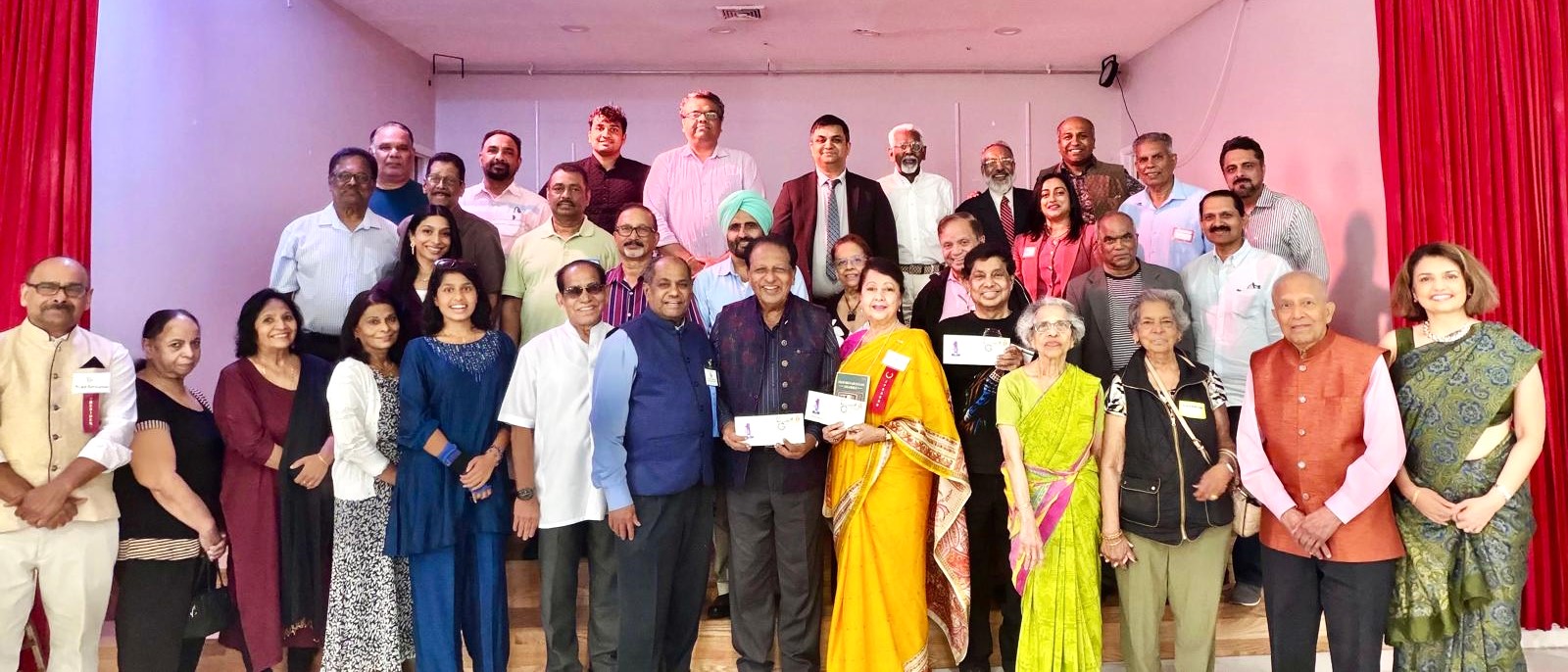
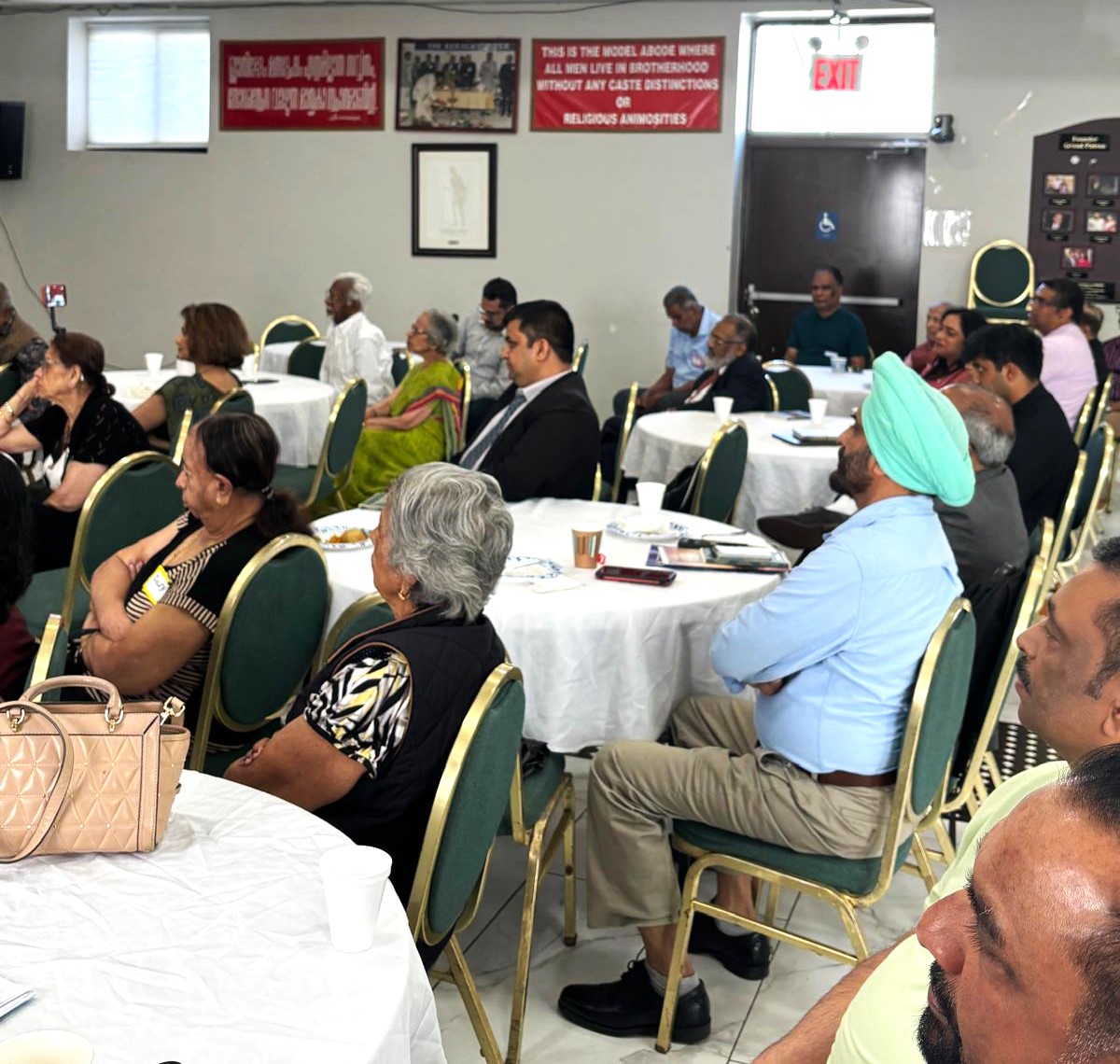
The symposium attracted a large audience of community leaders, media professionals, scholars, and members of the Indian American community, generating an engaging discussion on the remarkable evolution of Indian television and its future in the digital age. Among those in attendance were GOPIO International Chairman Dr. Thomas Abraham, GOPIO International Council Chair for Seniors Mukund Mehta, Kerala Center Founder and GOPIO Life Member E. M. Stephen, GOPIO Chamber of Commerce and Industry Secretary Ganesh Pager, Kerala Center Secretary Raju Thomas, along with numerous Life Members of GOPIO, the GOPIO-Manhattan Chapter, and the Indian American Kerala Cultural and Civic Center.
The event was jointly coordinated by Kerala Center President Alex Esthappan and GOPIO International Chairman Dr. Thomas Abraham. Kerala Center Vice President Daisy Stephen delivered the vote of thanks, expressing appreciation to the distinguished speakers for sharing their experiences and insights, and to the audience for their enthusiastic participation despite a warm summer Sunday afternoon. She noted that the lively interaction between the panelists and attendees reflected the continuing interest in the history, growth, and future of Indian television and media.
The book Doordarshan Diaries is available from Amazon.
For more information about the Indian Diaspora Center and future events, contact the Dr. Thomas Abraham Library at the Indian American Kerala Center.
About the Indian Diaspora Center at the Dr. Thomas Abraham Library – The Indian Diaspora Center is dedicated to preserving and promoting the history and contributions of the Indian diaspora through educational programs, cultural events, and community engagement.
About GOPIO – The Global Organization of People of Indian Origin (GOPIO) is a non-profit organization committed to fostering unity, cultural heritage, and advocacy for the Indian diaspora worldwide.
About the Indian American Kerala Cultural Center – The Kerala Center serves as a hub for cultural, educational, and community activities, celebrating the heritage of Indian Americans, particularly those from Kerala.