

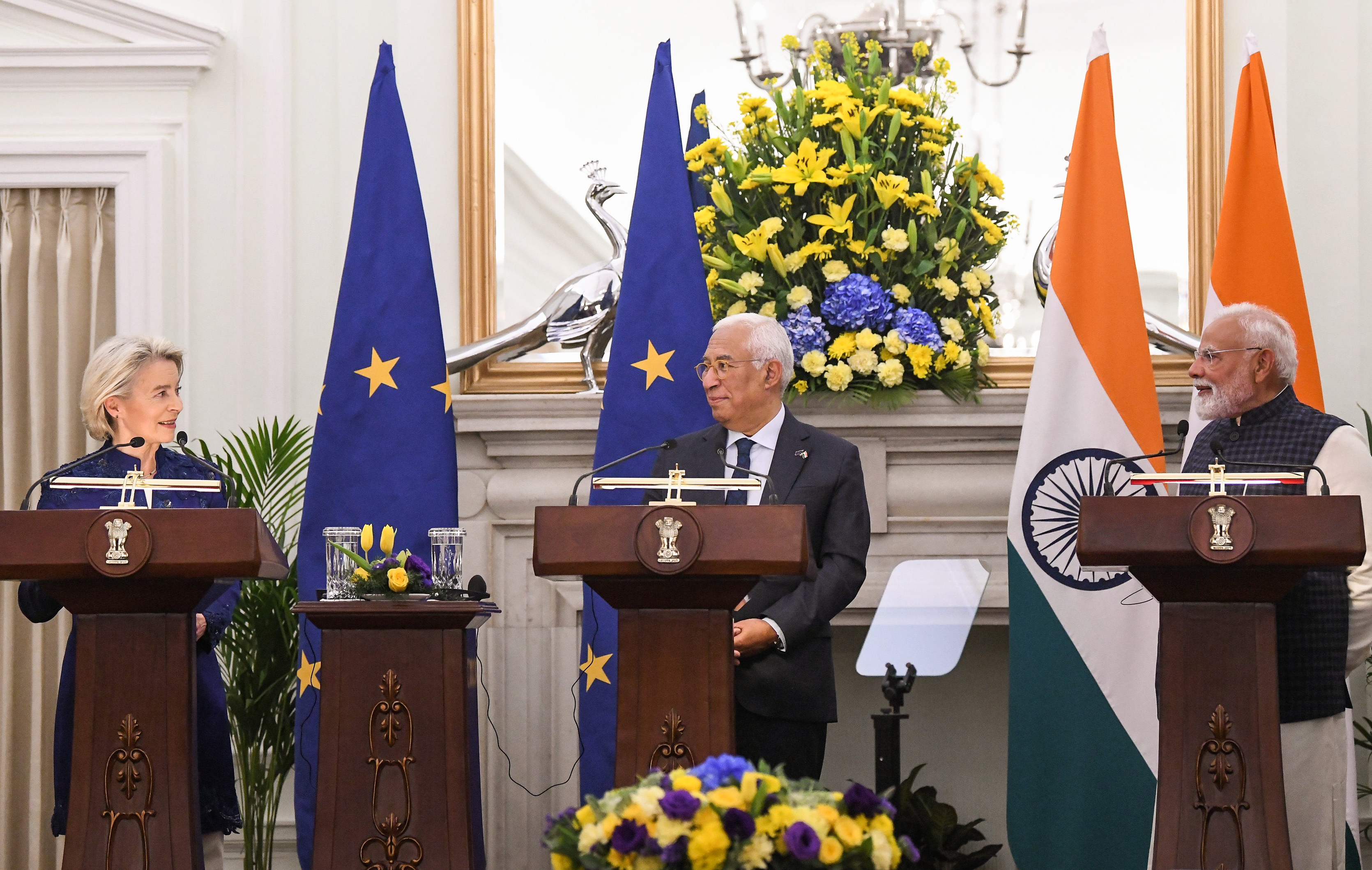
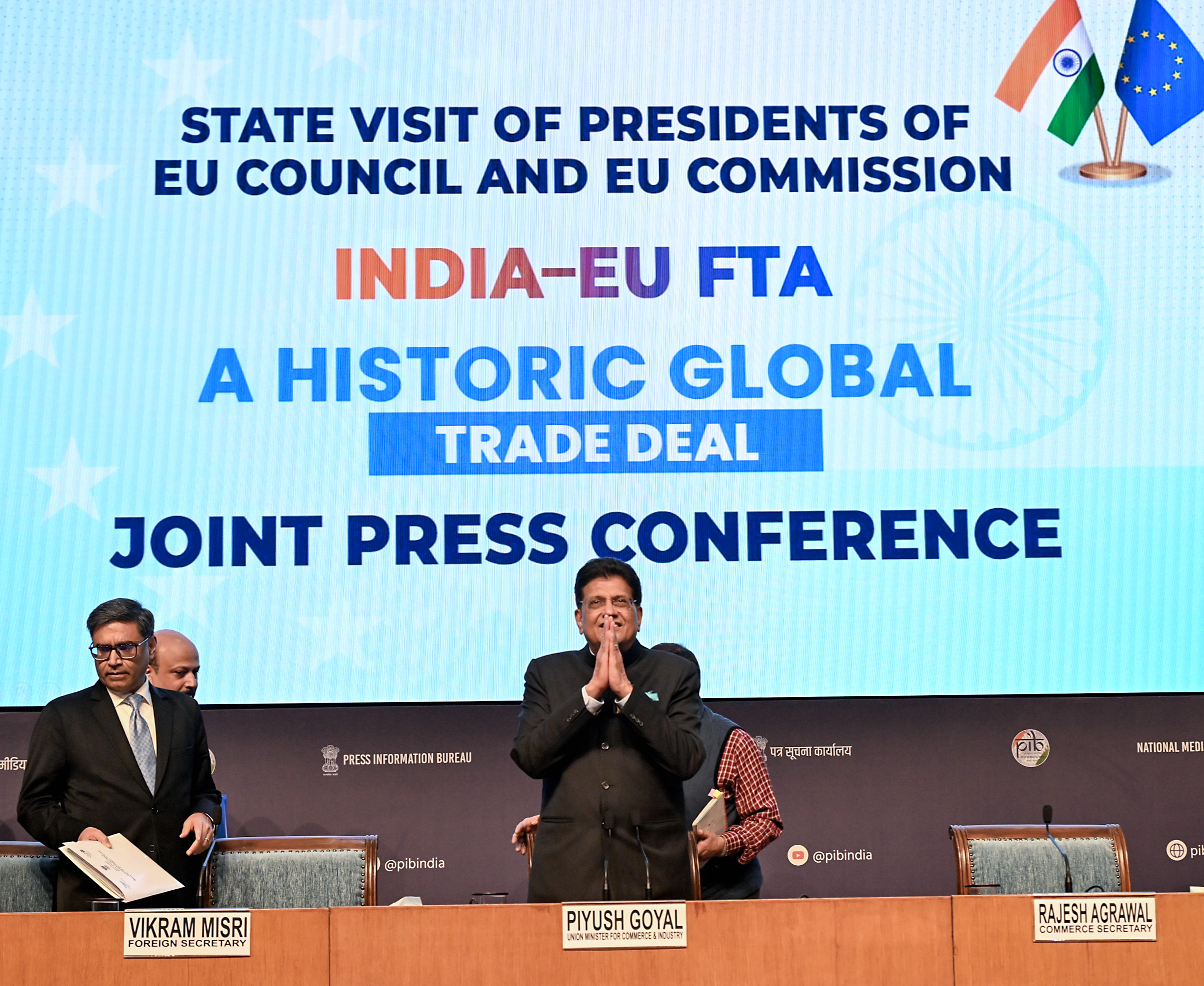
The India–EU Free Trade Agreement marks a decisive shift in India’s economic diplomacy—opening new growth pathways at home while unsettling Washington and recalibrating the geopolitical chessboard involving the US, China and Russia.
Our Bureau
New Delhi
The conclusion of the long-negotiated India–European Union Free Trade Agreement (FTA) is being hailed in New Delhi as a watershed in India’s global economic engagement. Described by both sides as the “mother of all deals,” the agreement comes at a moment when the global trading system is fractured by protectionism, strategic rivalry and war-driven realignments. For India, the FTA is not merely a trade pact; it is a strategic statement about economic confidence, geopolitical autonomy and the country’s ambition to position itself as a central pillar of the global economy. Yet the deal has also triggered unease in Washington, highlighted fault lines within the Western alliance, and intersected uneasily with India’s still-pending trade negotiations with the United States.
At its core, the India–EU FTA reflects India’s evolving economic trajectory. With growth projected to remain among the highest globally, India is increasingly viewed as both a manufacturing hub and a vast consumer market. The EY report describing the agreement as one of the most forward-looking concession packages India has ever negotiated underscores how far New Delhi has moved from the inward-looking trade posture of the past. Tariff liberalization across automobiles, textiles, pharmaceuticals, defense, aerospace and services signals India’s willingness to integrate more deeply with global value chains—on its own terms.
The scale of the agreement is significant. Covering nearly a quarter of global GDP and more than a fifth of the world’s population, the India–EU FTA links two economic giants with complementary strengths. For India, zero-duty access to the EU market for textiles from Day One restores competitiveness lost after the withdrawal of GSP benefits. For Europe, phased tariff reductions in automobiles and aerospace open a market long seen as difficult to penetrate. For both, defense and technology collaboration offer pathways beyond transactional trade into strategic industrial partnerships.
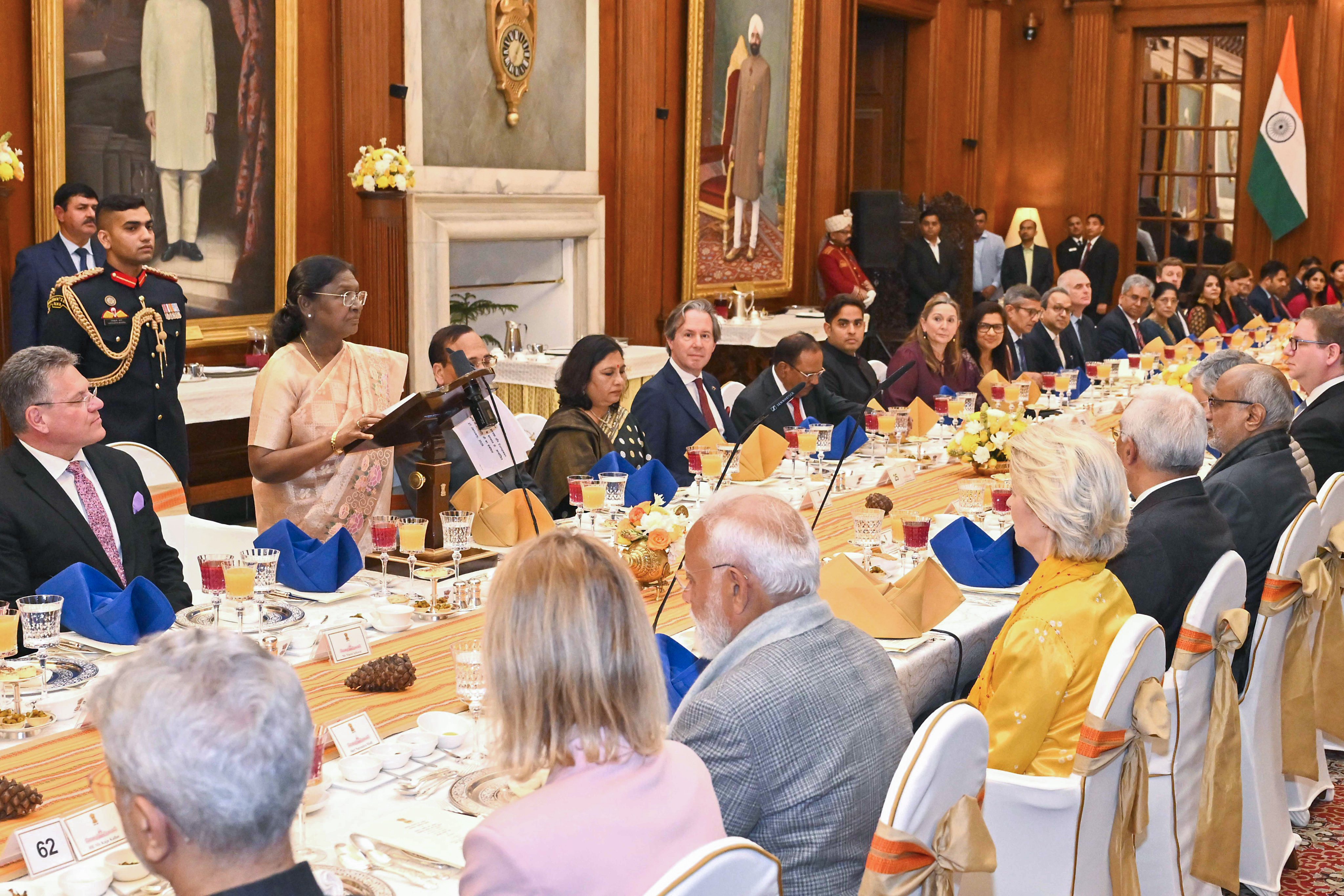
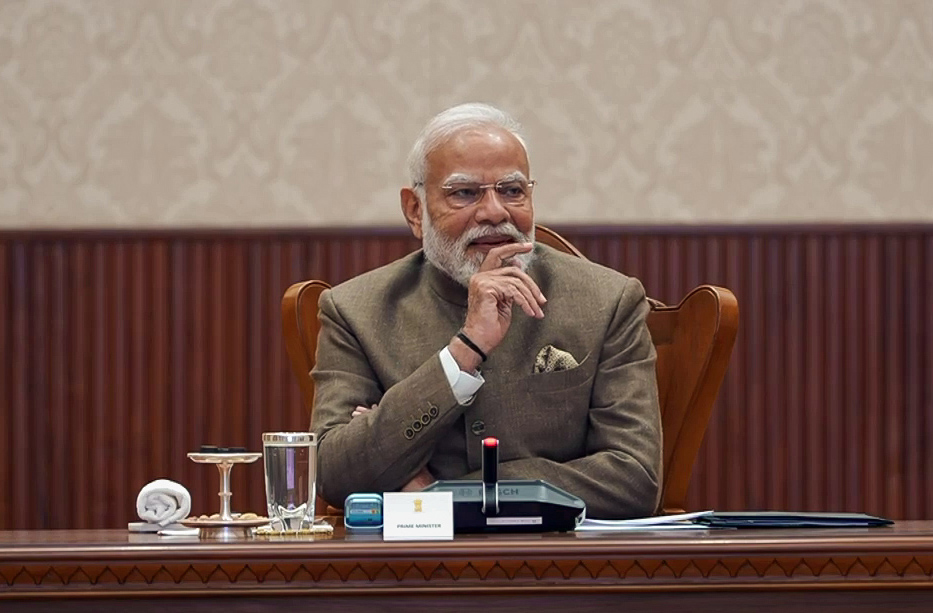
Prime Minister Narendra Modi has framed the agreement in characteristically aspirational terms—“Free Trade for Ambitious India, for Aspirational Youth, and for Aatmanirbhar India.” This framing is politically and economically deliberate. By linking the FTA to jobs, skills, startups and youth opportunity, the government is countering the traditional criticism that free trade primarily benefits large corporations. The emphasis on manufacturing capability, localization, and technology transfer allows New Delhi to argue that openness and self-reliance are no longer contradictions but complementary strategies.
The Indian economy stands to gain in several tangible ways. In automobiles, the gradual reduction of import duties—while politically sensitive—could catalyze innovation, push domestic manufacturers up the value chain, and integrate India more deeply into global automotive supply networks. In aerospace and defense, structured collaboration with European firms could accelerate the indigenization of critical technologies, a long-standing strategic goal. In IT and professional services, mobility frameworks and social security coordination promise to ease long-standing frictions faced by Indian professionals in Europe, especially as AI and digital services reshape global labor markets.
Yet the FTA’s significance goes well beyond sectoral gains. Strategically, it reflects India’s determination to diversify economic partnerships at a time when overdependence on any single bloc is seen as risky. The European Union, for its part, is seeking to reduce its reliance on China and, increasingly, on the United States amid growing transatlantic trade tensions. India fits neatly into this recalibration—large, fast-growing, politically stable, and not aligned with any single power bloc.
It is precisely this strategic convergence that has unsettled Washington. The sharp criticism from US Treasury Secretary Scott Bessent reveals deeper anxieties about Europe’s trade autonomy and India’s geopolitical positioning. By accusing Europe of prioritizing commercial interests over solidarity with Ukraine, and by linking the India–EU FTA to continued European purchases of refined fuels derived from Russian crude, Washington has signaled its discomfort with a deal that complicates its own sanctions narrative and trade leverage.
From the US perspective, the timing is awkward. India–US trade negotiations remain unresolved, with lingering disputes over tariffs, market access and strategic alignment. The imposition of higher US tariffs on India over Russian oil purchases contrasts sharply with Europe’s willingness to deepen trade ties with New Delhi. This divergence exposes a fundamental inconsistency in Western policy: while Washington seeks to pressure partners into aligning fully with its Russia strategy, Europe is increasingly hedging—balancing moral rhetoric with economic pragmatism.
For India, this moment underscores the value of strategic autonomy. New Delhi has consistently argued that its energy security and economic stability cannot be subordinated to great-power rivalries. By concluding the EU FTA even as US trade talks hang in the balance, India is demonstrating that it will not put all its economic eggs in one basket. The message is subtle but clear: India is open for business, but not on terms dictated by any single capital.
The Russia and China angles add further complexity. Washington’s criticism hinges partly on the claim that India’s refining of Russian oil indirectly finances Moscow’s war effort. India has countered that it purchases oil at discounted rates to protect its consumers and economy, and that refined products enter global markets through established trade mechanisms. The EU’s willingness to sign a major trade deal with India despite this reality weakens the moral absolutism of the US position and highlights differing threat perceptions within the West.
China, meanwhile, looms large in the background. For both India and the EU, the FTA is also about de-risking from China-centric supply chains. Europe has grown wary of excessive dependence on Chinese manufacturing, while India views China as both an economic competitor and a strategic rival. Deeper India–EU integration offers an alternative production and consumption ecosystem—one that could, over time, reshape global trade flows. This is not lost on Beijing, which has closely watched India’s expanding network of trade agreements with Western and Indo-Pacific partners.
Domestically, the Modi government is positioning the FTA as validation of its economic stewardship. By highlighting opportunities for startups, the creative economy, research and education, the Prime Minister is linking global integration with national transformation. The emphasis on youth is particularly salient in a country where demographics are a central economic advantage but also a political pressure point. Job creation, skills development and global exposure are essential to sustaining India’s growth narrative.
Still, the deal is not without risks. Implementation will be complex, requiring regulatory reforms, capacity building and political consensus. Sensitive sectors may face adjustment pressures, and the benefits of the FTA will accrue unevenly across regions and industries. Moreover, ratification across 27 EU member states could take time, delaying tangible gains. As Shashi Tharoor noted, expectations of immediate benefits would be misplaced; the real impact will unfold over years, not months.
The unresolved India–US trade deal remains a critical variable. Washington is unlikely to abandon efforts to secure better access to the Indian market or to align India more closely with its strategic objectives. But the leverage dynamic has shifted. With the EU pact concluded and other FTAs already in place—with the UK, UAE, Australia and others—India enters negotiations with greater confidence and alternatives. This could either encourage a more pragmatic US approach or harden positions further, depending on political winds in Washington.
In the broader global context, the India–EU FTA illustrates how middle and emerging powers are reshaping the rules of economic engagement. Rather than choosing sides in a binary geopolitical contest, India is crafting a multi-aligned economic strategy—engaging the West, managing ties with Russia, competing with China, and expanding its footprint in the Global South. The EU, facing its own strategic uncertainties, appears willing to meet India halfway.
Ultimately, the agreement signals a shift from defensive trade politics to strategic economic statecraft. For India, it reinforces the idea that growth, jobs and global influence are increasingly intertwined. For Europe, it offers a hedge against strategic vulnerability. For the United States, it is a reminder that alliances are no longer monolithic and that economic diplomacy must adapt to a more plural world.
As Parliament debates the agreement and industries prepare for its implications, one thing is clear: the India–EU FTA is not just about tariffs and quotas. It is about where India sees itself in the world—and how the world, including uneasy partners like the US, responds to that ambition.