








Indian Interest by SHOBHAN SAXENA
As global fault lines harden and old certainties crumble, India enters 2026 walking a diplomatic tightrope—protecting national interest while insisting on a seat at every consequential table
If 2025 was about India consolidating its global standing, 2026 will be about testing it. The world India faces is harsher, more transactional and less sentimental than before. Trade wars are back, geopolitics has turned blunt, and multilateralism is under strain. For New Delhi, the challenge is not merely to respond—but to shape outcomes without surrendering autonomy. Indian foreign policy in 2026 will be judged on one question: can India protect its interests without shrinking its ambitions?
The United States will be the first and most immediate test. A Trump-driven trade war—louder, less predictable and unapologetically protectionist—forces India to rethink its economic diplomacy with Washington. The old comfort of strategic alignment cannot mask hard trade realities. Tariffs, market access, immigration restrictions and technology controls will dominate the agenda. India will push back where it must—on steel, pharmaceuticals, digital trade—while avoiding a full-blown confrontation that could hurt exports and investor sentiment. The relationship will remain strategically vital, but emotionally colder. New Delhi’s task will be to decouple geopolitics from economics: cooperating with the US on defence, Indo-Pacific security and technology, while firmly ring-fencing its economic interests.
If the US relationship is about managing friction, China will be about managing opportunity without illusion. A slow thaw in ties—driven by economic pragmatism and border stabilisation—offers space for engagement. Trade is already deep, supply chains remain intertwined, and neither side benefits from permanent hostility. But improvement does not mean trust. India will engage China economically and diplomatically, while maintaining military vigilance and diversifying supply chains. The message to Beijing in 2026 will be calibrated: cooperation where possible, deterrence where necessary. India will not return to the old comfort of dependence—but nor will it embrace permanent confrontation.
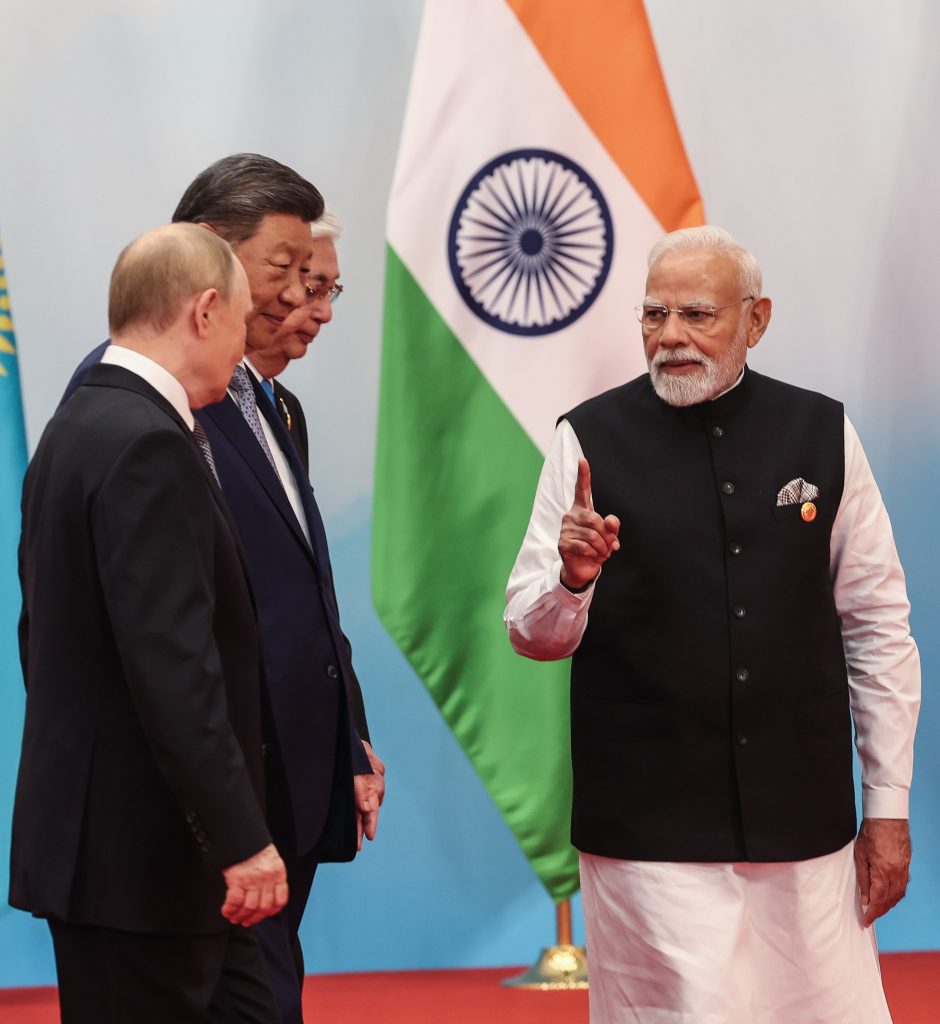
With Russia, the story is strikingly different. Relations are arguably at their strongest in decades, grounded in energy security, defence cooperation and strategic understanding. Even as the West remains wary of Moscow, India will continue to engage Russia openly, unapologetically and pragmatically. Cheap energy, military supplies and geopolitical coordination make the relationship indispensable. In 2026, India will also quietly position itself as one of the few credible bridges between Russia and the rest of the world. This is not mediation in a formal sense—but strategic relevance by default. India gains precisely because it talks to everyone.
Closer home, however, diplomacy becomes messier. Pakistan remains a permanent challenge, even when it fades from headlines. The absence of dialogue does not mean the absence of risk. Terror infrastructure, political instability and economic collapse across the border continue to demand vigilance. India’s approach will remain firm: no talks under the shadow of terror, no internationalization of bilateral issues, and zero tolerance for provocations. Pakistan will test India not through grand gestures, but through persistent low-grade disruption.
Bangladesh presents a different, more delicate challenge. Political flux, domestic pressures and external influence—particularly from China—have made the relationship more complex than before. India’s task in 2026 will be to support stability without appearing overbearing, and engagement without interference. Connectivity, trade and people-to-people ties will be the levers. New Delhi knows that neighborhood diplomacy is not about dominance, but reassurance. Lose the neighborhood, and global ambitions ring hollow.
All these strands converge in one defining moment: India’s hosting of the BRICS summit in 2026. This will be more than a ceremonial gathering. It will be a test of India’s ability to lead a fractured, expanding and often contradictory grouping. With new members, divergent interests and geopolitical tensions among partners, BRICS risks becoming incoherent. India’s challenge will be to inject focus—on development finance, supply chains, digital public infrastructure and reform of global institutions—without turning BRICS into an anti-West platform. New Delhi will push continuity over confrontation, reform over rhetoric.
India’s broader role in world affairs in 2026 will rest on one principle: strategic autonomy with strategic responsibility. India will resist camps, refuse binaries and reject pressure to choose sides. But it will also step up—on climate finance, Global South advocacy, technology governance and conflict de-escalation. This is the evolution of Indian diplomacy: from cautious non-alignment to confident multi-alignment.
The real test will be domestic coherence. Foreign policy in 2026 cannot be detached from economic strength, political stability and social confidence at home. Diplomacy works best when backed by credibility. India’s voice is heard today not because it shouts—but because it delivers.