








As West Bengal heads to polls, the battle between the TMC and BJP has evolved into a test of endurance, perception, and national political momentum.
Our Bureau
Kolkata /New Delhi
With West Bengal voting in two phases on April 23 and 29, and results due on May 4, the state has once again become the epicenter of a fierce political contest—this time less about traditional campaigning and more about a sustained battle of nerves between Mamata Banerjee’s Trinamool Congress (TMC) and the Bharatiya Janata Party (BJP). What is unfolding is not merely a state election, but a high-voltage confrontation with implications that extend well beyond Bengal, shaping narratives for national politics ahead of future electoral cycles.
At the heart of this contest lies a clash of competing anxieties. For Banerjee, it is about defending turf—securing a fourth consecutive term while resisting what she frames as an existential challenge to Bengal’s identity. For the BJP, it is about breaking through the last major regional stronghold that has resisted its expansion, converting electoral momentum into governance power.
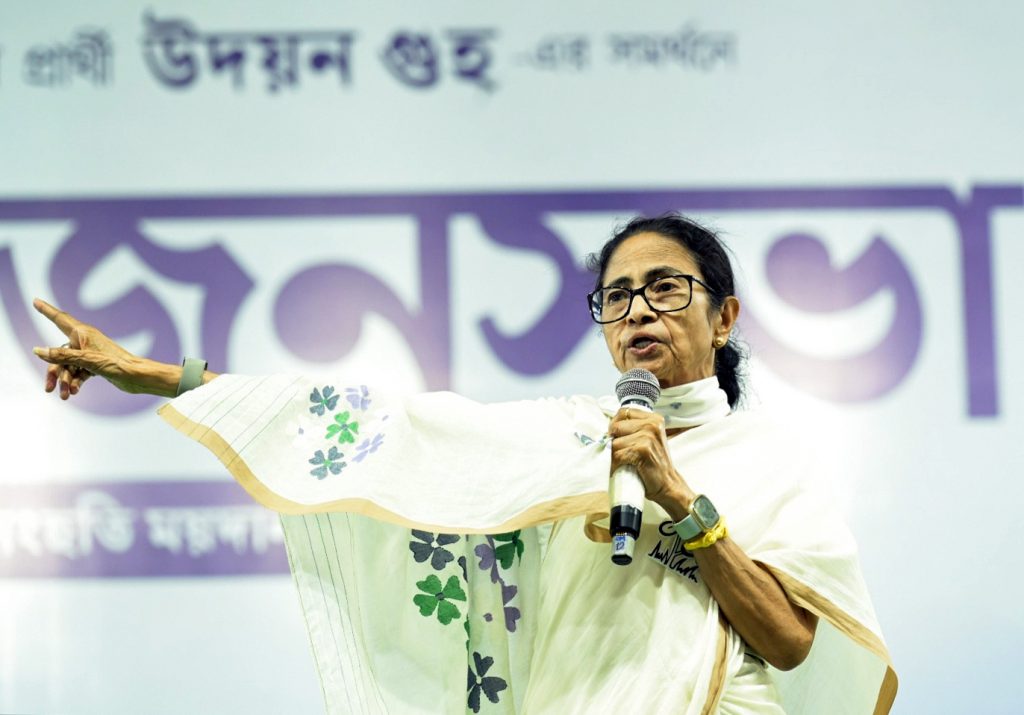
Banerjee’s rhetoric reflects a leader under pressure but unwilling to concede ground. Launching a blistering attack on the BJP, she described it as “oppressive, authoritarian, anti-women, anti-minority, anti-Dalit,” and extended her critique to include “anti-Adivasi and anti-Hindu.” This sweeping indictment is not incidental; it is part of a deliberate strategy to consolidate a broad coalition of social groups by portraying the BJP as a threat across identities.
Her warnings have taken on a sharper edge as polling nears. Alleging that the BJP is using administrative mechanisms to target voters, she cautioned citizens against sharing personal information. “In those forms, they are taking your home address, your bank account number, your phone number—do not give anything!” she said, adding, “Otherwise… they will loot whatever you have.” Such statements underscore a campaign built on mobilizing suspicion and vigilance—hallmarks of a political battle where trust itself is contested terrain.
At the same time, Banerjee has sought to position herself as the defender of Bengal’s cultural and constitutional identity. “They want to impose uniformity by erasing our language, our culture, our food habits, and our diversity,” she said, framing the BJP’s rise as not just political encroachment but cultural homogenization. Her assertion that “Bengal will never bow” captures the emotional pitch of the campaign—transforming electoral choice into a question of dignity and autonomy.
On the other side, the BJP has responded with equal intensity, shifting the focus to governance, security, and alleged administrative failures. Himanta Biswa Sarma, one of the party’s most vocal campaigners, has accused Banerjee of enabling communal tensions and failing to maintain control over the state’s socio-political environment.
Referring to controversial statements by local leaders, Sarma argued that such rhetoric would not be tolerated in BJP-ruled states. “This doesn’t happen in the rest of India,” he said, suggesting that West Bengal has become an outlier under TMC rule. His remarks were accompanied by a strong emphasis on border security, with promises of electrified fencing to prevent infiltration— “Anyone who comes will receive an electric shock,” he declared, in a statement designed as much for political signaling as policy positioning.
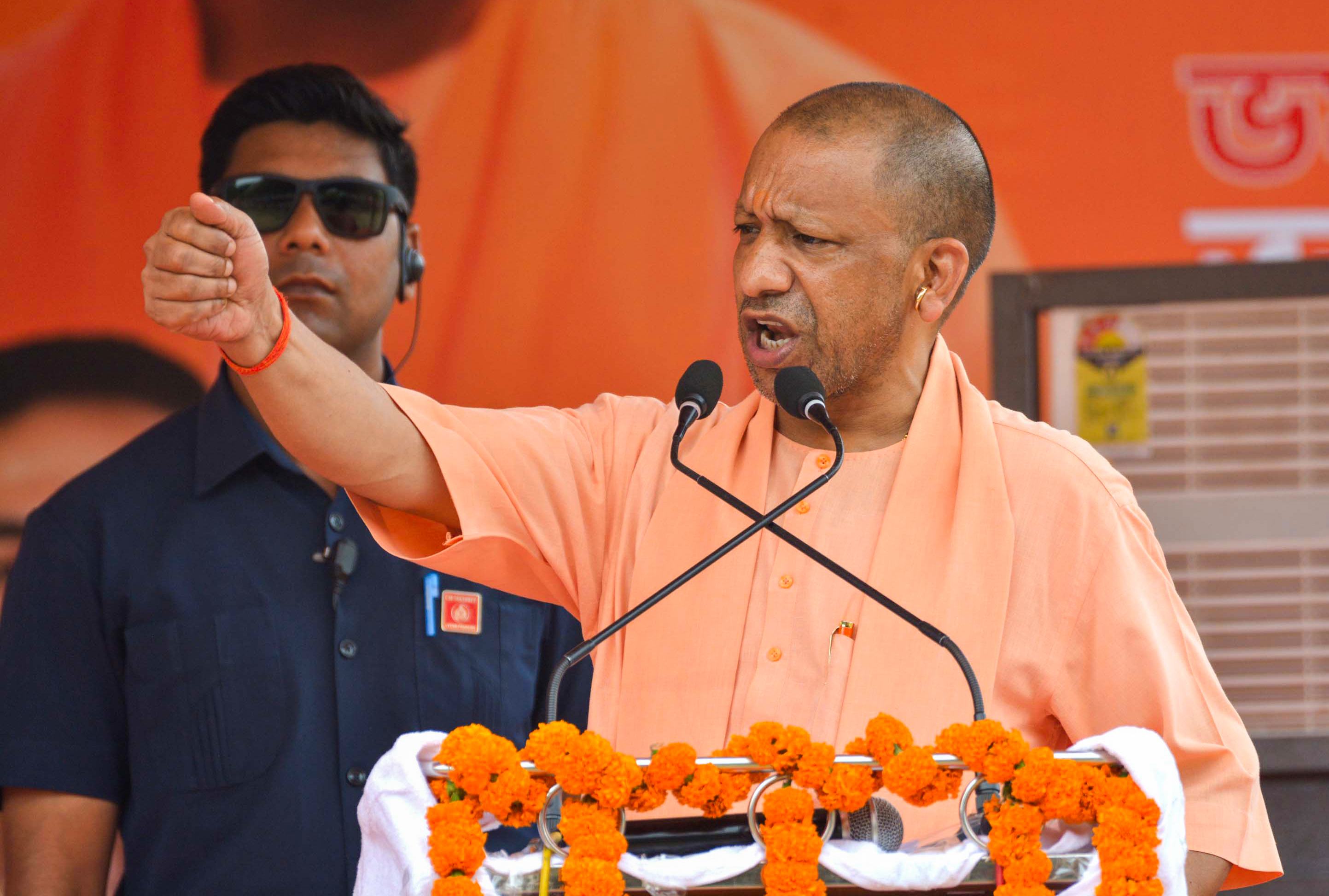
The BJP’s narrative is clear: it seeks to portray Bengal as a state slipping into disorder, requiring firm governance and alignment with the broader national framework. Allegations of cow smuggling, administrative laxity, and selective enforcement are repeatedly invoked to reinforce this image. At the same time, the party has attempted to counter fears about cultural imposition, with Sarma stating that practices like meat consumption are not banned in BJP-ruled states, directly addressing one of the TMC’s central campaign themes.
Between these competing narratives lies a deeper, more consequential struggle—one that revolves around control over institutions and the credibility of the electoral process itself. The intervention of the Supreme Court in matters related to voter lists and administrative transfers has added another layer of complexity to an already tense environment.
A bench led by Surya Kant highlighted a “lack of trust between the Election Commission of India and the State government,” noting that this distrust had reached such levels that even judicial officers had to be deployed in the election process. “They have no trust in the officers of the State government, and the State government has no trust in the ECI,” the Court observed—a striking admission that underscores the fragile institutional equilibrium in Bengal.
The scale of administrative reshuffling—over 10,000 officers transferred, according to arguments presented in court—has further intensified perceptions of an election being fought not just at the ballot box but within the machinery of governance. While the Court declined to intervene immediately, citing the proximity of polling, it kept the legal questions open, effectively postponing a resolution while allowing the political contest to proceed under a cloud of mutual suspicion.
For the TMC, judicial developments have been framed as validation. The party claimed a “landmark victory” after directions to ensure inclusion of eligible voters in revised electoral rolls, declaring that “truth has prevailed” and calling it a “slap in the face” of the BJP. This framing is crucial—it allows the ruling party to project itself as both embattled and vindicated, reinforcing its narrative of defending democratic rights.
The BJP, however, has sought to turn Banerjee’s rhetoric against her. Amit Malviya claimed that the Chief Minister’s campaign tone reflected a leader “with her back to the wall,” interpreting her remarks as an implicit acknowledgment of electoral vulnerability. “The people of West Bengal are saying: ‘Na rahega Trinamool, na phir milenge,’” he said, attempting to project inevitability around a potential political shift.
This exchange captures the essence of the current contest: a psychological duel where perception often matters as much as policy. Each side is attempting to frame the other as either desperate or dangerous, seeking to influence not just voter preferences but voter confidence.
The rivalry between Mamata Banerjee and Narendra Modi has evolved into one of India’s sharpest political confrontations. From the 2019 Indian general election onwards, Banerjee has accused Modi of imposing “authoritarian” rule and undermining federalism, while Modi has repeatedly targeted her government over corruption, political violence, and governance failures. Flashpoints include the 2021 West Bengal Legislative Assembly election, CBI versus state police standoffs, and clashes over schemes and agencies. Their exchanges reflect a deeper Centre-versus-state tension, shaping opposition politics and BJP’s expansion strategy.
What makes this election particularly significant for national politics is the symbolic weight Bengal carries. For the BJP, a victory would represent a decisive breakthrough in eastern India, strengthening its claim as a truly pan-Indian party capable of dislodging entrenched regional forces. It would also bolster its narrative of political expansion, reinforcing momentum ahead of future state and national elections.
For the TMC, retaining power would reaffirm the resilience of regional parties in the face of the BJP’s electoral machine. It would also elevate Banerjee’s stature as a national opposition figure, capable of not just resisting but defeating the BJP in a high-stakes contest. In a fragmented opposition landscape, such a victory could reposition her as a central player in any future anti-BJP coalition.
Beyond immediate outcomes, the Bengal election reflects broader trends in Indian politics: the increasing centrality of identity narratives, the growing role of institutional contestation, and the shift from conventional campaigning to high-intensity, perception-driven battles.
The emphasis on cultural identity versus national integration, welfare versus governance, and regional autonomy versus central authority are not unique to Bengal—but they are being played out here with unusual intensity. The state has effectively become a microcosm of India’s larger political debates.
As polling approaches, the battle between the TMC and BJP shows no signs of de-escalation. If anything, the rhetoric is sharpening, the stakes are rising, and the margins for error are shrinking. This is no longer just an electoral contest—it is a test of endurance, strategy, and psychological resilience.
In that sense, Bengal is not just voting for a government. It is staging a contest of narratives, one that could echo far beyond its borders and shape the contours of India’s political future.