








Rising tariffs and shifting demand are forcing India to rethink its trade strategy as its surplus with the US narrows.
Our Bureau
New Delhi / Dubai
India’s trade equation with the United States is undergoing a subtle but significant shift, as tariff measures imposed under President Donald Trump begin to ripple through export sectors and reshape long-standing patterns. The numbers tell a story of resilience under pressure—but also of emerging vulnerabilities.
In FY 2025–26, India’s exports to the US inched up only marginally to USD 87.31 billion from USD 86.51 billion a year earlier. At first glance, the increase suggests stability. But beneath that modest rise lies a slowdown in export momentum, widely attributed to tariff barriers and growing uncertainty in the American market. At the same time, imports from the US surged sharply to USD 52.90 billion from USD 45.63 billion, narrowing India’s trade surplus to USD 34.41 billion from USD 40.88 billion the previous year.
This shrinking surplus reflects a broader imbalance triggered by tariff distortions. While Indian goods continue to find their way into American markets, the pace has slowed, and US products are entering India more aggressively. The result is a tightening of margins in one of India’s most crucial bilateral trade relationships.
The United States remains India’s top export destination, but the changing dynamics have forced exporters to look elsewhere. Countries like the UAE and China have gained prominence, with exports to China surging to USD 19.48 billion from USD 14.25 billion—a robust 36.7 per cent growth. Yet, this pivot is not without complications. Imports from China have also ballooned to USD 131.63 billion, underscoring a persistent structural dependence that offsets gains made on the export front.
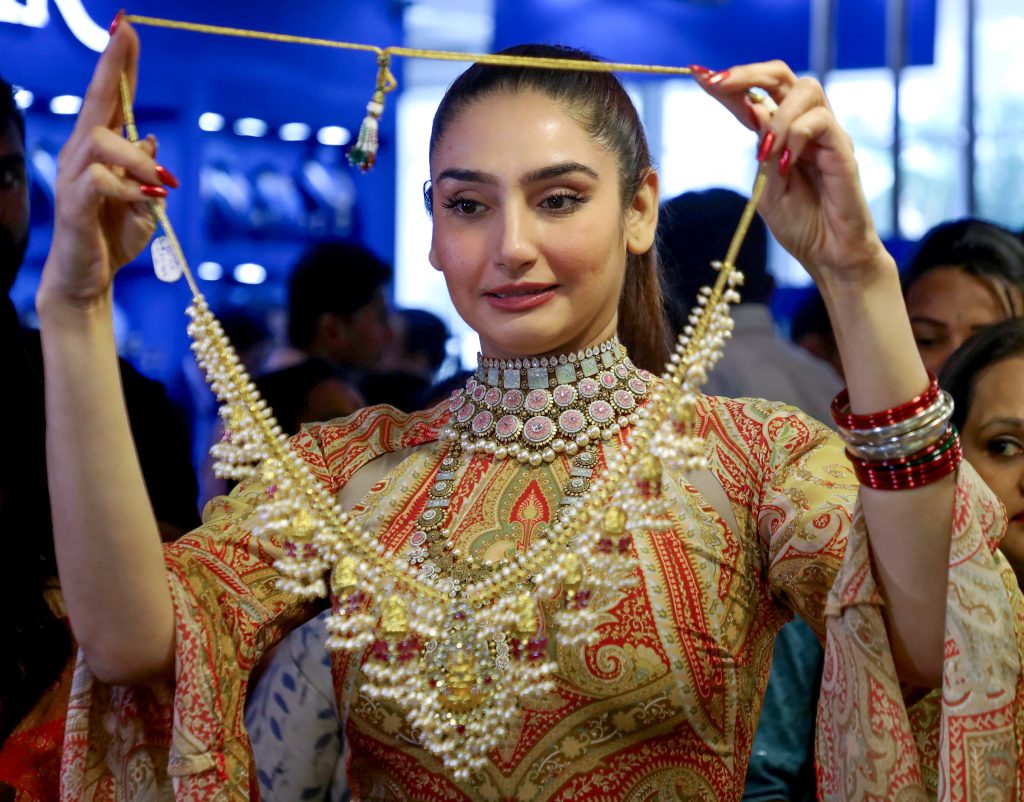
The tariff war’s impact is perhaps most visible in sector-specific data, particularly in the gem and jewellery industry—one of India’s flagship export segments. Exports in this sector declined by 3.32 per cent to USD 27.72 billion in FY26, a drop largely attributed to “evolving tariff regimes in the US, along with global inventory corrections, subdued discretionary demand, and increasing competition from alternative luxury segments.”
The United States has traditionally been a major market for Indian gems and jewellery, and tariff-related uncertainties have dampened demand. Exporters, facing unpredictability in pricing and access, have had to recalibrate strategies. As Kirit Bhansali, Chairman of the Gem and Jewellery Export Promotion Council, noted, “Exporters have actively diversified into new geographies, strengthened value-added segments, and adapted swiftly to evolving global trade dynamics.”
This diversification is already visible. Exports to the UAE grew over 22 per cent during most of the year, while Australia recorded a striking 38.33 per cent increase, aided by favourable trade agreements. These shifts indicate that Indian exporters are not merely reacting to tariffs but are actively seeking to de-risk their global exposure.
However, diversification is not an immediate remedy. Established markets like the US offer scale and stability that newer destinations cannot instantly replicate. Moreover, European markets such as the Netherlands and the UK have shown signs of moderation, adding another layer of complexity to India’s export outlook.
The tariff war is also intersecting with other global disruptions, amplifying its effects. Commerce Secretary Rajesh Agrawal pointed to the compounded challenges in March 2026, stating, “One of the key reasons we don’t need to find reasons also here has been the challenges on trade front, due to Middle East crisis… our exports to Middle East in the month of March has dipped by USD 3.5 bn… In percentage term it has been a decline of 57.95 per cent.” Imports from the region also fell sharply by 51.6 per cent, or USD 8.7 billion.
These overlapping crises—tariffs, geopolitical tensions, and demand fluctuations—are creating a volatile environment for Indian trade. While the headline figures suggest that exports are holding steady, the underlying pressures are forcing structural adjustments across industries.
Within the gem and jewellery sector, for instance, traditional segments like cut and polished diamonds—still accounting for 43.9 per cent of exports—declined by 8.52 per cent. In contrast, silver jewellery exports surged by over 52 per cent, driven by affordability and changing consumer preferences. Similarly, studded gold jewellery saw growth, reflecting a shift toward value-added products that can better withstand price and tariff pressures.
These trends point to a broader transformation: Indian exporters are moving up the value chain and diversifying both products and markets. Yet, the transition comes with costs—investment, uncertainty, and the challenge of building new trade relationships.