








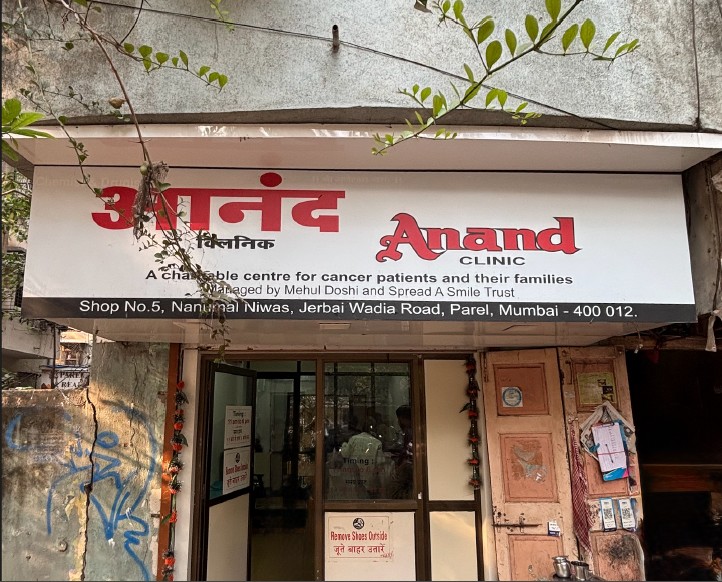
By Raam Krishnan
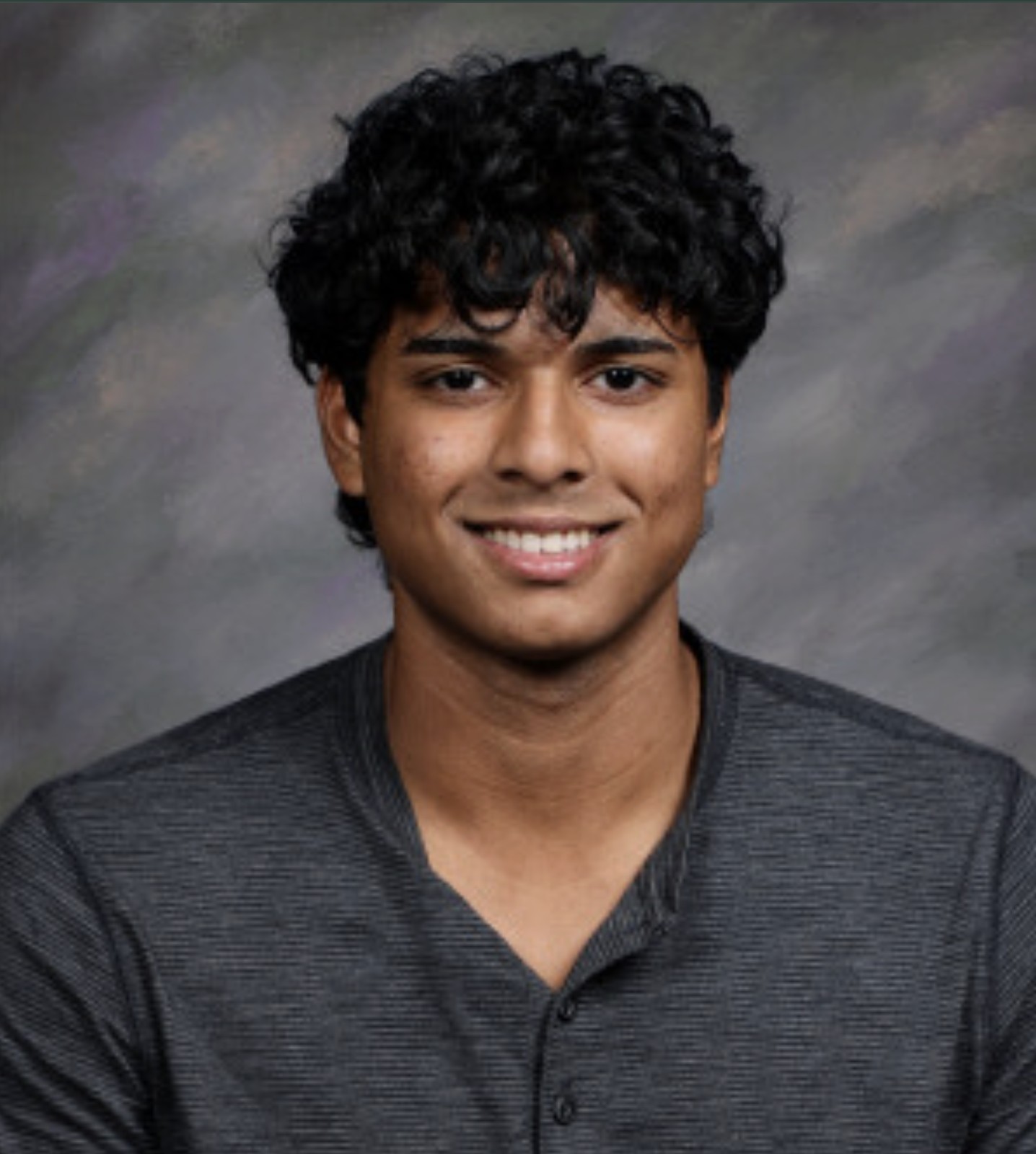
On a narrow road in Mumbai, just across from one of India’s largest cancer hospitals, a small storefront sits between aging concrete walls and steady traffic; sandals rest outside the door. Inside, Anand Clinic consists of a room no larger than a modest living room — white walls, plastic chairs, a desk, and metal shelves stacked tightly with grocery packets.
Anand Clinic is unlike a typical clinic. There are no examination tables, no IV stands — no white coats. Instead, there are packets of lentils, protein flour, rice bran oil, turmeric, sunflower seeds, and neatly bundled grocery kits waiting to be handed to families who have already spent everything they had just to reach this city.
For thousands of cancer patients who travel to Mumbai each year, the most urgent cost is not only chemotherapy, but sustaining the body itself.
The Journey to Mumbai
Many of the families who arrive here come from rural regions across India — across Maharashtra as well as from Madhya Pradesh, Uttar Pradesh, Bihar, Jharkhand, Chhattisgarh, Odisha, West Bengal, Assam, and several northeastern states. In their villages, diagnostic labs are limited. Symptoms are ignored until they become unbearable: a persistent cough, swelling, unexplained fever, constant pain.
Inside Anand Clinic, patients and family members wait in a room no larger than a modest living room.
Cancer remains taboo in many communities. Some believe it is contagious. Others see it as punishment. Families often hide the diagnosis out of fear.
Many of the patients who eventually arrive in Mumbai come from extremely poor rural backgrounds. A large number are daily wage laborers earning the equivalent of one to two dollars per day. Others depend on very small landholdings, sometimes less than half an acre, which barely produce enough food to sustain a family. When serious illness strikes, that fragile income disappears almost immediately. The patient can no longer work, and a family member must often travel with them to Mumbai, leaving the household without its primary source of income. Whatever small savings exist are quickly exhausted. Jewelry is sold, land is mortgaged, and livestock is often given up simply to reach the hospital.
By the time many families arrive in Mumbai, they are already financially broken.
The patient rarely travels alone. A relative must accompany them, which means a second income often disappears as well. In a city as expensive as Mumbai, even basic survival becomes uncertain.
This is where Mehul Doshi stepped in.
Over the years, he has listened to hundreds of stories like these.
“People don’t tell even their relatives,” Doshi says. “They think others will avoid them.”
By the time a patient reaches a major hospital in Mumbai, months may have passed. Savings are gone. Jewelry is mortgaged. Land is pledged. Treatment begins in phases — chemotherapy, surgery, radiation — each step costing thousands of dollars. Trusts and charitable funds often help cover hospital expenses by transferring money directly to hospital accounts.
But no one pays for food.
“Many trusts help them manage hospital bills,” Doshi says. “But very few give them grocery or meal support.”
The Hidden Gap
Large cancer centers in Mumbai register tens of thousands of new patients each year. While subsidized treatment is available for many, the surrounding ecosystem — housing, nutrition, daily living — remains fragile.
Even a small slum dwelling near the hospital can cost ₹6,000–₹7,000 per month (roughly $70–$85 USD). Shared toilets increase infection risks. Treatment often lasts six to twelve months, far longer than families initially expect.
When money runs out, the first thing to collapse is diet.
Chemotherapy reduces hemoglobin. Surgery weakens tissue. Recovery demands protein. While most patients rely on rice and wheat, their true necessity is protein — and Doshi helps supply it. The grocery kits provided by Anand Clinic support not only the patient, but also the family member who has traveled with them and is struggling to survive in the city during treatment.
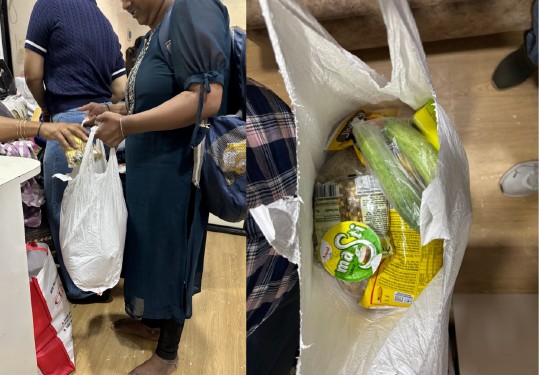
Grocery kits are handed directly to patients, containing protein-rich food meant to support treatment beyond hospital care.
“We don’t give rice and wheat,” Doshi explains. “That they can manage. We give what helps treatment.”
An Accidental Beginning
Doshi never intended to start anything.
As a teenager, he regularly donated blood. Years later, someone asked him to donate platelets for a cancer patient. At first, he resisted. Traveling to the hospital was inconvenient. Eventually, he agreed.
While donating, a woman approached him. Her daughter needed repeated platelet support. He reluctantly promised to return.
He came back. Again. And again.
Over time, Doshi donated platelets 294 times. The girl eventually passed away, but during her treatment he began to notice something deeper. Money was required for many things beyond the hospital bill. Sometimes families needed money simply to buy medicines from the local chemist. At other times, when patients were too weak to travel, they needed money just to reach the hospital by taxi. Many families could not even afford their rent during treatment. At one point, the girl refused milk because she disliked its taste in Mumbai, and Doshi bought chocolate syrup to make it easier for her to drink. These everyday needs, invisible inside the hospital system, also had to be met.
“I never planned this,” Doshi says quietly. “It just happened.”
What began as blood donation slowly became something much bigger. The number of recipients changed; the purpose did not.
A Platform, Not an NGO
Anand Clinic does not collect money. It does not function as a traditional charity.
“We are a platform,” Doshi says. “Between the donor and the beneficiary.”
Donors purchase groceries directly — either from local suppliers or from their own sources — and bring them in person. The items are handed directly to patients. No funds pass through the clinic’s hands.
On a typical month, around 40 to 50 regular donors contribute. Others come occasionally — often families who have lost someone to cancer and want to give in their memory.
The system is simple and transparent, operating quietly at a scale rarely seen across India.
The author assists with assembling grocery kits, handing supplies directly to patients.
What a Kit Contains
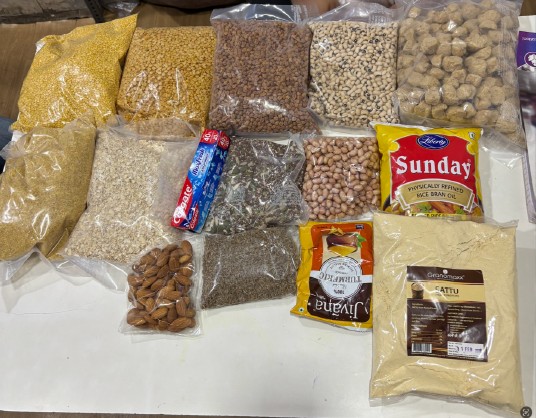
Each monthly grocery kit is carefully structured. It avoids filler items and focuses almost entirely on protein and nutritional value.
Four kilograms of protein sources — lentils such as toor dal, chana, and moong — form the core. Sattu, a roasted gram flour powder high in protein, is often provided separately for patients who struggle to swallow solid food or rely on feeding tubes. Rice bran oil, turmeric, cumin, seeds, and other essentials are added to support recovery.
“For chemo, blood levels go down,” Doshi explains. “If nutrition is maintained, treatment can continue.”
Every morning between 11 a.m. and 1 p.m., patients come in. Some collect full grocery kits. Others collect only protein supplements or dressing materials. Wheelchairs, airbeds, oxygen concentrators, and nebulizers are also distributed when available. Patients wait quietly, often holding folded medical papers, awaiting their greatest need.
There is no donation box. No banner asking for support. Only shelves filled with food, suitcases filled with clothes, and boxes of simple medical equipment.
After Treatment — and After Loss
Over the years, thousands of families have passed through this room. Support is not indefinite. Once treatment ends and a family regains stability, assistance stops.
But when an earning member dies, grocery support often continues for six months.
“If they can stand on their own, they must,” Doshi says. “We help where needed.”
The goal is not dependency. It is a transition, and a clear vision constructed for the patients to get their lives back on track.
Service Without Visibility
Doshi prefers not to publicize his work. He does not run social media pages, nor does he advertise for funds.
“People should come and see,” he says. “They should feel the pain.”
In a world driven by visibility and branding, Anand Clinic operates quietly. There are no fundraising campaigns. No polished promotional videos. Only donors who show up, alongside patients who return each month until they no longer need to.
This distinct vision is what sets Anand Clinic apart from other clinics. It seeks no profit or recognition — only solutions for patients in desperate need.
A Different Model of Care
In the United States, where I live, help for cancer patients usually comes through institutions — hospitals, nonprofits, and formal programs designed to manage need at scale. Support exists, but it is rarely personal.
Rarely does it involve someone standing across the table, handing over food with no paperwork, no publicity, and no expectation in return.
Anand Clinic’s work would be unusual anywhere. What sets it apart here is its humility: help delivered quietly and directly, in a space where families have little left except the hope that someone will notice.
Making the Difference
Cancer treatment is often measured in cycles and clinical outcomes. But beyond hospital walls lies another reality — housing, nutrition, transport, stigma, survival.
Anand Clinic exists in that space.
It does not cure cancer. It does not replace hospitals. It does not claim to solve systemic gaps.
Instead, it fills a gap often ignored, providing support in areas many clinics overlook: food and essential supplies.
In a 300-square-foot room across from one of Mumbai’s busiest cancer centers, lentils and protein powder quietly sustain families who have already spent everything else.
Sometimes, that is the difference between continuing treatment and stopping it — and in many cases, Anand Clinic has made that difference.