

Our Bureau
New Delhi
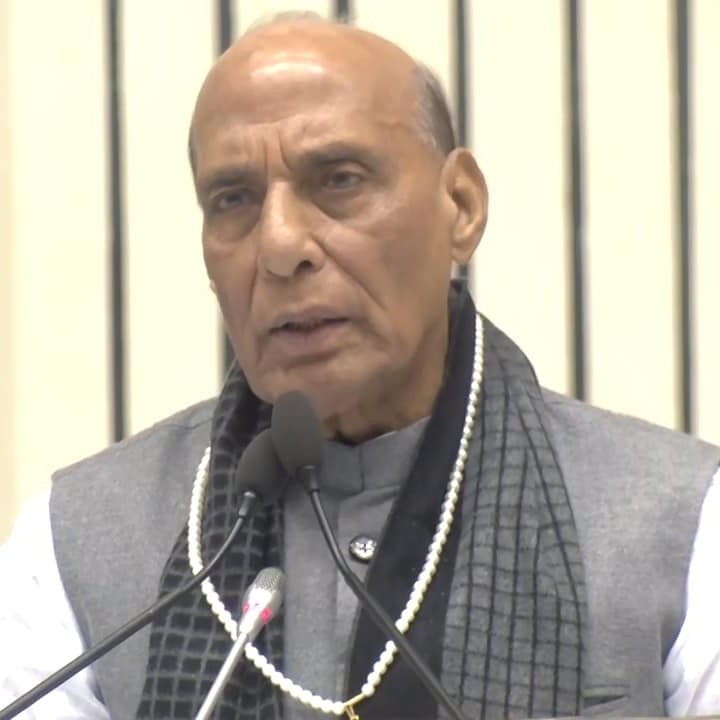
Defence Minister Rajnath Singh sparked political discussions recently by stating that the Sindh region, currently part of Pakistan, “may return to India” as borders can change. Speaking at a Sindhi Samaj Sammelan event in New Delhi, Singh emphasized that Sindh has always been civilisationally connected to India despite its current geopolitical status since Partition in 1947. He highlighted the deep cultural and emotional ties Sindhi Hindus, especially those from the generation of leaders like Lal Krishna Advani, maintain with Sindh, noting that many have never accepted its separation from India.
Singh invoked the sacredness of the Indus River, revered by both Hindus and many Muslims in Sindh, as a symbol of the enduring cultural bond between Sindh and India. Referring to Advani’s writings, Singh remarked that Sindhi Hindus have not yet accepted partition of Sindh, underscoring how Sindh is perceived as an integral part of Indian civilization irrespective of current borders.
Earlier, the Defence Minister also spoke about political aspirations regarding Pakistan-occupied Kashmir (PoK), expressing confidence that it will be reclaimed by India without aggressive measures, driven by internal demands for freedom among PoK’s populace.
Singh’s remarks come amid heightened geopolitical tensions and follow India’s Operation Sindoor against terror infrastructure in PoK. His statements reignite debates about the permanence of borders and the deep-rooted historical and cultural links between regions divided by Partition with potential implications for India-Pakistan relations.