








From fitness struggles to selection headaches, India’s Asia Cup build-up reveals the physical and mental hurdles modern-day T20 stars must overcome.
Our Bureau
Mumbai
T20 cricket may last only 40 overs a game, but the format continues to push players to their physical and mental limits. Ahead of the Asia Cup, several Indian cricketers—both senior stalwarts and emerging talents—are battling unique challenges that highlight how demanding this shortest international format has become.
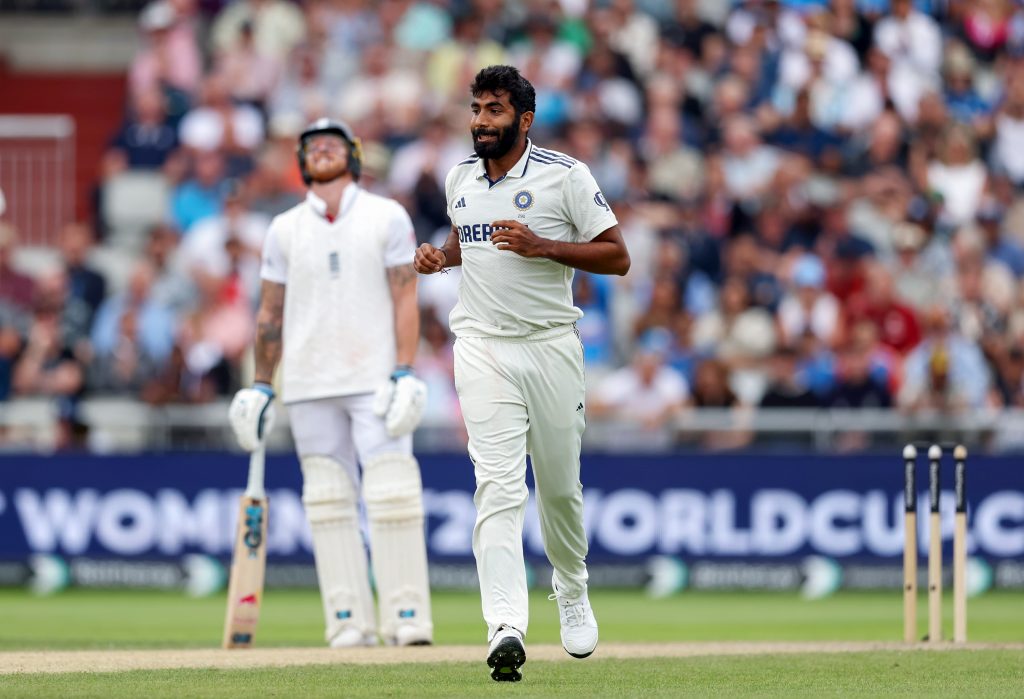
One of the biggest talking points is the return of India’s pace spearhead Jasprit Bumrah. After spearheading India to a dramatic T20 World Cup triumph against South Africa last year, Bumrah is back in colored clothing. But while his form in the IPL and Tests shows he remains world-class, concerns around workload and fitness persist. Former South African great AB de Villiers cautioned against overburdening him, noting that the selectors were right to manage his game-time.
“I do not think he will play all the games,” de Villiers said. “I love that the selectors are being proactive. You cannot expect someone like Bumrah to play every single match when he has had fitness struggles in the past. Managing senior and impactful players is key.”
Bumrah, India’s fifth-highest wicket-taker in T20Is, has endured a long injury layoff due to a stress fracture, and while he roared back with 18 IPL wickets this season, sustaining that across formats is no easy task. His case is emblematic of the broader challenge in modern cricket: balancing player fitness with fans’ and teams’ demand for performances across three formats.
Spin bowling brings its own pressures. Kuldeep Yadav, India’s chinaman wizard, has been in and out of squads despite his enviable T20I record—69 wickets in 40 games at an average just over 14. His IPL 2025 campaign was solid, though not spectacular, with 15 scalps. De Villiers lauded his “skill and flight” but also pointed out that his exclusion from Test cricket and sporadic T20I appearances raise concerns about rhythm and consistency. For wrist-spinners like Kuldeep, missing matches can mean losing the sharpness needed to outfox batters in high-pressure T20 contests.
If bowlers are grappling with workload and rhythm, batters are not immune to challenges either. India’s T20I captain Suryakumar Yadav, one of the most destructive white-ball batters in the world, enters the Asia Cup after a battle with his own body. A sports hernia, which required surgery in Germany earlier this year, threatened to derail his season. But weeks of intense rehab at the BCCI’s Centre of Excellence in Bengaluru have put him back on track.
“It’s been five to six weeks of a good process, good routines, and I am feeling really well now,” Suryakumar said in a video shared by the BCCI. He detailed how physios and trainers planned his recovery step by step, preparing him for the pressures of leading India. Yet his story underscores the fragility of careers in T20 cricket, where explosive batting comes with significant strain on the body, especially the core and muscles most involved in powerful stroke play.
For younger talents, the challenge is not always fitness—it is selection. Yashasvi Jaiswal, despite another prolific IPL season with 559 runs at a strike rate nearing 160, finds himself among the reserves. Former Indian cricketer Surinder Khanna called him “unlucky” to miss out, hinting that weaknesses in his fielding may have cost him a place. “In T20, coaches and captains look at fielding as much as batting. Jaiswal has dropped some catches recently, and that could have gone against him,” Khanna said.
For a player who has already scored a T20I century and five fifties in just 23 matches, missing the Asia Cup is a reminder of how competitive the format has become. In a squad of 15, even consistent run-getters can be sidelined if they do not bring additional value—whether it is as a fielder, bowler, or leader.
Former players point out that these stories—Bumrah’s workload management, Suryakumar’s rehab, Kuldeep’s fight for consistency, Jaiswal’s fielding shortcomings—reflect the broader evolution of T20 cricket. No longer is the format seen as “hit and giggle”; it is now as demanding as any other, requiring peak physical conditioning, tactical sharpness, and multi-dimensional skills.
As the Asia Cup kicks off on September 9, India’s campaign will not just be about chasing victories but also about managing the challenges that come with modern-day T20 cricket. For Bumrah, it is about sustaining fitness. For Suryakumar, it is proving his body can match his ambition. For Kuldeep, it is maintaining rhythm despite sporadic opportunities. And for Jaiswal, it is working on his weaknesses to break back into the XI.