








Our Bureau
Chandigarh
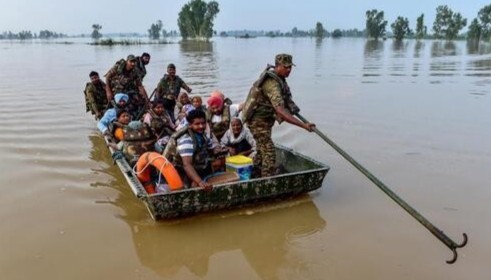
More than 1,000 villages and over 61,000 hectares of farmland across Punjab have been devastated by floods triggered by swollen Sutlej, Beas and Ravi rivers, officials reported on Saturday. So far, 11,330 people have been evacuated by combined teams of the Army, NDRF, BSF, SDRF and district authorities.
According to the state government, Gurdaspur district remains the worst-hit, with 323 villages affected, followed by Kapurthala (107), Ferozepur (101), and Hoshiarpur (85). Heavy rain in the catchment areas of Himachal Pradesh and Jammu and Kashmir has further aggravated the crisis, impacting agriculture, homes and livestock.
District reports reveal large-scale crop losses: 16,632 hectares in Fazilka, 11,620 in Kapurthala, 10,806 in Ferozepur, 9,928 in Tarn Taran, and over 7,000 in Pathankot. The cumulative financial losses are expected to run high.
Rescue operations have intensified, with 4,711 people shifted to safety in the past 24 hours alone. Currently, 77 relief camps are operational across the affected districts, sheltering 4,729 people. Ferozepur hosts the largest contingent at 3,450, followed by Hoshiarpur, Pathankot, and Gurdaspur. Food, medical aid and essentials are being provided with support from Red Cross, NGOs and local volunteers.
Seven NDRF teams remain deployed in Gurdaspur, along with additional contingents in Pathankot, Fazilka, and Ferozepur. The Army, BSF and Air Force are assisting in rescue and relief operations, particularly in border districts.
State Chief Secretary KAP Sinha, after inspecting Pong dam and flood-affected areas in Mukerian, directed strict regulation of water discharge and round-the-clock vigilance. Visiting embankments in Hoshiarpur, he assured residents that state agencies were strengthening flood protection measures and committed to extending every possible help.
Officials said cross-departmental teams, including revenue, health and animal husbandry staff, are stationed in affected zones to ensure no person faces shortages of food, medicines or shelter. Relief and rescue work continue on war-footing as water levels remain dangerous.