








Indian artists and diaspora members turned the welcome events into a living art—blending dance, devotion, and deep emotion to weave a cultural bridge between the two nations
Our Bureau
Rio de Janeiro & Brasilia
Prime Minister Narendra Modi’s visit to Brazil for the 17th BRICS Summit was marked not just by high-level diplomacy but also by heartfelt cultural tributes from the Indian diaspora. In two memorable events — a vibrant welcome in Rio de Janeiro and a deeply emotional ceremony in Brasilia — Indian artists living in Brazil showcased the rich tapestry of India’s traditions, sending a powerful message of unity, pride, and cultural diplomacy.
Rio’s Rhythms and Resolve
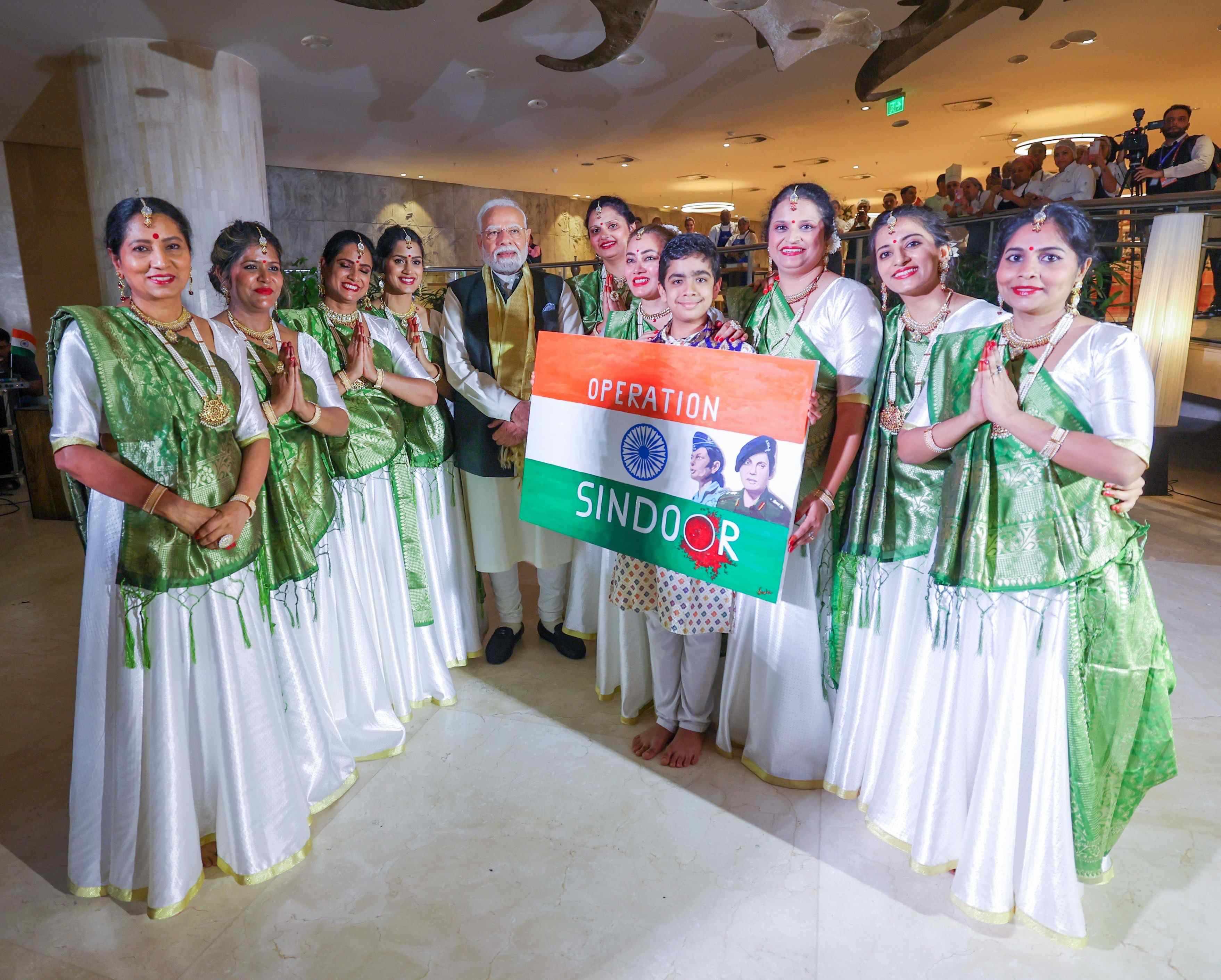
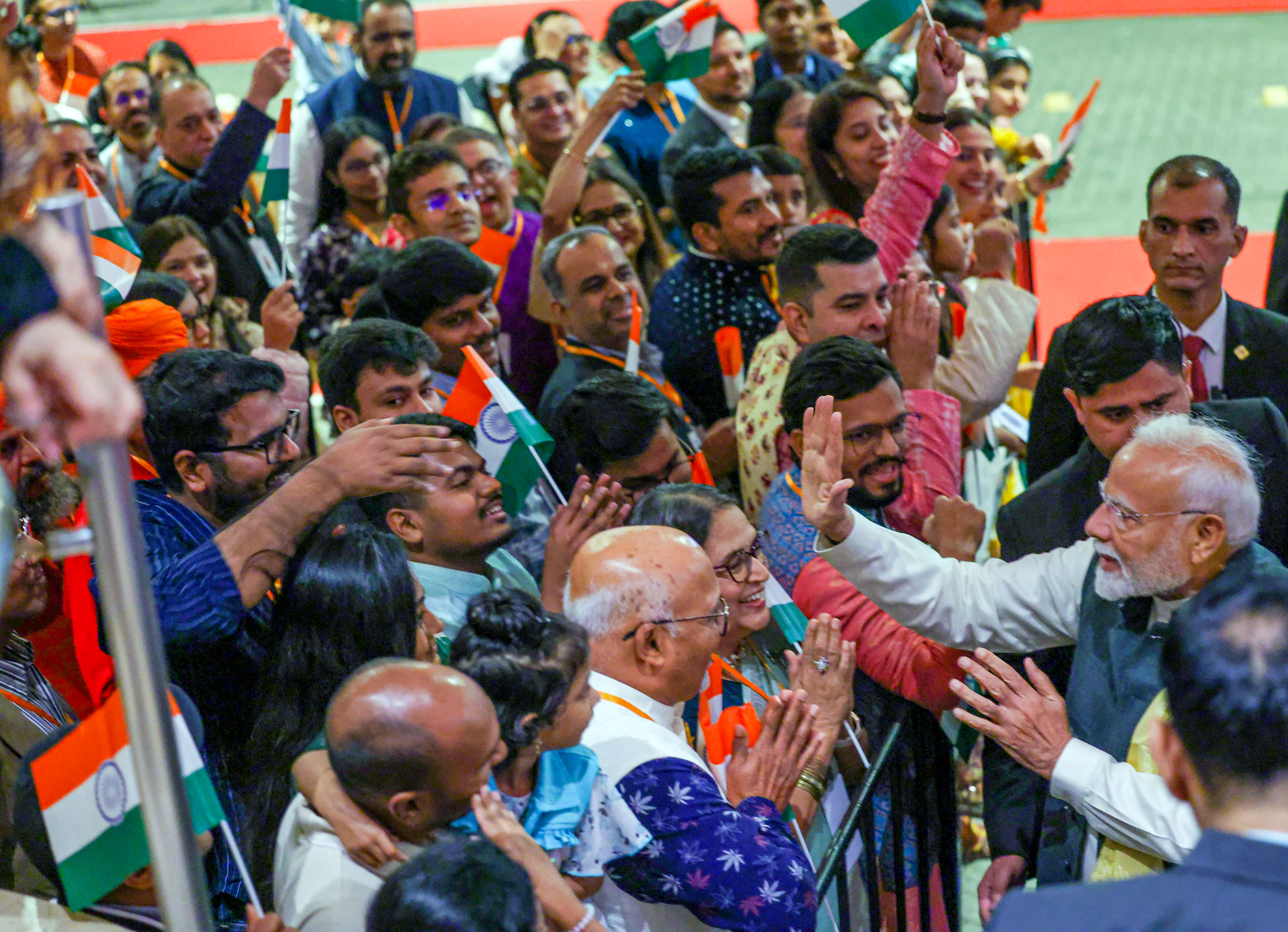
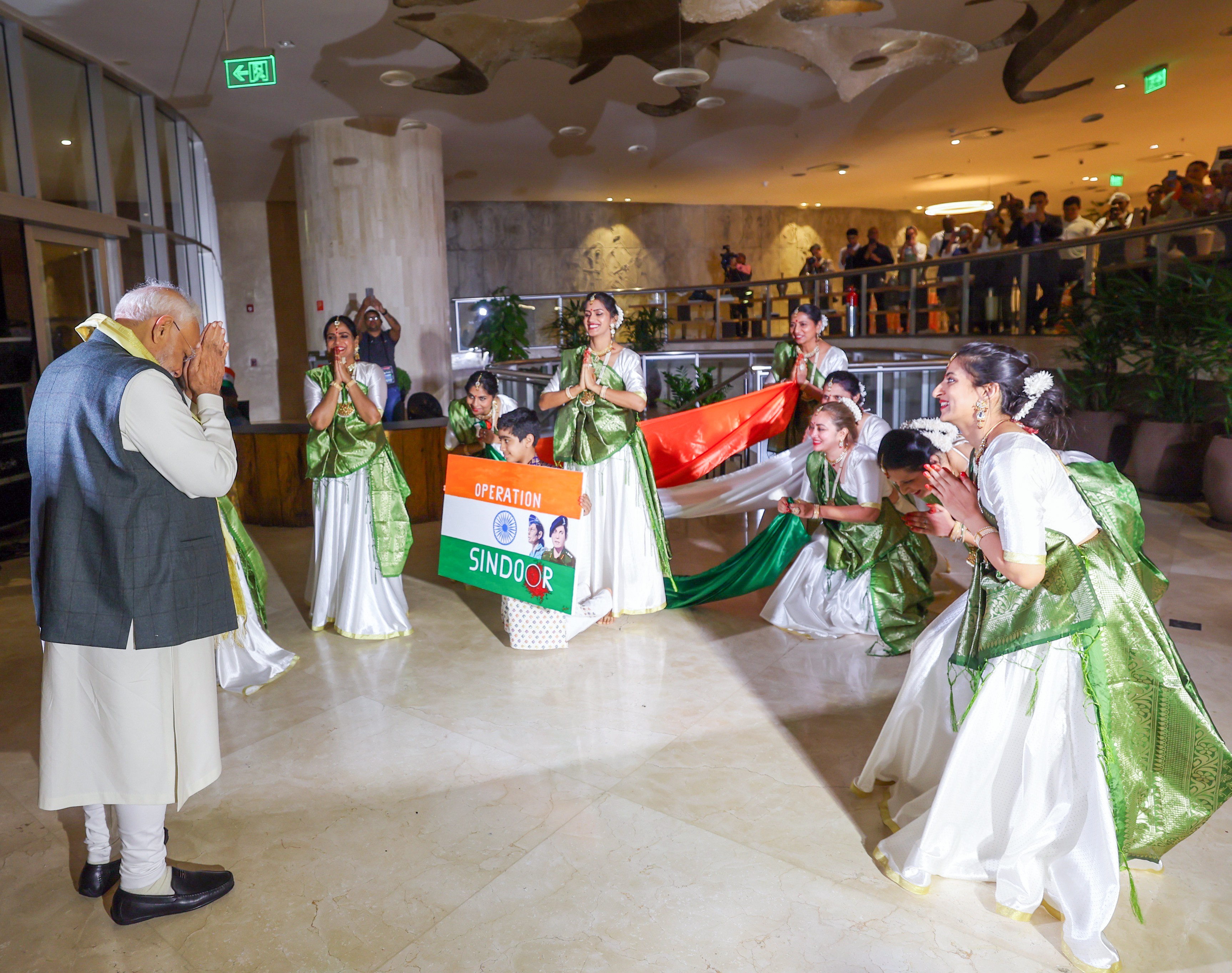
In Rio de Janeiro, the Prime Minister was welcomed with chants of “Modi, Modi” as members of the Indian community gathered at the Hotel Nacional for a community reception jointly organized by the Indian Embassy, Indian Consulate in Sao Paulo and Indian Association of Sao Paulo. The highlight of the evening was a stirring Kathak-based group dance performance choreographed by Gyaneshree Karahe, a classical dancer who has been promoting Indian culture in Brazil since 2009.
“After what India went through this year, especially before Operation Sindoor, I felt this was our chance to send a message,” said Gyaneshree. “Through our performance, we wanted to honor our soldiers, our Prime Minister, and show that we stand united — even thousands of miles away,” said Gyaneshree Karahe who led the group of dancers at the welcome ceremony for the Prime Minister.
Set to the patriotic songs “Tujhe namami ho” and “Saugandh mujhe is mitti ki”, the performance featured women from Indian community in São Paulo, Campinas, and Rio, along with the youngest performer, Jayesh Karahe, 10, who portrayed PM Modi in the final stage of the dance presentation. As the music swelled, Prime Minister Modi was visibly moved. “He couldn’t stop himself from clapping,” Gyaneshree said. “He smiled and said, ‘Excellent performance!’ That one moment was worth everything.”
Behind the scenes, the performance was a labor of love. The performers included Abha Joshi, Shilpa Pinaki, Vaijanti Raut, and Gyaneshree from São Paulo; Jalak Modi and Raksha Bagaria from Campinas; and Sneha Prateek, Puja Shah, and Rajani Sinha from Rio de Janeiro. “We rehearsed through Zoom calls, video tutorials, and coordinated our moves and efforts across cities,” she said. “These are women with jobs, small children, and daily responsibilities — but they came together because they believed in the cause,” said Gyaneshree.
Their message was clear: Operation Sindoor, led by Indian women, was now being paid tribute to by Indian women in Brazil. “It was a message of empowerment, strength, and gratitude — from us, to our nation,” said Gyaneshree.
“We are very thankful to the Indian embassy, Indian consulate, Swami Vivekanand Cultural Centre and the Indian Association for giving us this opportunity – and responsibility – for performing in front of the Prime Minister of India at such an important event,” said Gyaneshree Karahe.
A Sacred Moment in Brasilia
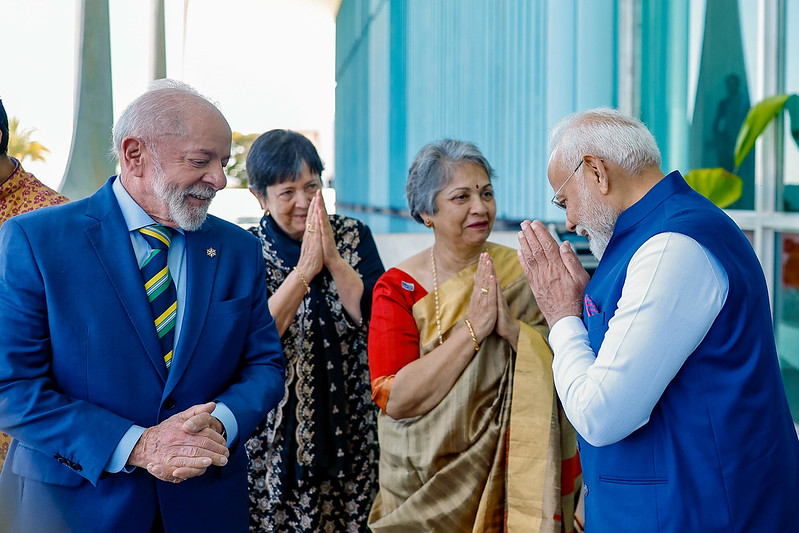
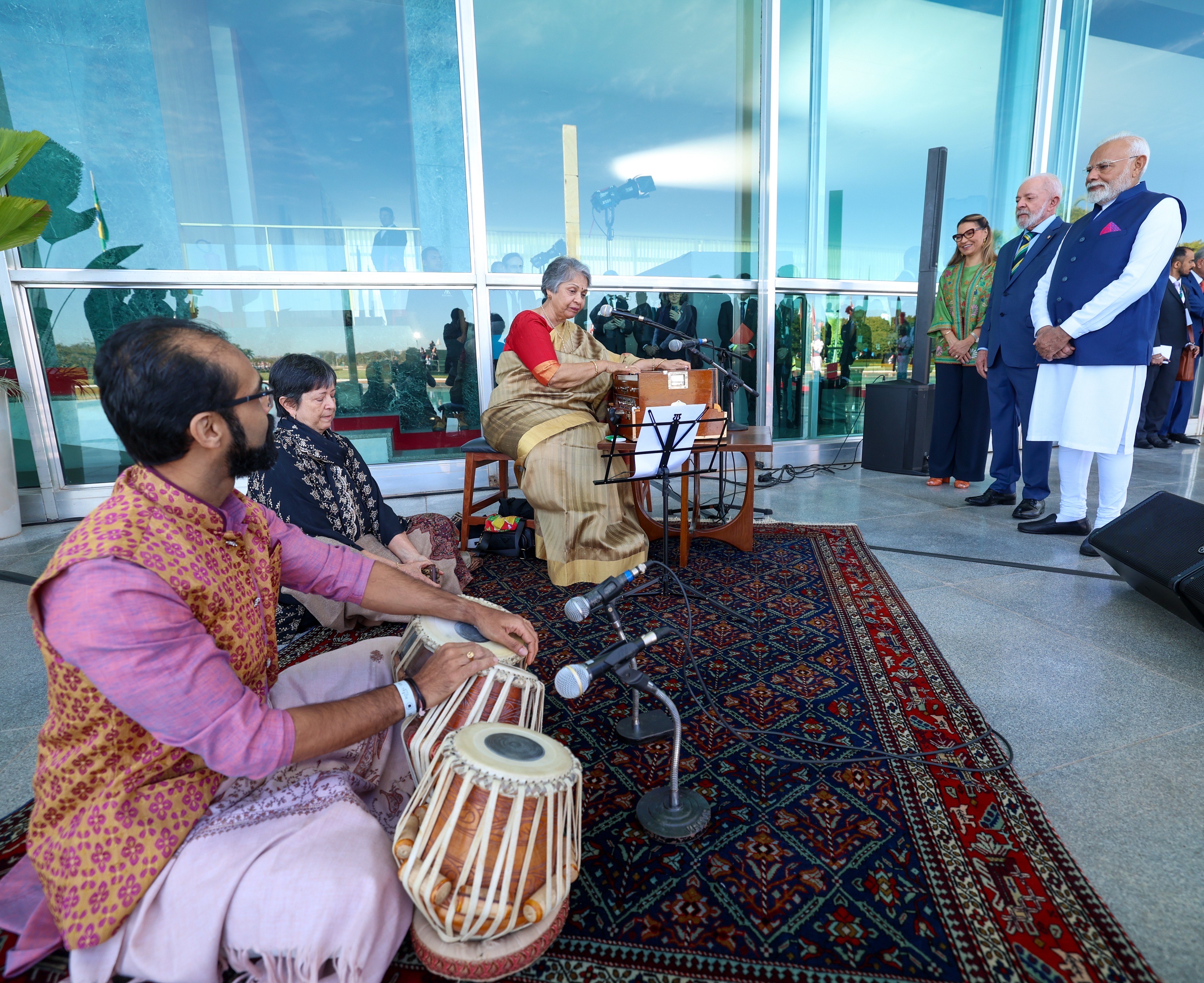
The emotion carried forward to Brasilia, where Brazilian President Lula da Silva hosted a special reception for Prime Minister Modi at his official residence — the Palácio da Alvorada. The event was formal yet profoundly intimate, with ceremonial honors and a cultural tribute that turned into a moment of shared humanity.
“I felt like my heart was about to burst out of my chest,” said Meeta Ravindra, a respected Indian classical singer based in Brazil for a long time, who was invited by the Ministry of Culture — at President Lula’s personal request — to sing a Ram Bhajan for PM Modi. “It was an immense joy — a true gift and recognition of the work I’ve been doing for over 50 years in Brazil.”
As the national anthems of India and Brazil played, followed by the raising of both flags, the mood was dignified and deeply respectful. But as Meeta Ravindra began her bhajan, the air shifted. “As President Lula, Janja, and Modi ji came closer to listen, their expressions changed,” she recalled. “Modi ji was marking the rhythm with his hands. Lula had tears in his eyes.”
After the performance, Meeta was greeted by PM Modi and warmly embraced by President Lula and the First Lady Janja da Silva. “When Lula heard that I was from São Bernardo do Campo like him, he hugged me again,” she said, her voice filled with emotion. “It was the fulfillment of a beautiful dream.”
Adding rhythm to the evening was Sagar Karahe on tabla. “Playing in front of Modi ji, President Lula, and Janja was one of the most emotional moments of my life,” he said. “I felt like I was offering a piece of India’s soul to Brazil. It wasn’t just a performance — it was a bridge between cultures.”
Sagar’s performance, widely shared on social media, drew praise for its technical finesse and artistry. “It confirmed how powerful Indian classical music can be — it moves, unites, and transcends language.”
A Celebration of Cultures
From the cultural vibrancy of Rio to the melodious dignity of Brasilia, these moments of music and dance revealed a deeper layer of PM Modi’s Brazil visit — one grounded in emotion, community, and shared identity. For the Indian diaspora, it wasn’t just about seeing their Prime Minister. It was about showing that India lives in their hearts, their art, and their everyday lives in Brazil.
In the beats of the tabla, in the swirl of the Kathak dancers, in the verses of a bhajan sung from the heart — India and Brazil found harmony, not just as BRICS partners, but as nations connected by culture.

Beautiful description of the whole welcome cermony of PM Modi ji in Brazil. I too am very happy to be an indian, but living in Brazil also for more than 50 years and having the friendship with the Indian artists Meeta Karahe family. Hearty congratulations to all of them, Meeta Ravindra Karahe, son, daughter-in-law and grandson.
This is a very proud moments for all Indians specially to us being a family members of Meeta karahe. Sagar, Gyansri n master Jayesh have also made this moment unforgatable. I’m a younger brother of Meeta felt a very cherishible event after witnessing the event. Many many love to all Brazilians providing this opportunity.