








Our Bureau
Bhopal
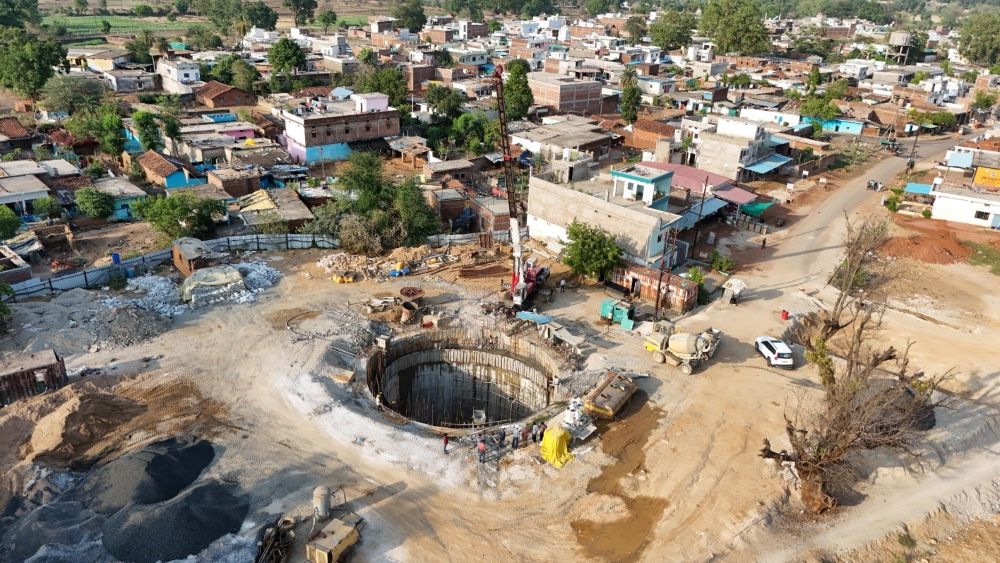
India has achieved a major infrastructure milestone with the completion of its longest irrigation water tunnel, a nearly 12-km underground passage through the Vindhya mountain range in Madhya Pradesh. The Sleemanabad Tunnel, constructed under the Bargi Diversion Project, will carry Narmada River water by gravity into the Son basin, eliminating the need for pumping and significantly improving irrigation and drinking water supply across the Vindhya region. The final breakthrough was achieved this week after nearly 17 years of construction.
Stretching 11.95 km beneath the Vindhya hills in Katni district, the tunnel is expected to irrigate around 2.45 lakh hectares of farmland across nearly 1,450 villages in six districts, including Jabalpur, Katni, Maihar, Satna, Rewa and Panna. The project will also strengthen drinking and industrial water availability, offering a major boost to agriculture and regional development.
The ambitious project, undertaken by the Narmada Valley Development Authority (NVDA), encountered numerous engineering and geological challenges during its prolonged construction. Hard rock formations repeatedly damaged imported tunnel-boring machines, while flooding, toxic gases and difficult underground conditions slowed progress. Engineers eventually adopted excavation from both ends of the tunnel, enabling the two sections to meet successfully after years of painstaking work. The project’s cost also rose substantially because of delays and complex dewatering operations.
Beyond its engineering significance, the tunnel symbolically links the Narmada and Son river basins, two rivers that, according to local folklore, were destined never to meet. By harnessing gravity instead of energy-intensive pumping systems, the project represents a sustainable model for large-scale water transfer and stand as one of India’s most significant irrigation engineering achievements in recent years.