








As the Iran war rattles energy markets and global supply chains, Prime Minister Narendra Modi’s five-country diplomatic tour reflects India’s urgent push to secure energy routes and deepen economic partnerships
Our Bureau
Dubai / Amsterdam / Copenhagen
Prime Minister Narendra Modi’s five-country diplomatic tour this week comes at a moment of extraordinary geopolitical turbulence. The conflict involving Iran has once again exposed the vulnerability of global energy supply chains, sent strategic anxieties across Asia and Europe, and revived fears about disruptions in the Strait of Hormuz — one of the world’s most critical oil shipping corridors. For India, which imports more than 80 per cent of its crude oil requirements, the crisis is not merely a foreign policy concern. It is a direct economic challenge with implications for inflation, growth, shipping costs, industrial production, and domestic political stability.
Against this backdrop, Modi’s visits to the United Arab Emirates, the Netherlands, Sweden, Norway and Italy represent far more than ceremonial diplomacy. The tour reflects a broader Indian strategy: diversify energy partnerships, strengthen economic linkages with Europe and the Gulf, secure technological cooperation, and build resilient supply chains in a world increasingly shaped by wars and geopolitical fragmentation.
The message from New Delhi throughout the tour has been consistent — India wants to emerge not only as the world’s fastest-growing major economy but also as a reliable strategic partner capable of contributing to global stability.
The Gulf Crisis and India’s Energy Anxiety
The Iran conflict has sharpened India’s long-standing concerns regarding energy security. Any instability around the Strait of Hormuz immediately impacts India because a substantial portion of its crude oil imports passes through the region. Rising freight charges, insurance premiums for tankers, and fears of disruption to maritime trade threaten to increase India’s import bill significantly.
This explains why Modi’s first major stop in the region — the UAE — carried immense strategic significance. India and the UAE signed several agreements and memoranda of understanding focused particularly on defense and strategic cooperation. The agreements, exchanged in the presence of UAE President Sheikh Mohamed bin Zayed Al Nahyan, underscored the rapidly expanding security dimension of the India-UAE relationship.
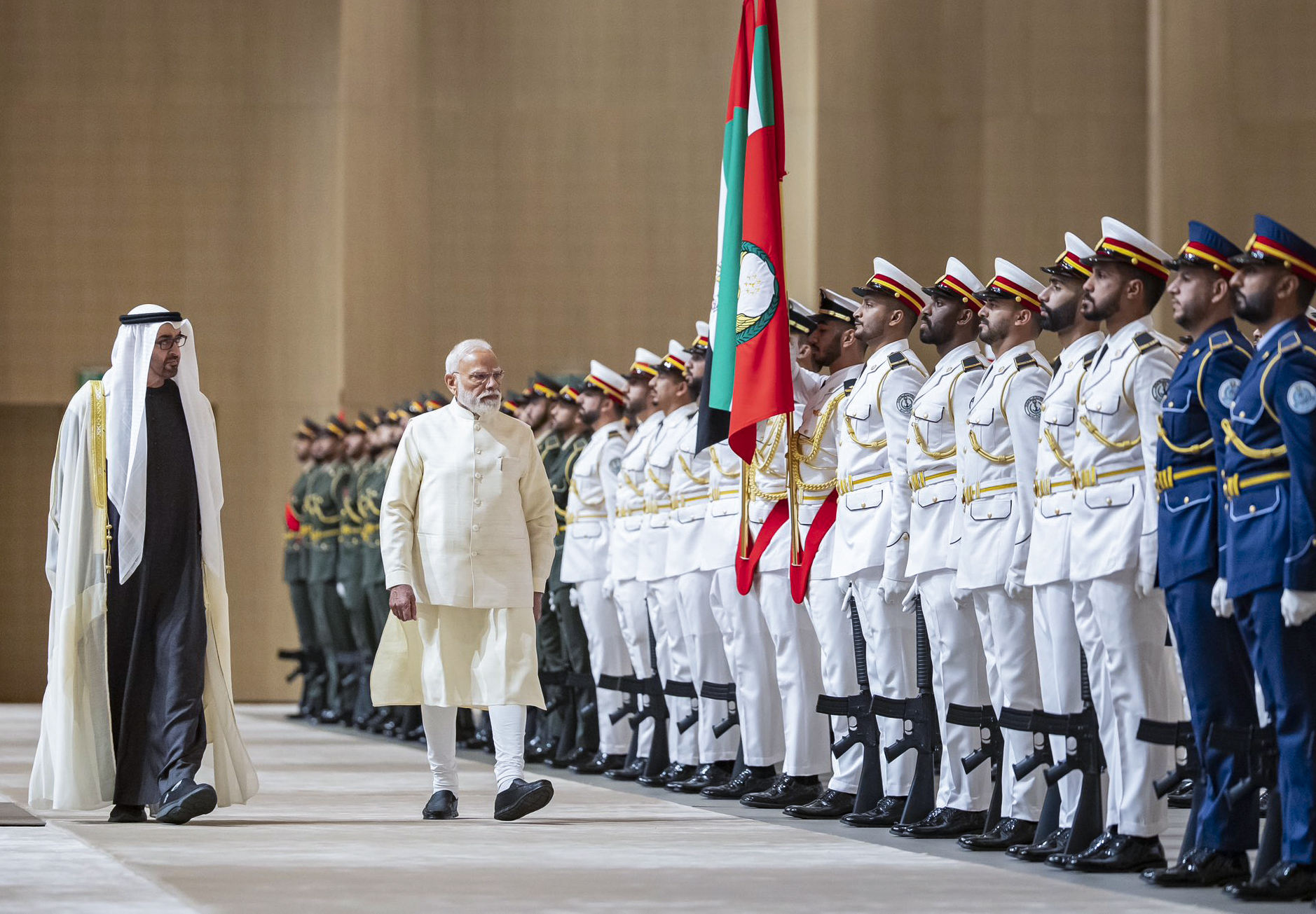
More importantly, Modi’s remarks in Abu Dhabi reflected India’s concern over regional instability. “We strongly condemn the attacks on the UAE. The way the UAE has been targeted is unacceptable in any way,” Modi said during talks with the Emirati leadership. He praised the UAE leadership’s “restraint, courage, and wisdom” during difficult regional circumstances.
India’s outreach to the UAE is deeply tied to energy calculations. The UAE has steadily become one of India’s most dependable energy partners. Beyond crude oil supplies, the relationship now includes strategic petroleum reserves, renewable energy investments, logistics, ports, and defense cooperation. In recent years, India has tried to reduce dependence on any single energy source by strengthening ties simultaneously with Gulf monarchies, Russia, the United States and African producers.
The UAE also represents something larger in India’s geopolitical thinking: a stable Gulf partner capable of acting as a regional anchor at a time when tensions involving Iran threaten wider instability.
Europe as an Economic and Strategic Alternative
If the UAE leg of the tour was about energy and regional security, the European segment is clearly about economic resilience and technological partnerships.
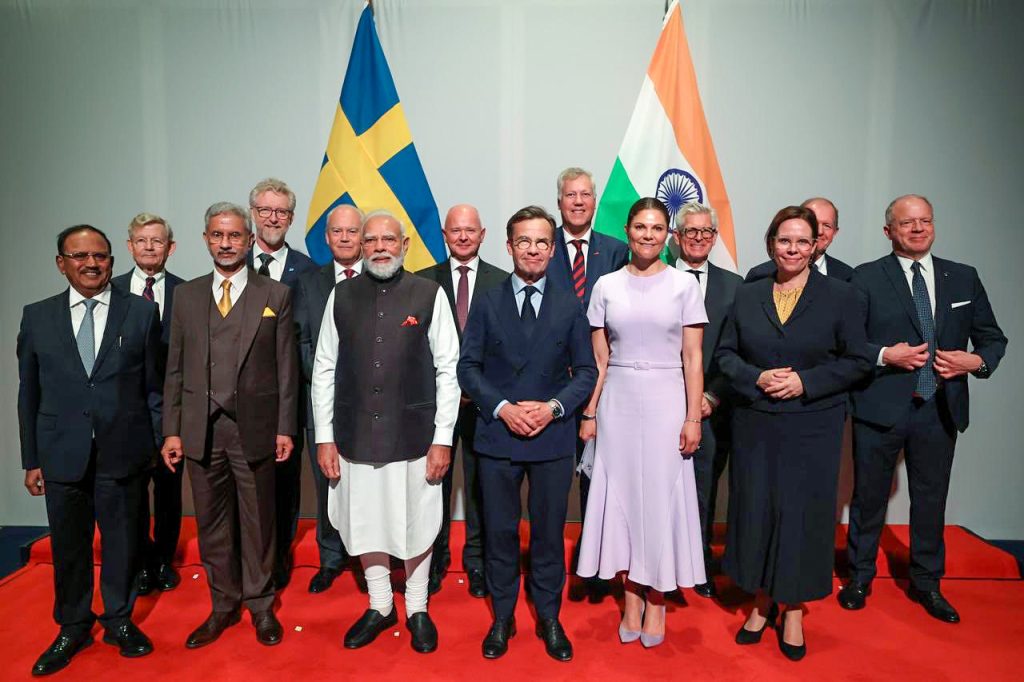
In Sweden, Modi repeatedly highlighted the global uncertainty created by supply-chain disruptions, technological competition and energy insecurity. Addressing the European CEO Round Table organized by Volvo in Gothenburg, he said, “In today’s world marked by uncertainty, where supply chains are under pressure, technological competition is intensifying, and both energy security and climate action face challenges, at such a time, India and Europe can join forces to become strong pillars of stability, sustainability, and shared prosperity.”
This statement captured the essence of India’s current foreign policy approach. New Delhi increasingly sees Europe not merely as a trading partner but as a strategic economic counterweight in an unstable global order. India wants European investment, advanced technology, clean-energy cooperation, and manufacturing partnerships as it attempts to transform itself into a global production hub.
The emphasis on the India-European Union Free Trade Agreement during the visit was especially notable. Modi said there was now a consensus regarding the agreement and both sides were endeavoring to implement it “as soon as possible.” For India, the FTA has gained urgency because global economic fragmentation is accelerating. Protectionism, sanctions, wars and geopolitical rivalry are reshaping trade patterns worldwide.
India’s attempt to attract European capital also comes as many Western companies seek alternatives to overdependence on China. By presenting India as politically stable, economically dynamic and strategically reliable, Modi is attempting to position the country as a central node in emerging global supply chains.
Sweden fits neatly into this strategy. Bilateral trade between India and Sweden reportedly touched USD 7.75 billion in 2025, while cooperation is expanding in artificial intelligence, green transition, startups, defense manufacturing, space technology and climate initiatives.
Modi’s repeated references to India’s startup ecosystem were aimed directly at European investors. “Today, India possesses the world’s third-largest startup ecosystem. Our startups are creating global solutions in AI, Fintech, Space, Drones and Mobility,” he said.
The pitch is clear: India wants capital, technology and innovation partnerships that can accelerate domestic growth while reducing vulnerability to external shocks.
Nordic Countries and Maritime Security
The Norway leg of Modi’s tour reveals another major strategic concern — maritime trade security.
The Iran conflict has reignited fears about shipping disruptions through the Strait of Hormuz. This is why comments made ahead of Modi’s visit by Line Falkenberg Ollestad of the Norwegian Shipowners’ Association are particularly significant. She stressed the importance of India in global maritime stability and openly linked the Middle East crisis to international shipping concerns.
“With the situation in the Middle East, we completely depend on a strong partner like India,” she said, adding that India’s support for international maritime law was crucial “so that ships can start sailing through Hormuz again.”
These remarks underline India’s growing importance in maritime geopolitics. As global trade routes face increasing risks, countries like Norway see India as an indispensable Indo-Pacific partner capable of helping maintain shipping stability.
For India, maritime security is inseparable from energy security. Any disruption in shipping routes affects oil imports, exports, manufacturing and inflation simultaneously. Strengthening cooperation with maritime nations such as Norway therefore serves both economic and strategic objectives.
The India-Nordic Summit in Oslo also reflects India’s broader northern Europe strategy. Nordic countries offer expertise in green shipping, clean technology, renewable energy and sustainability — sectors that India considers essential for long-term economic transformation.
Norway’s sovereign wealth fund, one of the world’s largest investment funds, has already invested nearly USD 28 billion in Indian capital markets. India hopes such investments will expand further into infrastructure, renewable energy and advanced manufacturing.
The summit additionally offers India access to cutting-edge environmental technologies at a time when climate pressures and energy insecurity are converging globally.
Water, Infrastructure and Strategic Technology
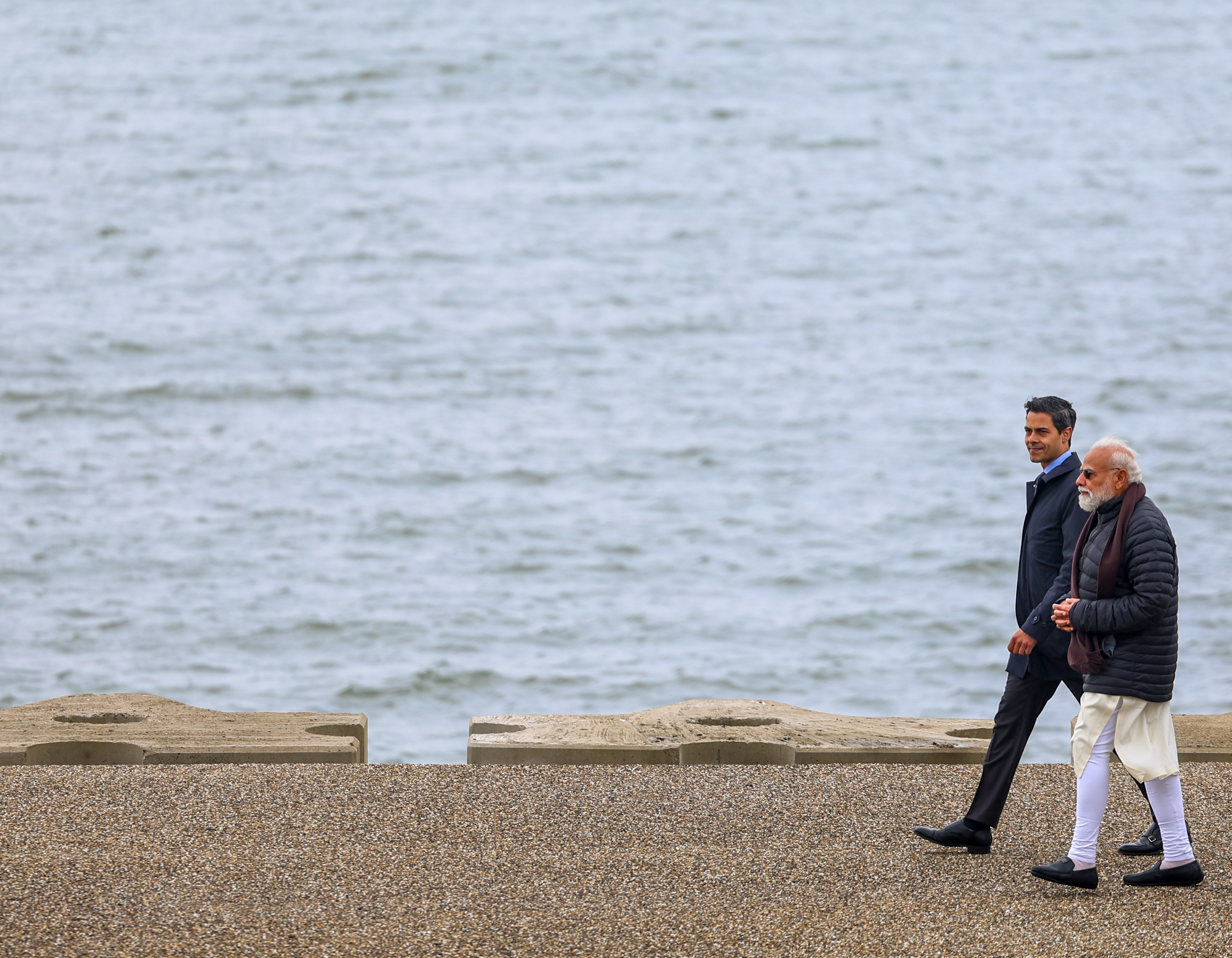
Another important aspect of the tour was Modi’s visit to the Netherlands, where India signed a Letter of Intent on technical cooperation for Gujarat’s ambitious Kalpasar Project.
At first glance, the agreement may appear primarily developmental. However, it also reflects India’s increasing focus on infrastructure resilience amid climate and economic uncertainty.
The Kalpasar Project aims to create a massive freshwater reservoir while integrating renewable energy, transportation and irrigation infrastructure. The cooperation with Dutch experts is significant because the Netherlands possesses globally recognized expertise in water management and marine engineering.
In an era where climate change increasingly threatens agriculture, urban infrastructure and industrial production, water security is becoming an economic security issue. India’s engagement with Dutch expertise therefore fits within the larger framework of building long-term resilience.
The project also demonstrates Modi’s effort to combine foreign diplomacy with domestic developmental ambitions. By linking international partnerships to major infrastructure projects at home, the government attempts to showcase diplomacy as directly beneficial to India’s economic future.
Strategic Balancing in a Polarized World
Modi’s five-country outreach also reflects India’s continuing attempt to balance relations across competing geopolitical camps.
India maintains ties with the Gulf monarchies while preserving relations with Iran. It strengthens partnerships with Europe while maintaining strategic autonomy. It seeks Western investments without fully aligning itself with Western geopolitical positions.
This balancing act has become more difficult as global tensions deepen. The Iran conflict, continuing instability in West Asia, the Ukraine war, US-China rivalry, and disruptions in global trade are forcing countries to make harder strategic choices.
India, however, continues to resist bloc politics. Instead, New Delhi is positioning itself as a bridge power — a country capable of maintaining relations with multiple competing centers of power simultaneously.
The tour reinforces this image. In the UAE, the emphasis was on regional stability and defense cooperation. In Sweden and Norway, the focus shifted toward innovation, green technology, supply chains and economic partnerships. In the Netherlands, infrastructure and water management dominated discussions.
Together, these engagements reflect a multidimensional foreign policy aimed at securing India’s long-term economic rise despite growing global instability.
Domestic Pressures Behind the Diplomacy
The urgency behind Modi’s diplomatic outreach is also driven by domestic economic pressures.
The Iran conflict threatens to push up global oil prices at a time when India is trying to maintain growth momentum while controlling inflation. Higher energy costs directly affect transportation, manufacturing, fertilizers and household consumption.
At the same time, India’s ambitions of becoming a manufacturing and technology hub require enormous foreign investment, secure supply chains and stable energy access.
This explains why Modi’s speeches throughout the tour repeatedly highlighted themes such as “stability,” “shared prosperity,” “resilient supply chains,” and “sustainability.”
India is trying to reassure global investors that despite international uncertainty; it remains a dependable destination for long-term economic partnerships.
The government also understands that India’s domestic political stability is closely linked to economic performance. Sustained inflation or energy disruptions could create public discontent. Diversifying partnerships and ensuring stable imports therefore becomes both a foreign policy and political necessity.
A Diplomacy Built Around Economic Survival
Ultimately, Modi’s five-country tour reflects the transformation of Indian diplomacy itself. Foreign policy is no longer driven solely by ideological positioning or traditional strategic concerns. Increasingly, it is shaped by the practical needs of economic survival and long-term development.
The Iran conflict has accelerated this transition. It has reminded India that energy dependence remains one of its greatest vulnerabilities. It has also reinforced the importance of diversified partnerships spanning the Gulf, Europe and the wider Indo-Pacific.
From Abu Dhabi’s defense agreements to Sweden’s technology partnerships, from Norway’s maritime cooperation to Dutch water-management expertise, every stop on the tour contributes to a larger strategic objective: insulating India from the shocks of an increasingly unstable world while sustaining its economic ascent.
As wars, sanctions and geopolitical rivalries reshape global politics, India is attempting to position itself not merely as a rising power but as a stabilizing one — a country capable of building partnerships across regions while protecting its own developmental ambitions.
Modi’s diplomatic marathon therefore is not simply about optics or ceremonial honors. It is about securing energy, trade, technology and investment at a time when the world economy is entering one of its most uncertain phases in decades.