








Our Bureau
New York, NY
In a bold challenge to centuries of British colonial history, New York City Mayor Zohran Mamdani on Wednesday signalled that any potential audience with King Charles III would be far from a mere formality.
At a press conference, when pressed on what his message would be to the King, he skipped the pleasantries of statecraft to address one of the most contentious artefacts in the world: the Kohinoor diamond.
Mamdani was unequivocal, “If I were to speak to the king… I would probably encourage him to return the Kohinoor diamond.”
Notably, Mamdani’s mother, Mira Nair, was born in India and moved to the US for college. She later lived in Uganda with Mahmood Mamdani, the mayor’s father.
While mayoral interactions with the British Crown are typically defined by rigid protocol and “soft diplomacy,” Mamdani’s remarks have injected a dose of historical reckoning into the public discourse.
Meanwhile, UK’s King Charles III and Queen Camilla on Wednesday paid tribute to the victims of the September 11 attacks, visiting the 9/11 Memorial in New York during their ongoing state visit to the United States.
In a post on X, the Royal Family said, “In New York today, the King and Queen have paid their respects at the 9/11 Memorial. During their time at the site, Their Majesties honoured the lives that were lost during the attacks, and recognised the courage of the men and women involved in the rescue efforts. This year marks the 25th anniversary of the attacks.”
The royal couple visited the memorial site for the first time, marking a solemn moment as the world approaches the 25th anniversary of the attacks that claimed nearly 3,000 lives, including 67 British citizens. The King and Queen laid a bouquet of white roses beside the reflecting pools, which now stand in place of the former World Trade Centre towers.
During his Tuesday address to a joint meeting of Congress, Charles acknowledged the upcoming 25th anniversary of Sept. 11. Nearly 3,000 individuals were killed in the attacks, including 67 British citizens.
The Kohinoor (meaning “Mountain of Light”) is not just a gemstone; it is a symbol of both immense cultural pride and the deep scars of imperialism.
Mined in the Kollur Mine of India, the diamond weighed a staggering 186 carats (before being recut) and passed through the hands of various Indian dynasties, including the Mughals and the Sikhs.
In 1849, following the Second Anglo-Sikh War, the British East India Company forced the 10-year-old Maharaja Duleep Singh to sign the Treaty of Lahore, which ceded the diamond to Queen Victoria.
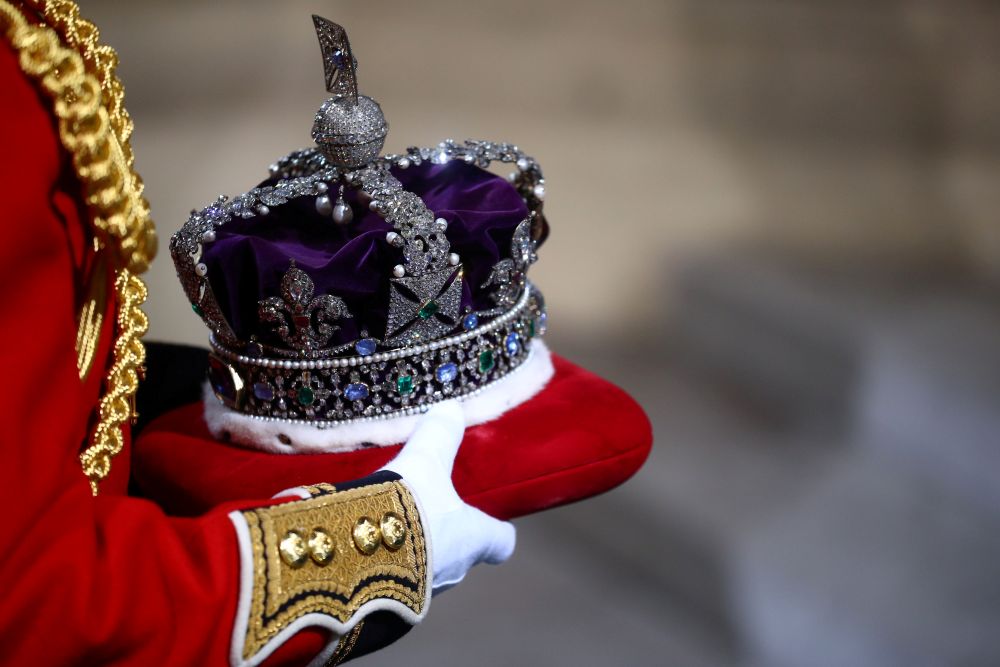
Today, the 105.6-carat diamond is set in the Crown of Queen Elizabeth the Queen Mother, housed safely behind reinforced glass in the Tower of London.
For India, the Kohinoor is the “ultimate unreturned asset.” Mamdani’s comments resonate with a billion-strong population that views the diamond as a looted treasure rather than a legal gift.
Many Indians view the diamond’s presence in London as a lingering reminder of the colonial “drain of wealth.”
The UK government has historically maintained that the diamond was obtained via a legal treaty, while Indian historians argue that a treaty signed by a child-king under duress has no moral or legal standing.
Mamdani’s call joins a chorus of voices from Greece (the Elgin Marbles) and Africa (the Benin Bronzes) demanding that Western museums and monarchies return items that define their national histories.
By centring the Kohinoor in his potential dialogue with King Charles, Mayor Mamdani has reframed a standard political meeting as a forum for historical justice, ensuring that while the diamond may be in London, its heart–and the conversation surrounding it–remains firmly rooted in India.