








Archan Mehta

The 2026 Indian Premier League season has served as a definitive case study in the ongoing metamorphosis of the wicketkeeper’s role. No longer a specialized niche reserved for the purist, the position has evolved into a high-stakes dual discipline where tactical glovework must now coexist with explosive batting intent. This shift has created a fascinating dichotomy in the league’s player profiles, ranging from the traditional “keeper-batsman” to the modern “batting-specialist who keeps,” reflecting a strategic pivot in how franchises value on-field balance in an increasingly data-driven environment.
At the apex of this evolution sits Dhruv Jurel, who has distinguished himself as the season’s premier all-round force. Jurel’s statistics offer a masterclass in efficiency; his 13 dismissals across eight innings equate to a league-leading rate of 1.625 per match, a figure that highlights a level of concentration and technical prowess rarely seen in the frantic T20 format. Unlike many of his contemporaries who sacrifice one discipline for the other, Jurel has maintained a formidable presence at the crease, amassing 232 runs at a strike rate of 163.38. By combining three half-centuries with flawless technical keeping, he has set a benchmark for the “complete” modern cricketer, proving that one need not compromise the gloves to satisfy the scorecard.
The established guard, represented by the likes of Jos Buttler and Jitesh Sharma, continues to offer stability, albeit with varying degrees of offensive impact. Buttler remains a model of consistency for Rajasthan, pairing 10 dismissals with a robust 270 runs at a strike rate of 151.68, reinforcing the value of the veteran anchor. Conversely, Jitesh Sharma has emerged as a glove-first asset for Royal Challengers Bengaluru; while matching Buttler’s 10 dismissals, his modest return of 62 runs at a strike rate of 116.98 suggests a tactical deployment centered on lower-order finishing rather than top-order accumulation. This disparity highlights the different philosophies teams employ: some seeking a secondary opener, others a reliable set of hands to support a pace-heavy attack.
Perhaps the most significant trend of 2026 is the dominance of the “batting-wicketkeeper,” where pure run-scoring often compensates for a quieter presence behind the stumps. KL Rahul epitomizes this shift; as the engine room of the Delhi Capitals’ offense, he has plundered 358 runs at a strike rate of 185.49. While his tally of just two dismissals is statistically lean, his heavy scoring—highlighted by a masterful century—renders the trade-off a strategic masterstroke for a side reliant on his leadership at the top. Ishan Kishan follows a similar trajectory, boasting a blistering strike rate of 198.72. Though his keeping duties remain secondary to his role as a power-play aggressor, his ability to take the game away from the opposition in the first six overs justifies his inclusion regardless of his dismissal count.
Sanju Samson’s tenure at Chennai Super Kings further underscores this prioritization of batting volume over traditional keeping metrics. With 304 runs and two centuries at a strike rate of 169.83, Samson has been a cornerstone of the CSK lineup, even as his keeping returns remain modest at four dismissals in eight games. This suggests a league-wide acceptance that, in the modern T20 era, a keeper’s primary “save” might actually be the runs they prevent the opposition from chasing by exerting scoreboard pressure during their own batting innings.
In contrast, Rishabh Pant maintains a more traditional equilibrium, providing a steady hand with eight dismissals while contributing 189 runs. While not as explosive as Rahul or Kishan this season, Pant provides the tactical glue that allows for a balanced XI. Meanwhile, aggressive profiles like Prabhsimran Singh continue to lean into high-risk, high-reward roles; Singh’s 192.61 strike rate highlights the value of the keeper as a middle-order disruptor. Even shorter stints, such as Quinton de Kock’s efficient three-match appearance featuring a century and three dismissals, prove that class remains permanent, regardless of the sample size or the specific tactical demands of the franchise.
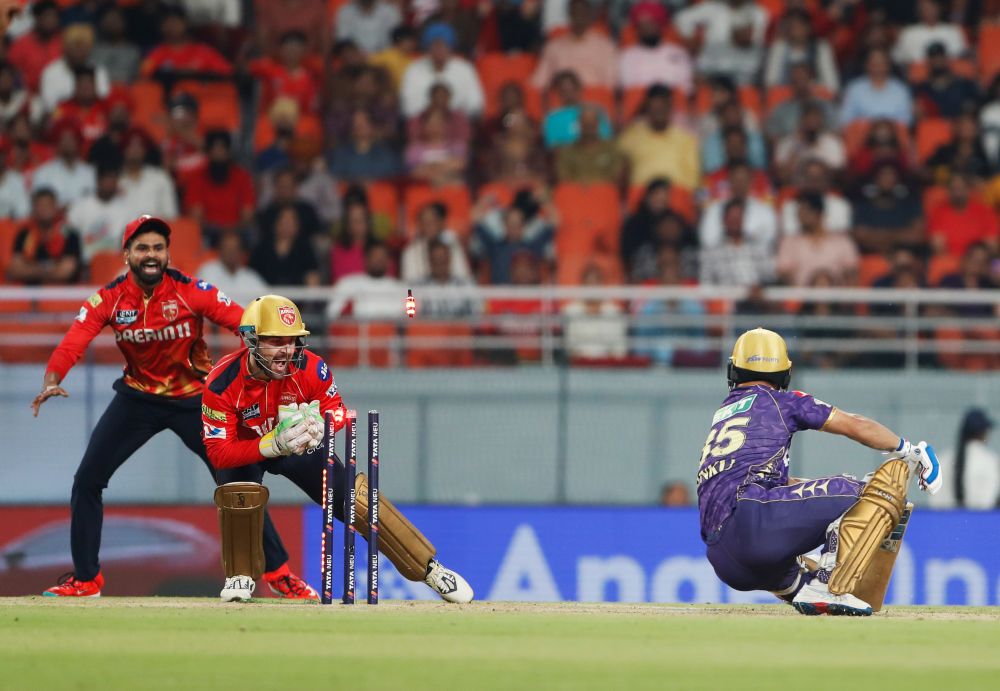
A nuanced technical observation of the 2026 season is the notable scarcity of stumpings, a phenomenon that is less a reflection of waning skill and more a byproduct of prevailing bowling trends. With an increased reliance on high-velocity seamers during the middle overs and spinners bowling flatter, defensive trajectories, keepers are finding fewer opportunities to effect dismissals outside the crease. Consequently, clean catching and positional awareness have surpassed stumping flair as the primary metrics of success. This shift underscores the reality that while the role has expanded at the crease, the fundamental requirement for precision behind the stumps remains as unforgiving as ever.
Ultimately, IPL 2026 confirms that the wicketkeeper is no longer just a fielder who bats, but a multi-dimensional specialist whose value is calculated through a complex lens of strike rates and dismissal percentages. While the league is currently enamored with the batting exploits of Rahul and Samson, it is Dhruv Jurel who best embodies the modern ideal. He proves that the highest value in the contemporary game lies in the rare ability to dominate the scorecard without ever letting the standard slip behind the stumps, successfully bridging the gap between the specialist past and the explosive future of the sport.
Archan Mehta is a writer dedicated to telling compelling stories about athletes, teams, and the world of cricket