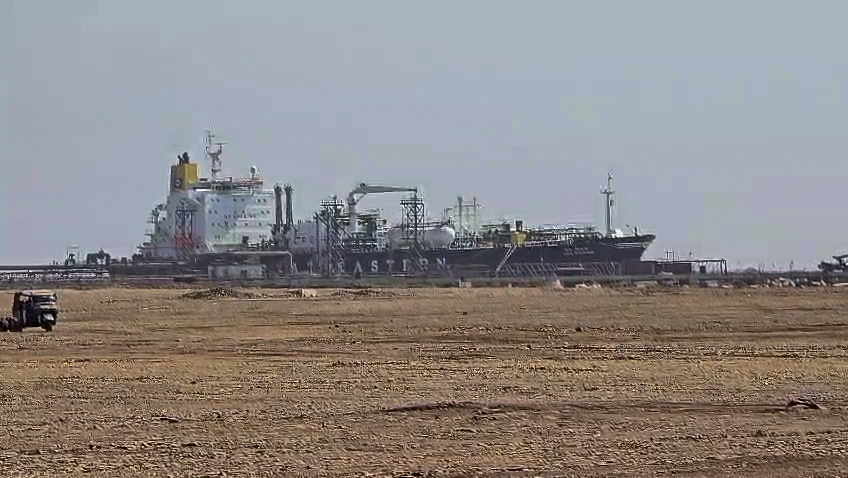


As conflict in West Asia and uncertainty over Russian oil supplies grow, India is accelerating efforts to diversify its energy sources from countries like Venezuela
Our Bureau
New Delhi /
India’s energy diplomacy is entering a new phase. Faced with a prolonged conflict involving Iran, growing instability in the Gulf region, and signals from Washington that it may once again tighten restrictions on Russian oil exports, New Delhi is moving aggressively to diversify its sources of crude oil and secure long-term energy supplies.
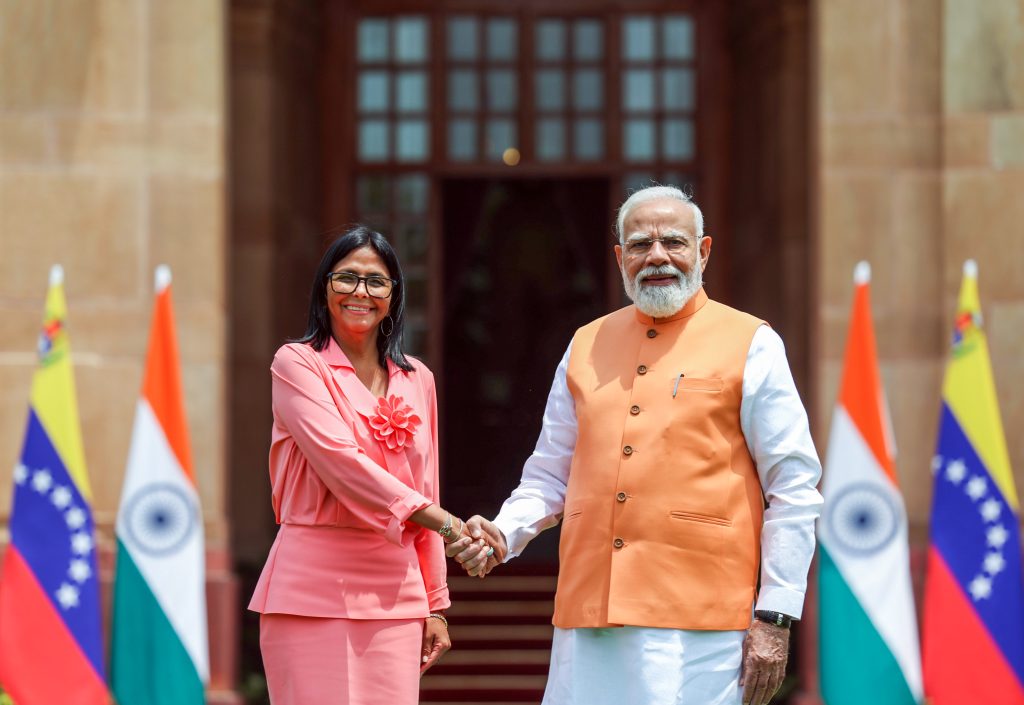
Recent discussions between Prime Minister Narendra Modi and Venezuelan Acting President Delcy Rodriguez underline the urgency with which India is approaching the issue. What was once a largely commercial relationship is now evolving into a strategic energy partnership, reflecting broader concerns about supply disruptions, geopolitical uncertainty and the country’s growing energy needs.
India remains the world’s third-largest oil consumer and imports more than 85 per cent of its crude requirements. As the economy continues to expand and industrial activity grows, energy demand is expected to rise steadily over the coming decades. Ensuring reliable and affordable supplies has therefore become a central pillar of India’s foreign and economic policy.
The immediate challenge comes from the continuing conflict in West Asia. Although Indian authorities have repeatedly stressed that fuel supplies remain uninterrupted, policymakers are acutely aware of the risks posed by instability in a region that supplies a significant portion of India’s energy imports.
The Strait of Hormuz remains a particular concern. A substantial share of India’s crude oil and liquefied petroleum gas imports passes through this narrow maritime corridor. Any disruption to shipping routes could have serious consequences for energy prices and supply chains.
Officials from the Ministry of Ports, Shipping and Waterways recently confirmed that Indian ships and seafarers operating in the region remain safe and that maritime operations continue normally. Yet the very need for constant monitoring highlights the strategic vulnerability created by India’s dependence on Gulf energy supplies.
It is this uncertainty that has pushed New Delhi to search for alternatives.
Venezuela has emerged as one of the most promising options. According to the Ministry of External Affairs, the South American nation has already become India’s third-largest source of crude oil supplies in recent months.
During Delcy Rodriguez’s visit to India, energy cooperation dominated discussions. MEA Secretary (East) Rudrendra Tandon described the relationship as a “perfect complementarity” between a country with vast energy reserves and a rapidly growing economy seeking reliable supplies.
“Venezuela has already emerged as the third largest supplier this month,” Tandon noted, adding that India is seen as a stable and long-term customer.
The significance of the relationship extends beyond simple oil purchases. Both sides discussed opportunities for Indian participation in Venezuela’s energy sector, including upstream exploration and downstream refining activities. Such investments could provide India with greater control over supply chains while helping Venezuela attract foreign capital and technology.
The timing of these discussions is particularly significant because of growing uncertainty surrounding Russian oil.
Since the outbreak of the Ukraine conflict, India has emerged as one of the largest buyers of discounted Russian crude. Those purchases have helped India contain inflationary pressures and maintain stable fuel supplies despite global volatility.
However, recent comments from US Secretary of State Marco Rubio have raised questions about the future availability of Russian oil in global markets. Rubio indicated that Washington would prefer to end existing waivers allowing access to Russian crude “as soon as possible.”
Although the final decision rests with the US Treasury Department, the statement signals a potential tightening of sanctions policy.
Temporary exemptions have so far allowed certain countries access to Russian oil in order to stabilise global markets and prevent supply shortages. Yet if those waivers are removed, India could face a more complicated energy environment.
The prospect of renewed restrictions explains why New Delhi is looking beyond traditional suppliers and exploring new partnerships in Latin America, Africa and other regions.
The United States remains the single most important external influence on Venezuela’s oil industry. Years of sanctions sharply reduced Venezuelan production and exports, while recent easing of restrictions has helped revive output and attract foreign investment. Washington now has significant leverage because access to global markets, financing, shipping and energy technology largely depends on US policy decisions. Recent US measures have allowed broader transactions with Venezuela’s state oil company PDVSA and encouraged exports to countries such as India and the US itself. However, any future tightening of sanctions could quickly affect Venezuelan production, exports and investment flows.
For India, this means Venezuelan oil remains available largely because current US policy permits it, making Washington a key factor in New Delhi’s energy calculations
India’s relationship with Iranian oil has been shaped by a combination of energy needs and geopolitical constraints. Before US sanctions were reimposed in 2019, Iran was among India’s top crude suppliers, offering attractive terms such as discounted freight, extended credit periods and refinery-compatible crude grades. India halted imports in May 2019 under pressure from US sanctions, forcing refiners to diversify supplies.
However, the recent West Asia conflict and disruptions around the Strait of Hormuz prompted India to resume limited purchases of Iranian crude for the first time in seven years after temporary US sanctions relief. The government confirmed that refiners had secured Iranian oil without payment hurdles as part of efforts to protect energy security. Even so, future imports will depend on sanctions policy, commercial viability and regional stability.
India’s energy diversification strategy is not limited to securing additional crude oil imports. Policymakers are also seeking to reduce overall dependence on imported fossil fuels through alternative energy initiatives.
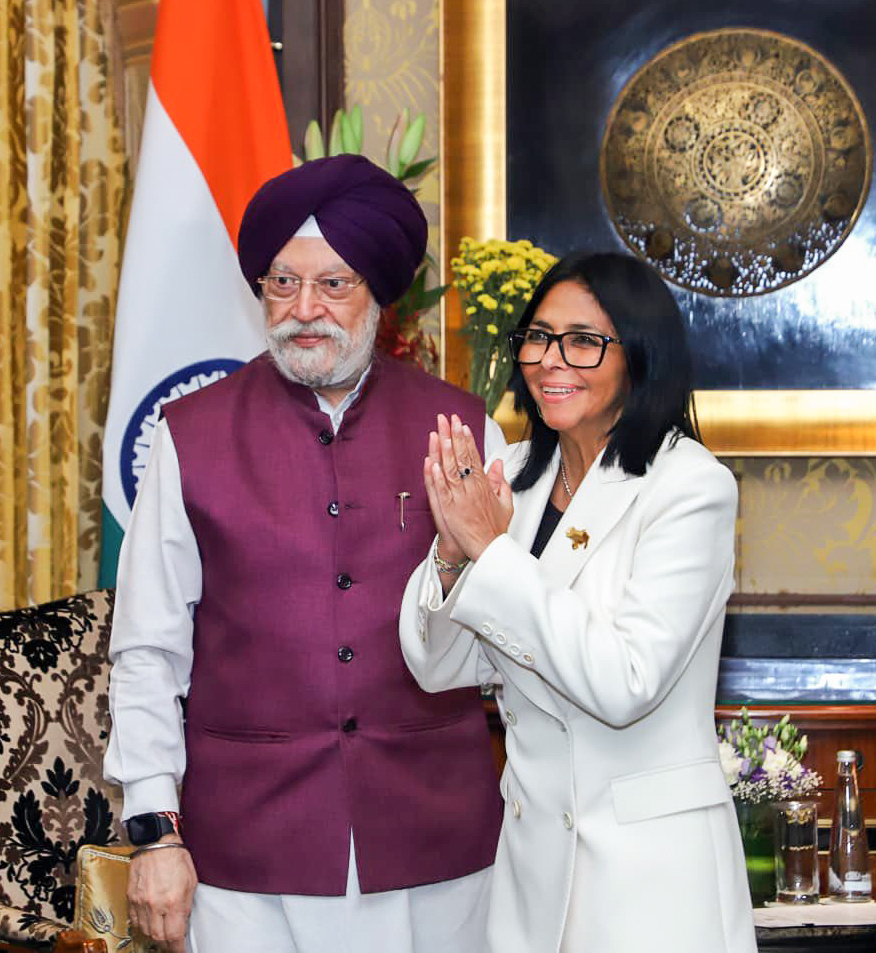
Union Petroleum Minister Hardeep Singh Puri recently announced the rollout of around 5,200 ethanol dispensing stations across major urban centres including Delhi-NCR, Mumbai, Pune and Nagpur. The move is intended to support the adoption of flex-fuel vehicles capable of operating on higher ethanol blends.
The government believes that widespread adoption of flex-fuel technology could significantly increase ethanol consumption and reduce reliance on imported petroleum products.
Puri has also linked the policy to agricultural transformation, arguing that greater ethanol production can encourage farmers to shift towards less water-intensive crops such as maize.
These efforts form part of a broader strategy aimed at improving energy security through diversification not only of suppliers but also of fuel sources.
At the same time, India is expanding its international energy diplomacy. Venezuela’s vast reserves of oil are attracting attention, but discussions during Rodriguez’s visit also covered critical minerals, mining, technology and industrial cooperation.
The South American country possesses substantial deposits of gold, diamonds and other strategic resources that are increasingly important for modern manufacturing and clean-energy technologies. Access to such resources could help India secure supply chains for emerging industries while deepening economic ties with resource-rich nations.
The growing engagement with Venezuela also reflects a larger geopolitical trend. As traditional energy markets become more volatile, India is broadening its diplomatic outreach to countries across Latin America, Africa and the Global South.
Prime Minister Modi highlighted this dimension during his meeting with Rodriguez, describing cooperation between India and Venezuela as important not only for bilateral relations but also for the interests of the Global South.
Ultimately, India’s energy challenge is becoming more complex. The country must simultaneously manage geopolitical risks in West Asia, prepare for potential changes in sanctions on Russian oil, secure affordable supplies for a growing economy and accelerate the transition towards alternative fuels.
The search for new suppliers such as Venezuela is therefore not a temporary response to current events but part of a longer-term strategy. As global energy markets become increasingly shaped by conflicts, sanctions and strategic competition, diversification has become the cornerstone of India’s energy security policy.
For New Delhi, the lesson of recent years is clear: dependence on a limited number of suppliers carries risks that can no longer be ignored. Whether through partnerships with Venezuela, investments in alternative fuels or broader diplomatic outreach, India is seeking to ensure that future economic growth is not held hostage to geopolitical shocks.
The success of that strategy could play a decisive role in determining the country’s economic resilience in an increasingly uncertain world.