








Our Bureau
New Delhi
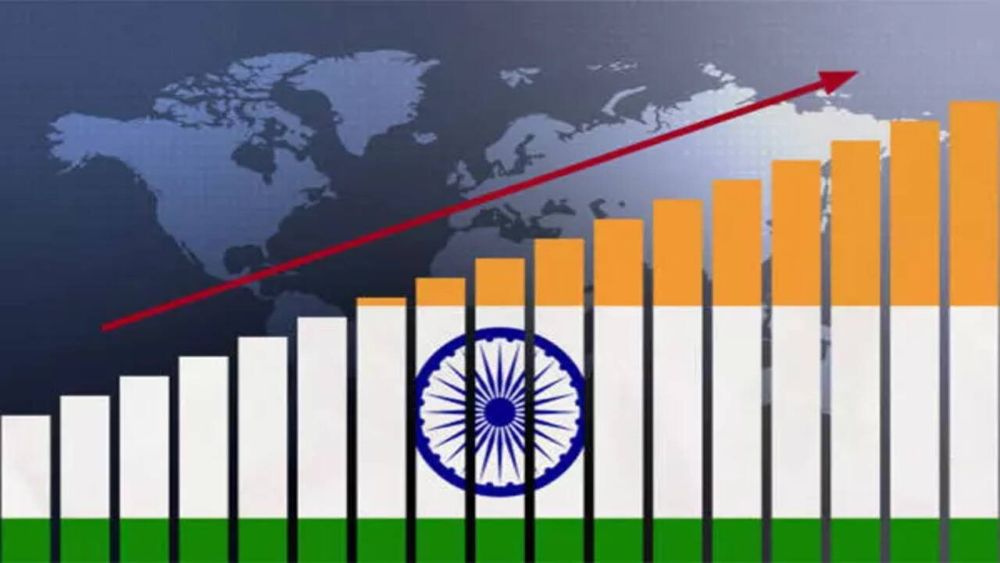
India’s economy grew by 7.7% in the financial year 2025-26, marking its fastest annual expansion in two years and exceeding earlier expectations, according to official data released on Friday. Growth in the January-March quarter stood at 7.8%, underscoring the economy’s resilience despite global uncertainties and geopolitical tensions.
Data released by the Ministry of Statistics and Programme Implementation (MoSPI) showed that real Gross Domestic Product (GDP) at constant prices reached an estimated ₹323.12 lakh crore in FY26, compared with ₹299.89 lakh crore in the previous year. Nominal GDP, measured at current prices, rose to ₹346.36 lakh crore, registering growth of 8.9%.
The FY26 growth rate improved from 7.1% recorded in FY25 and came in slightly above the government’s earlier estimate of 7.6%. Economists attributed the stronger-than-expected performance to robust private investment, healthy agricultural output, construction activity and sustained rural demand.
Prime Minister Narendra Modi welcomed the figures, describing them as the result of economic reforms and the efforts of “140 crore Indians.” The latest numbers reinforce India’s position as one of the world’s fastest-growing major economies.
However, economists cautioned that challenges remain. Rising energy prices, inflationary pressures and geopolitical risks could weigh on growth in the coming fiscal year. The Reserve Bank of India has projected GDP growth of 6.6% for FY27 while raising its inflation forecast to 5.1%, reflecting concerns over global volatility and weather-related disruptions.
Despite these headwinds, the latest GDP data highlights the Indian economy’s ability to maintain strong momentum, supported by investment activity, infrastructure spending and resilient domestic demand.