








Our Bureau
New York, NY
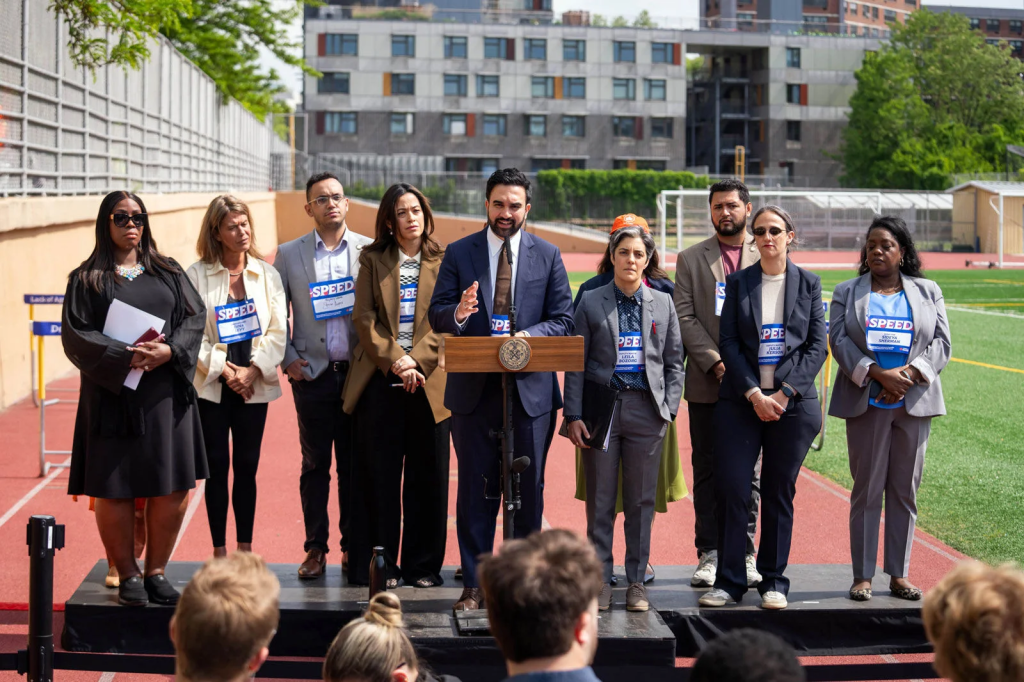
Mayor Zohran Kwame Mamdani, alongside Deputy Mayors Leila Bozorg and Julia Kerson, have released the Streamlining Procedures to Expedite Equitable Development (SPEED) report, a sweeping package of reforms designed to accelerate the delivery of affordable housing across New York City by cutting bureaucratic delays across every stage of development.
The initiative targets environmental review, permitting, construction approvals, and housing lottery lease-up processes, with officials projecting reductions of up to eight months for standard affordable housing projects and as much as two years for developments requiring zoning changes. The administration says the reforms are intended to address long-standing procedural bottlenecks that have slowed housing production in one of the world’s most expensive cities.
“These delays are not inevitable. They are the result of broken systems and a failure of political will,” Mayor Mamdani said. “New Yorkers cannot afford to wait years for affordable housing while projects sit trapped in bureaucracy. SPEED is about making government deliver — faster, fairer and at the scale this crisis demands.”
Deputy Mayor for Housing and Planning Leila Bozorg said the reforms are designed to match urgency with execution. “We will cut months or even years off the affordable housing development timeline — months that New Yorkers can spend in permanent housing instead of instability,” she said, crediting the SPEED Task Force and interagency collaboration.
Deputy Mayor for Operations Julia Kerson said the initiative reflects a broader effort to modernize city government. “Whether overhauling permitting through SPEED or pursuing Alternative Delivery contracting, we’re slashing project timelines in half,” she said, adding that faster delivery would translate directly into more housing access across all five boroughs.
Under the plan, the administration will overhaul four key stages of housing development: environmental review and planning, pre-development and financing, permitting and approvals, and marketing and lease-up. A central reform reduces the “pre-certification” phase for zoning-related projects from roughly two years to six months, while permitting timelines for new construction and office-to-residential conversions will be shortened by about five months.
The Department of City Planning said the changes modernize outdated processes. Director Sideya Sherman said reducing pre-certification timelines will allow projects to move from planning to construction more efficiently while maintaining rigorous review standards.
Housing Preservation and Development Commissioner Dina Levy said the reforms will also transform the city’s Housing Connect lottery system, cutting application-to-approval times to under 100 days. “Together with permitting and development changes, we’re cutting eight months off the timeline from inception to move-in day,” she said.
Buildings Commissioner Ahmed Tigani described the initiative as a “comprehensive blueprint” to unlock faster and safer housing construction, while emphasizing that New York must remain competitive for developers seeking to build in the city.
The reforms also include a full overhaul of the lease-up process. The administration aims to reduce the time between construction completion and tenant move-in from 210 days to under 100 days, addressing what officials described as a critical but often overlooked stage of housing delivery.
Department of Social Services Commissioner Erin Dalton said the initiative reduces administrative burden while prioritizing vulnerable New Yorkers. “We are cutting red tape and expediting connections to deeply affordable housing,” she said.
The SPEED report was developed by a task force established on Mayor Mamdani’s first day in office. The group held consultations with more than 100 industry experts and stakeholders and reviewed over 500 recommendations from developers, advocates, and trade organizations. Officials emphasized that the reforms do not require legislative approval and can be implemented directly through executive authority.
Additional housing initiatives — including the Expedited Land Use Review Procedure (ELURP) and the Neighborhood Builders Fast Track program — complement SPEED and are expected to further reduce pre-development timelines by more than two years when combined.
City officials also highlighted agency-specific reforms. Transportation Commissioner Mike Flynn said environmental review processes must be updated to reflect modern urban mobility needs, while Parks Commissioner Tricia Shimamura noted improvements in coordination for projects involving green space and tree management.
City Comptroller Mark Levine called the reforms a necessary step in addressing the city’s housing shortage, noting that SPEED aligns with broader financing and charter reforms aimed at increasing supply.
Support from local leaders was broad. Queens Borough President Donovan Richards Jr. said speeding up housing delivery is essential to addressing affordability across all income levels. City Council Majority Leader Shaun Abreu said the initiative would help families access housing faster, while Council Member Justin E. Sanchez said the reforms remove unnecessary bureaucratic barriers that have slowed development for years.
Housing policy experts and advocacy groups also welcomed the changes. Pascale Leone of the Supportive Housing Network of New York said the recommendations reflect extensive stakeholder engagement and will help accelerate supportive housing delivery. Annemarie Gray of Open New York said reducing delays at every stage of development is critical to addressing the scale of the crisis.