








Archan Mehta
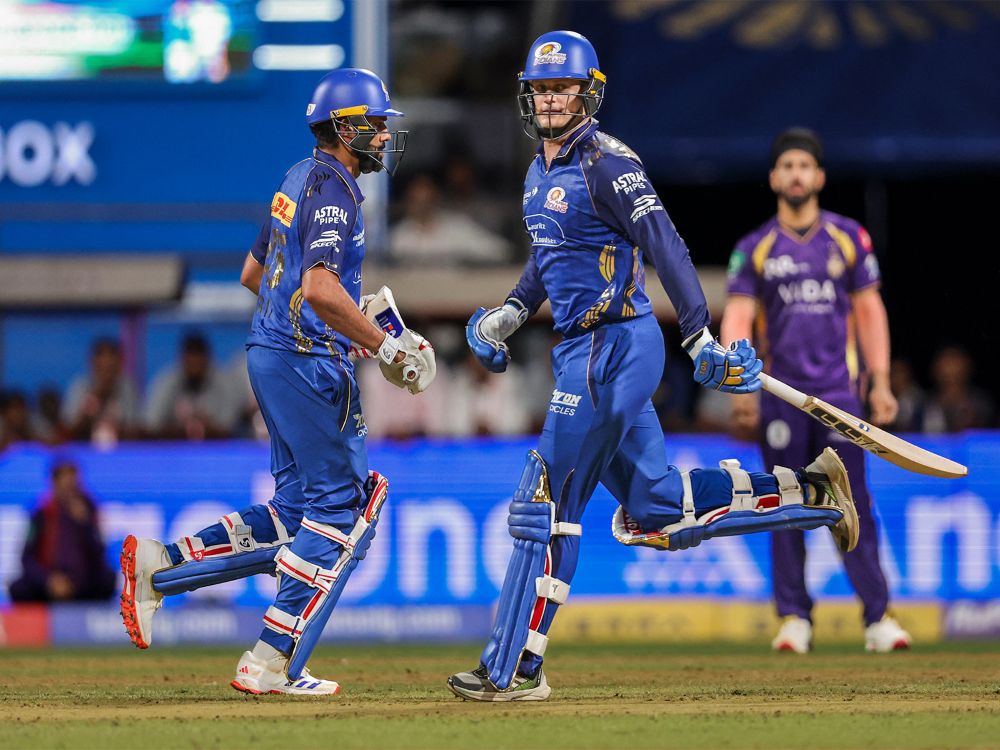
The grand old arenas of Wankhede, Chepauk, and Eden Gardens are no strangers to drama but in IPL 2026, they echo with something far more unfamiliar, the decline.
For nearly two decades, the triumvirate of Mumbai Indians, Chennai Super Kings, and Kolkata Knight Riders shaped the very identity of the Indian Premier League. Titles, rivalries, and iconic moments flowed through these franchises. Yet, midway through the 2026 season, that aura has dimmed dramatically. All three now find themselves languishing near the bottom of the points table, signaling not just a dip in form, but a deeper, systemic inability to keep pace with the league’s evolution.
The numbers offer a blunt assessment. Kolkata sit winless, rooted to the bottom with a campaign unraveling faster than anticipated. Mumbai, historically the most successful franchise, have scraped together just a single win. Chennai, though marginally ahead, remain trapped in the lower half with a negative net run rate that reflects their inconsistency. Combined, these three giants; who once accounted for the majority of IPL titles; are now locked in an unfamiliar contest: survival rather than supremacy.
At the core of this upheaval lies a transformation in T20 batting philosophy. The modern IPL innings no longer unfolds in phases; it explodes from ball one. Powerplay scoring rates have skyrocketed, with teams aggressively targeting totals that once seemed excessive. Sides like Royal Challengers Bengaluru have redefined intent, stacking runs at a pace that leaves little room for consolidation. In contrast, traditional anchors such as Ajinkya Rahane and Ruturaj Gaikwad have struggled to adapt, often slowing the middle overs in a format that now punishes hesitation.
Tactical rigidity has further exposed these teams. The Impact Player rule; designed to reward flexibility; has instead highlighted strategic gaps. While some franchises have mastered substitutions to tilt games in their favor, Kolkata have faltered, often making changes that yield little advantage. The lack of clarity extends to roles within the XI, where players have been shuffled without defined responsibilities, resulting in a side that appears fragmented rather than cohesive.
Leadership transitions have only intensified the instability. The departure of iconic figures like MS Dhoni, Rohit Sharma, and Gautam Gambhir from central leadership roles has left a vacuum that is yet to be convincingly filled. Mumbai’s shift to Hardik Pandya has been particularly turbulent, with on-field decisions and team dynamics drawing scrutiny. From mismanaging Jasprit Bumrah’s overs to bowling spin at both ends on a flat Wankhede deck, Pandya’s tactical “cardinal sins” have mirrored a dressing room that appears fractured and lacking the psychological resilience of years past. The calm assurance that once defined these sides has given way to visible uncertainty, both tactically and emotionally.
Injuries have compounded the decline. Chennai’s bowling unit, once a hallmark of discipline, has been severely weakened by the absence of key pacers. Without experienced heads to close out innings, their death bowling has unraveled under pressure. Similarly, Mumbai’s reliance on a few marquee names has exposed a lack of depth, especially when performances dip or key players endure lean patches.
And yet, the story is not entirely devoid of hope. Individual brilliance continues to flicker; young players stepping up, veterans showing glimpses of form; but these moments have remained isolated rather than transformative. The challenge for these franchises is not merely to compete, but to reinvent. The IPL of 2026 demands aggression, adaptability, and data-driven clarity; traits that newer teams have embraced more readily.
For Kolkata, the equation is stark. A winless start leaves no margin for error, with every remaining match effectively a knockout. Mumbai and Chennai face similarly steep climbs, needing sustained momentum to re-enter playoff contention. History offers reminders of comebacks, but history alone cannot win matches in a format that evolves by the week.
As the league races ahead, one truth stands out with brutal clarity. Legacy commands respect, but it guarantees nothing.
Because in the IPL’s unforgiving present, yesterday’s giants are not being chased; they are being left behind.
Archan Mehta is a writer dedicated to telling compelling stories about athletes, teams, and the world of cricket