

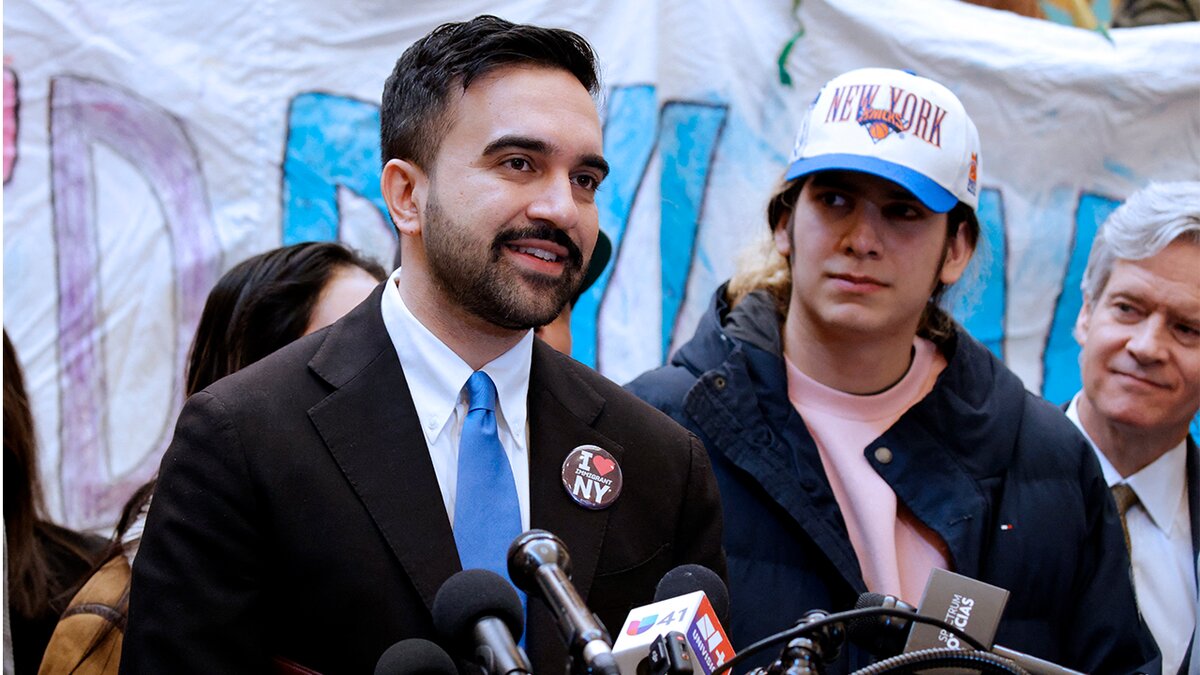
New York Mayor rolls out sweeping appointments and reforms to redefine public safety, urban services and government accountability
Our Bureau
New York, NY
In a wide-ranging reset of governance priorities, Zohran Kwame Mamdani has unveiled a series of major appointments and institutional reforms that together signal a shift toward a more integrated, service-driven and accountable model of city administration. From reimagining public safety to strengthening oversight and modernising sanitation, the moves reflect an effort to tackle both the immediate and structural challenges facing New York City.
At the forefront of this transformation is Mamdani’s push to redefine public safety through the creation of the Office of Community Safety and the appointment of Renita Francois as Deputy Mayor for Community Safety. With over 15 years of experience across government and advocacy sectors, Francois is tasked with leading a “whole-of-government” strategy that goes beyond policing to address the root causes of crime.
“The cornerstone of a dignified life is true community safety,” Mamdani said, emphasising that safety must be built through sustained investment in services rather than reactive enforcement. The newly established office will coordinate efforts across multiple agencies dealing with gun violence prevention, mental health, substance abuse, domestic violence and hate crimes.
The initiative marks a structural shift in how the city approaches safety—treating it as a public health and social issue rather than solely a law enforcement challenge. Francois highlighted this philosophy, noting that issues such as economic inequality, social disconnection and deteriorating infrastructure are central to understanding violence and insecurity.
Her track record includes overseeing more than $500 million in neighbourhood safety investments under former Mayor Bill de Blasio, positioning her as a key architect of the city’s evolving safety framework. The Office will also oversee crisis response initiatives like B-HEARD and work to ensure coordinated, community-based interventions.
Support for the move has been widespread. New York Attorney General Letitia James praised Francois’ leadership, while NYPD Commissioner Jessica S. Tisch stressed the importance of complementing policing with social services. Advocates such as Council Member Tiffany Cabán described the initiative as a necessary departure from over-reliance on the criminal justice system.
Alongside the safety overhaul, Mamdani has moved to strengthen institutional accountability by appointing a three-member Quadrennial Advisory Commission to review compensation for elected officials. Chaired by Carl Weisbrod and joined by Lilliam Barrios-Paoli and Larian Angelo, the commission will conduct an independent review and submit recommendations within 120 days.
“The Quadrennial Commission is tasked with ensuring that New Yorkers’ hard-earned tax dollars are spent responsibly,” Mamdani said, underlining the importance of transparency in governance. The commission’s work, covering salaries of City Council members and other elected officials, comes after a decade-long gap since the last review in 2015.
City Council Speaker Julie Menin welcomed the appointments, noting that the process must remain independent and credible. Weisbrod, in his remarks, stressed that “public trust in government depends on accountability,” highlighting the broader political sensitivity of compensation decisions.
Completing this triad of governance reforms is Mamdani’s appointment of Gregory Anderson as Commissioner of the Department of Sanitation, one of the city’s most critical operational agencies. With nearly 10,000 employees handling 24 million pounds of waste daily and maintaining 6,000 miles of streets, the department plays a central role in the city’s daily functioning.
Anderson’s return to the department is being framed as both a continuation and expansion of earlier reforms. Having previously helped shape the city’s “Trash Revolution,” he was instrumental in advancing waste containerisation, commercial waste zones and curbside composting initiatives. His recent role in the administration of Governor Kathy Hochul, where he coordinated emergency responses across more than 70 state agencies, adds a layer of operational expertise to his profile.
“This is a well-deserved homecoming,” Mamdani said, noting that Anderson takes charge at a “pivotal moment” as the city pushes forward on cleanliness and sustainability goals. Anderson himself emphasised a broader vision of urban cleanliness, stating that it should be measured not just by the absence of trash but by “vitality and well-maintained public spaces.”
His appointment follows the tenure of acting commissioner Javier Lojan, who led the department through a challenging winter marked by heavy snowfall and extended cold conditions. Lojan will now return to his role as First Deputy Commissioner, ensuring continuity within the agency.
Together, these moves reveal a governance strategy that is both ambitious and interconnected. The focus on community safety addresses the social foundations of urban stability, while the sanitation overhaul targets the physical environment that shapes daily life. The advisory commission, meanwhile, seeks to reinforce institutional credibility and public trust.
Mamdani’s latest announcements signal a clear intent: to reshape not just policies, but the very architecture of city governance. Whether this integrated vision can deliver tangible outcomes will define the trajectory of his administration—and potentially set a template for other major cities grappling with similar challenges.