

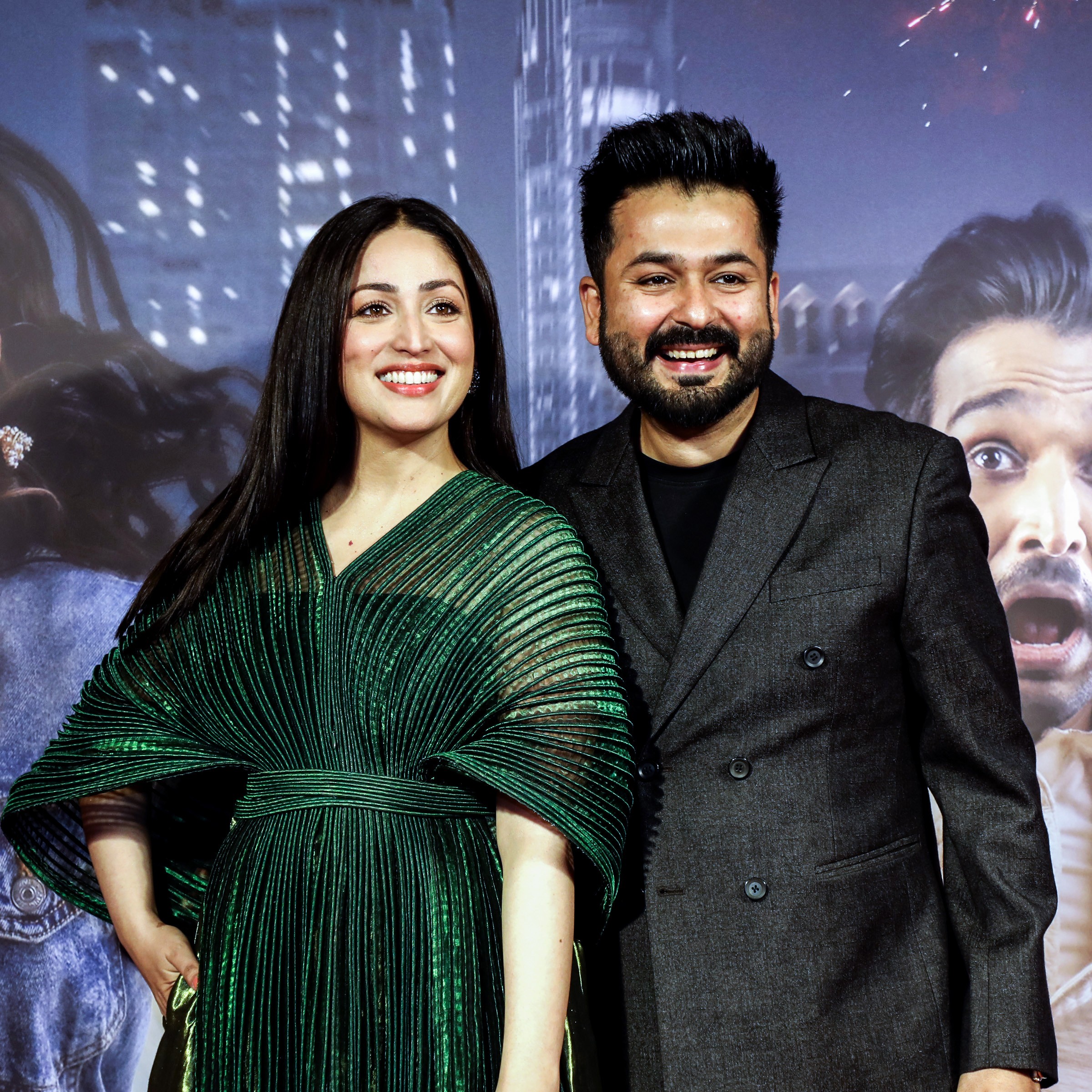
With Dhurandhar crossing ₹1,000 crore, Aditya Dhar emerged in 2025 as one of Indian cinema’s most powerful and bankable directors.
In 2025, Aditya Dhar crossed a threshold that few filmmakers manage to reach—and even fewer sustain. With the release of Dhurandhar on December 5, Dhar delivered not just a hit, but a phenomenon that redefined the scale, ambition, and commercial potential of Hindi spy thrillers. By year’s end, he stood firmly established as one of India’s most bankable directors, a filmmaker capable of marrying grit with grandeur and spectacle with seriousness.
Dhurandhar arrived as a monumental cinematic event. A hard-edged intelligence thriller set in the shadows of covert operations, the film grossed over ₹1,000 crore worldwide, making it the highest-grossing Indian film of 2025. It also became the highest-grossing “A” certified Indian film in history, a rare achievement in a market traditionally dominated by family-friendly entertainers. The numbers alone placed Dhar in elite territory—but the impact went deeper.
The film’s ensemble cast was a statement of intent. Ranveer Singh led the charge with ferocity and restraint, supported by a formidable lineup that included Akshaye Khanna, R. Madhavan, Sanjay Dutt, and Arjun Rampal. Rather than relying on a single star vehicle, Dhar constructed Dhurandhar as a performance-driven narrative, where every actor functioned as part of a larger intelligence ecosystem. The casting reinforced the film’s seriousness and helped broaden its appeal across demographics.
Critically, Dhurandhar was praised for its grounded portrayal of undercover operations and its refusal to glamorize espionage into caricature. Reviewers highlighted the film’s layered plotting, morally complex characters, and meticulously choreographed action sequences. At the same time, the film sparked debate—particularly around its 214-minute runtime and its engagement with sensitive historical and geopolitical themes. Dhar, however, appeared unfazed by the discourse. For him, the conversation itself was evidence that the film had struck a nerve.
The success of Dhurandhar was not accidental. Dhar’s filmmaking journey has been defined by patience and preparation. Having made his debut with Uri: The Surgical Strike, which itself became a defining military film of its time, Dhar spent years developing Dhurandhar. The result was a cinematic universe that felt expansive yet disciplined, commercial yet uncompromising.
That long-term vision became evident when it was revealed that Dhurandhar had been conceived and shot as a two-part story. Riding on the film’s extraordinary success, Dhar officially announced Dhurandhar 2, scheduled for a pan-India release on March 19, 2026. The sequel instantly became one of the most anticipated releases on the Indian film calendar, underlining Dhar’s new status as a franchise-builder rather than a one-off hitmaker.
Interestingly, even at the peak of his commercial triumph, Dhar demonstrated restraint in choosing his next moves. His ambitious passion project, The Immortal Ashwatthama, remains on the back burner. Dhar has been candid in acknowledging that the film’s scale—both technical and financial—is still too vast for current Indian cinema infrastructure to fully support. In an industry often driven by announcement-led hype, his decision to wait underscored a maturity rarely seen at this level of success.
Beyond directing, 2025 also saw Dhar consolidate his role as a producer. Under his banner, B62 Studios, he continued to back diverse projects, including the Netflix original comedy Dhoom Dhaam. The move reflected his desire to build a sustainable creative ecosystem rather than limit himself to marquee directorial ventures.
One of the most striking aspects of Dhar’s 2025 narrative, however, unfolded off-screen. In late interviews, he spoke openly about his lifelong struggle with severe dyslexia. Describing his rise in the film industry as a “miracle,” Dhar recounted the challenges he faced with reading and academics during childhood. The disclosure resonated widely, reframing his success not merely as talent meeting opportunity, but as perseverance overcoming structural barriers.
That personal honesty added a human dimension to his otherwise formidable professional image. In an industry often obsessed with glamour and certainty, Dhar’s willingness to discuss vulnerability deepened his connect with audiences and aspiring filmmakers alike.
By the close of 2025, Aditya Dhar occupied a rare position in Indian cinema. He was commercially dominant without being formulaic, politically engaged without being preachy, and ambitious without being reckless. Dhurandhar proved that audiences were willing to embrace complex, adult storytelling on a massive scale—and that Dhar was uniquely equipped to deliver it.
In a year defined by spectacle, Aditya Dhar stood out not just for how big his film became, but for how confidently it trusted the intelligence of its audience. That confidence, backed by box office muscle and creative conviction, made 2025 unmistakably his year.