Unverified claims about Imran Khan’s health have set off political tremors across Pakistan, fueling street protests, family outcry and a swelling crisis of public trust
Our Bureau
Lahore / Islamabad
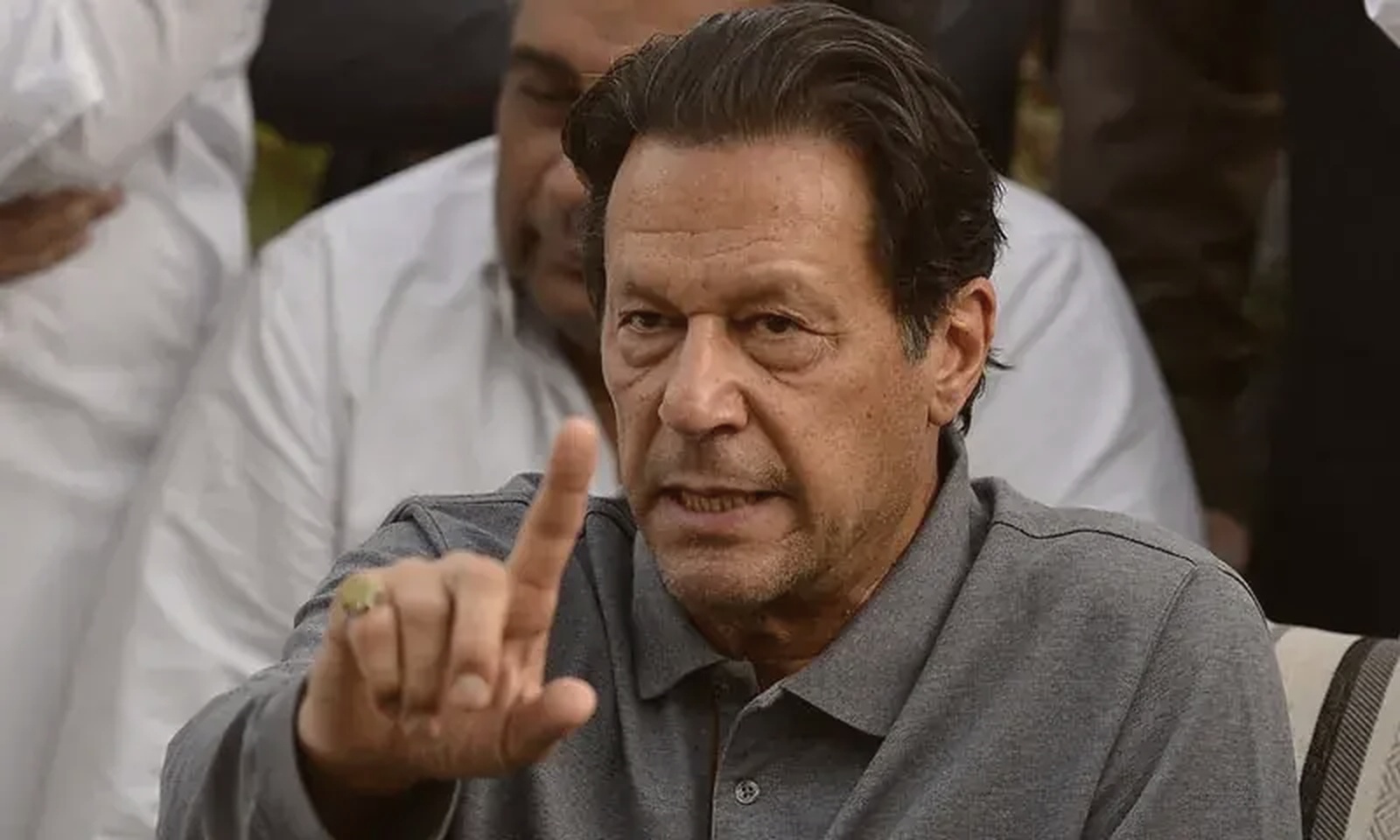
Rumors about Imran Khan’s condition have plunged Pakistan into a state of unease, igniting protests outside prisons and courts, triggering frantic political statements, and once again revealing the deep fractures within the country’s fragile political landscape. What began as whispers on social media — posts speculating about the former prime minister’s health and even his death — has morphed into a national crisis, drawing his supporters into the streets and putting pressure on the government for answers it has so far failed to fully provide.
The tension intensified at Rawalpindi’s Adiala Jail, where Khan and his wife, Bushra Bibi, are being held in connection with multiple corruption cases. On Thursday, Khyber Pakhtunkhwa Chief Minister Sohail Afridi arrived at the prison, joined by a growing crowd of Pakistan Tehreek-e-Insaf (PTI) lawmakers and supporters demanding clarity on Khan’s wellbeing. The scene outside the heavily guarded jail was a swirl of anxiety, accusations and political theatre — a reflection of how deeply Khan’s fate remains tied to the nation’s mood.
Central to the unrest is the repeated denial of prison meetings to Khan’s family, especially his sisters. Aleema Khan, who led a sit-in for days near the Gorakhpur checkpost, said she would not leave until she was granted access to her brother. Negotiations with police eventually ended the protest, but not the suspicion. “He is being kept in solitary confinement,” Aleema insisted. “This treatment is oppressive and illegal.” Her allegations only sharpened the public’s sense of foreboding.
PTI has seized on the moment, demanding an immediate and official government response. The party’s statement, posted on X, insisted that “rumors of a despicable nature” — allegedly spread by “Afghan and Indian media” — were destabilizing the national mood. PTI said the government must “clearly dismiss and clarify the rumor and immediately arrange a meeting between Imran and his family.” The party warned that the “nation will not tolerate any uncertainty regarding the status of its leader.”
But far from calming nerves, official responses have only deepened the divide. Defense Minister Khawaja Asif dismissed the fragility narrative entirely, claiming that Khan enjoys better jail conditions than many inmates. He alleged that the former PM has a TV, outside food, exercise equipment, even “a double bed and velvet bedding” — a statement clearly intended to puncture PTI’s narrative of mistreatment. Yet such comments did little to change the atmosphere of suspicion; if anything, they appeared to inflame the sense among Khan’s supporters that the state was trivializing their concerns.
Meanwhile, one of the most powerful voices in this unfolding drama is that of Noreen Niazi, one of Imran Khan’s sisters. Speaking to ANI, she said bluntly: “We don’t know anything.” Her account was chilling — weeks without access to her brother, rumors of his death circulating freely, and what she described as an unprecedented crackdown on PTI supporters. “Police have been given a free hand to deal with whoever stands with Imran Khan,” she said, adding that women, children and the elderly were beaten during protests. “This has never happened in Pakistan before.”
Noreen’s anger reflects a broader sentiment: that the government’s refusal to allow even routine family visits has created a dangerous vacuum in which rumors naturally thrive. She compared the current environment to “Hitler-era-like repression,” describing Pakistan as a country where citizens are abducted, assaulted or silenced without consequence. Her depiction of Pakistan’s political climate — a landscape of fear, distrust and spiraling authoritarianism — resonated deeply with PTI’s base.
The jail administration has insisted that Imran Khan is safe, alive, and in “good health.” But in a country where the public has long distrusted official statements, such reassurances have barely made a dent. Instead, every denial seems only to deepen the sense that something is being concealed.
The unrest has spread beyond Rawalpindi. In Lahore, Noreen Niazi issued one of the starkest warnings yet: “Just one spark is enough,” she said, hinting at the possibility of massive public anger erupting into something far more uncontrollable. She claimed that the authorities had been “given license” to assault citizens and that public frustration has reached dangerous levels. “People are angry and fed up,” she said. “When you oppress your own people, they will never support you.”
Every rumor, denial, protest and statement has turned the battle over Imran Khan’s condition into a symbol of something larger: who holds the power in Pakistan, and at what cost. His absence from the public eye for weeks has become a trigger for the country’s anxieties, pushing people into the streets and pulling the political class into a cycle of confrontation.
As the government continues to insist that Khan is safe and PTI continues to demand proof, one truth has become undeniable: Imran Khan’s silence — enforced or otherwise — has become the loudest sound in Pakistan.