

As Bihar heads toward a high-stakes Assembly election, three distinct political forces — the NDA, the Mahagathbandhan, and Jan Suraaj — are redrawing the state’s political lines and testing the pulse of Indian democracy
Our Bureau
Patna / New Delhi
Bihar, the political crucible that has often set the tone for India’s larger democratic trends, is once again poised for a fierce and unpredictable contest. The Assembly election scheduled for November will not be a simple bipolar face-off but a triangular battle involving the ruling National Democratic Alliance (NDA), the opposition Mahagathbandhan (Grand Alliance), and Prashant Kishor’s Jan Suraaj, a new player determined to disrupt established equations.
The Election Commission of India (ECI) has already rolled out a massive exercise to ensure smooth polling across the state’s 243 constituencies. Over 8.5 lakh election officials have been deployed, alongside an unprecedented appointment of one General Observer per constituency, signaling the seriousness of the contest. The election will be conducted in two phases — November 6 and 11 — with counting on November 14.
Beyond the logistics, what’s at stake is Bihar’s political identity and the direction of Indian politics heading toward the next general election. The contest is not merely about governance but about who defines the future of Bihar — a state long seen as emblematic of India’s social churn and aspirations.
Unity Under Strain
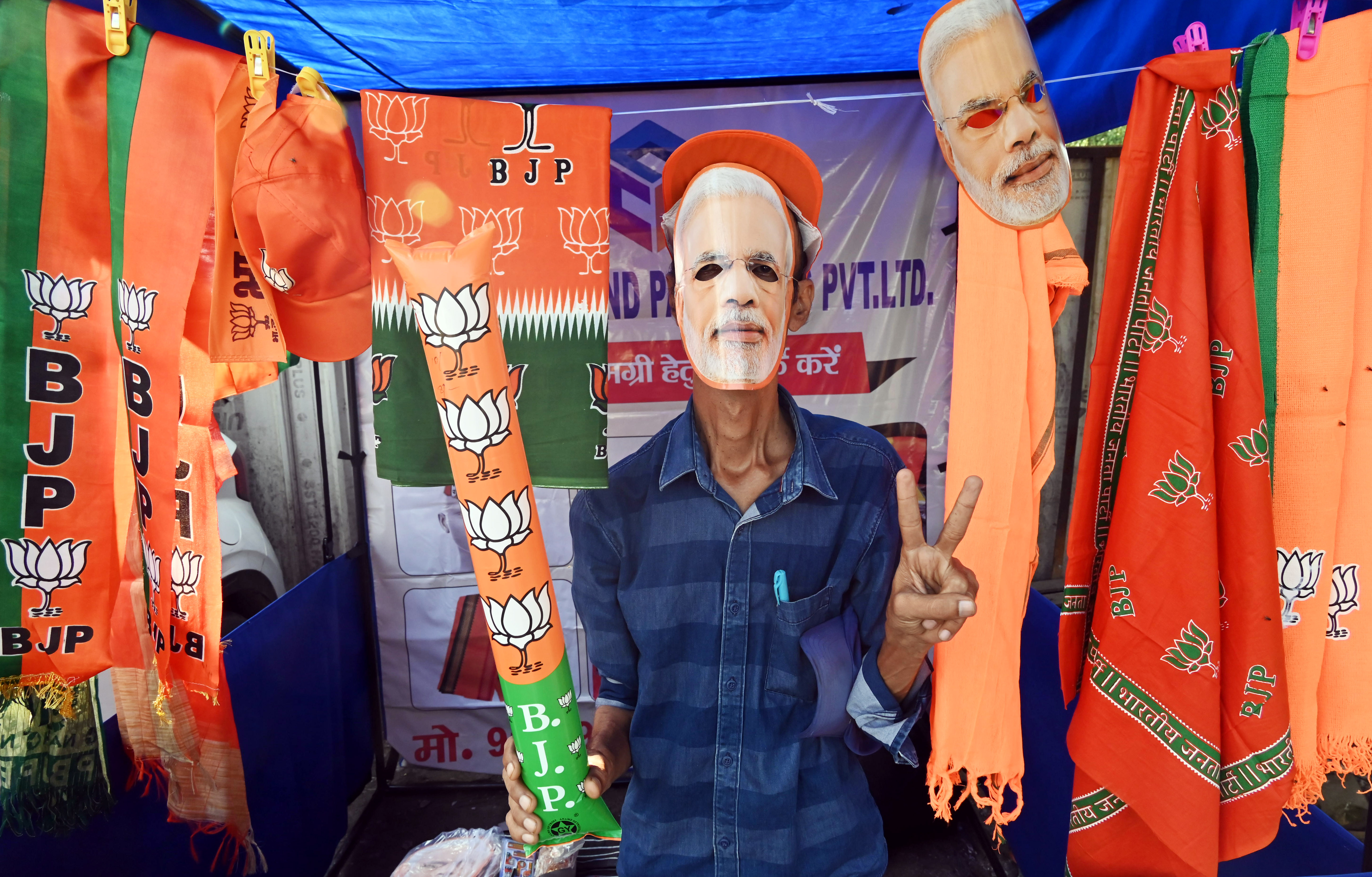
Within the ruling NDA, the struggle to maintain unity has become a defining feature of the campaign’s early phase. The alliance — led by the Bharatiya Janata Party (BJP) and Janata Dal (United) [JD(U)] — faces internal bargaining and delicate negotiations with its smaller allies such as Lok Janshakti Party (Ram Vilas) [LJP (RV)] and Hindustani Awam Morcha (Secular) [HAM].
Union Minister Chirag Paswan, who leads the LJP (RV), has been holding critical talks with BJP leaders, including Minister of State for Home Affairs Nityanand Rai, to finalize seat-sharing. While Rai sounded optimistic — “Everything is positive,” he said — other allies have shown signs of discontent. HAM chief Jitan Ram Manjhi’s cryptic post on X lamenting the slow pace of talks hinted at underlying tension: “Ho nyaay agar to aadha do… rakho apni dharti tamaam…” The poetic frustration reflects the friction in an alliance where smaller partners seek recognition beyond tokenism.
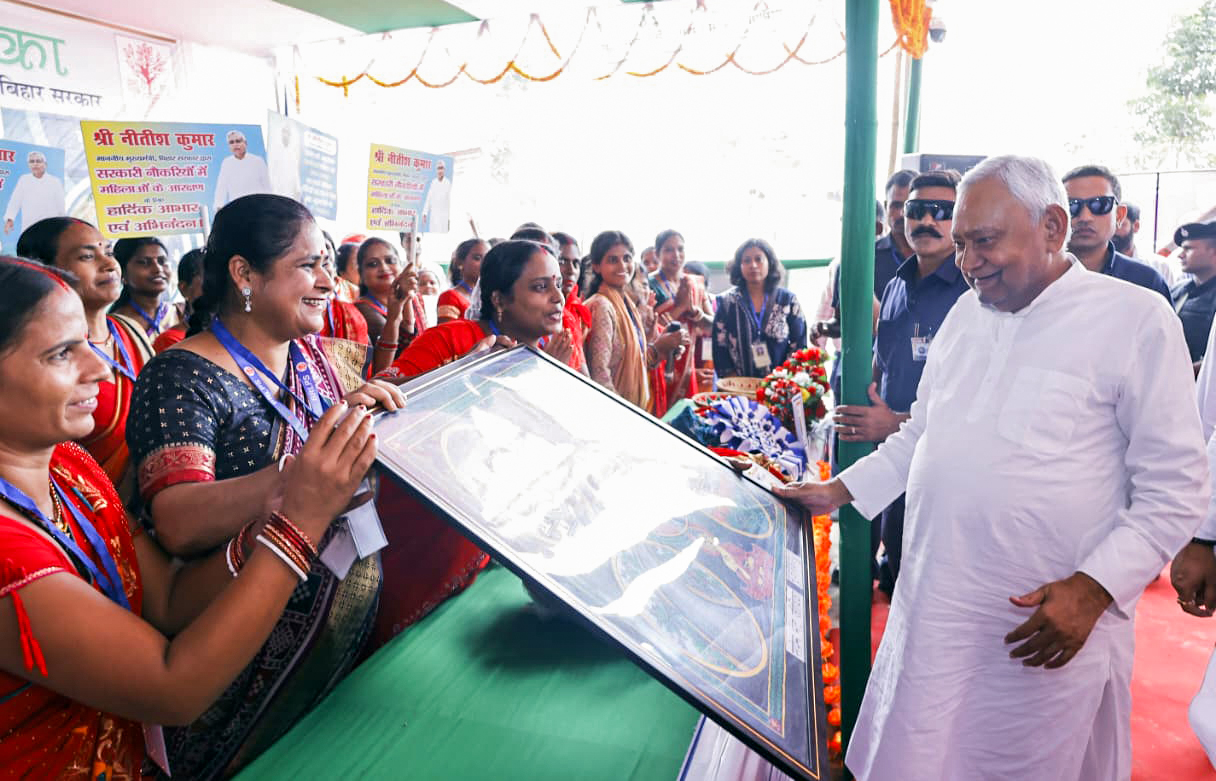
The JD(U), led by Nitish Kumar, remains the NDA’s most experienced hand in Bihar. Yet, a cloud of uncertainty hangs over his leadership. The opposition has repeatedly pointed out that despite multiple visits to Bihar, Prime Minister Narendra Modi has avoided explicitly declaring Nitish as the NDA’s chief ministerial face. “The NDA and the Prime Minister have not yet declared Nitish Kumar as the CM candidate. Therefore, there is confusion,” remarked Congress leader Tariq Anwar.
For Nitish, who has shifted between alliances over the years, the stakes are high. He must balance the BJP’s aggressive electoral machinery, placate smaller allies, and counter the growing discontent over issues like unemployment and migration. The NDA’s slogan of the “double-engine government” is now being challenged as “a double-engine without fuel” by its rivals.
Still, the NDA remains formidable. With the BJP’s organizational strength, Nitish Kumar’s caste-based outreach, and Chirag Paswan’s Dalit voter base, the alliance hopes to consolidate enough ground to retain control. The coming days will reveal whether its internal strains translate into lost seats or renewed cohesion.
A Populist Push
The Mahagathbandhan (Grand Alliance) — comprising the Rashtriya Janata Dal (RJD), Congress, and Left parties — has mounted an aggressive campaign centered on youth aspirations and “economic justice.” At its forefront stands Tejashwi Yadav, the young RJD leader and Leader of Opposition, whose bold announcement of guaranteeing a government job for every household has electrified the political landscape.
“In every family in Bihar where no one currently holds a government job, a new legislation will be enacted to ensure employment,” Tejashwi declared in Patna. “Within 20 days of forming the government, this law will be passed, and within 20 months, every family without a government job will have at least one member employed.”
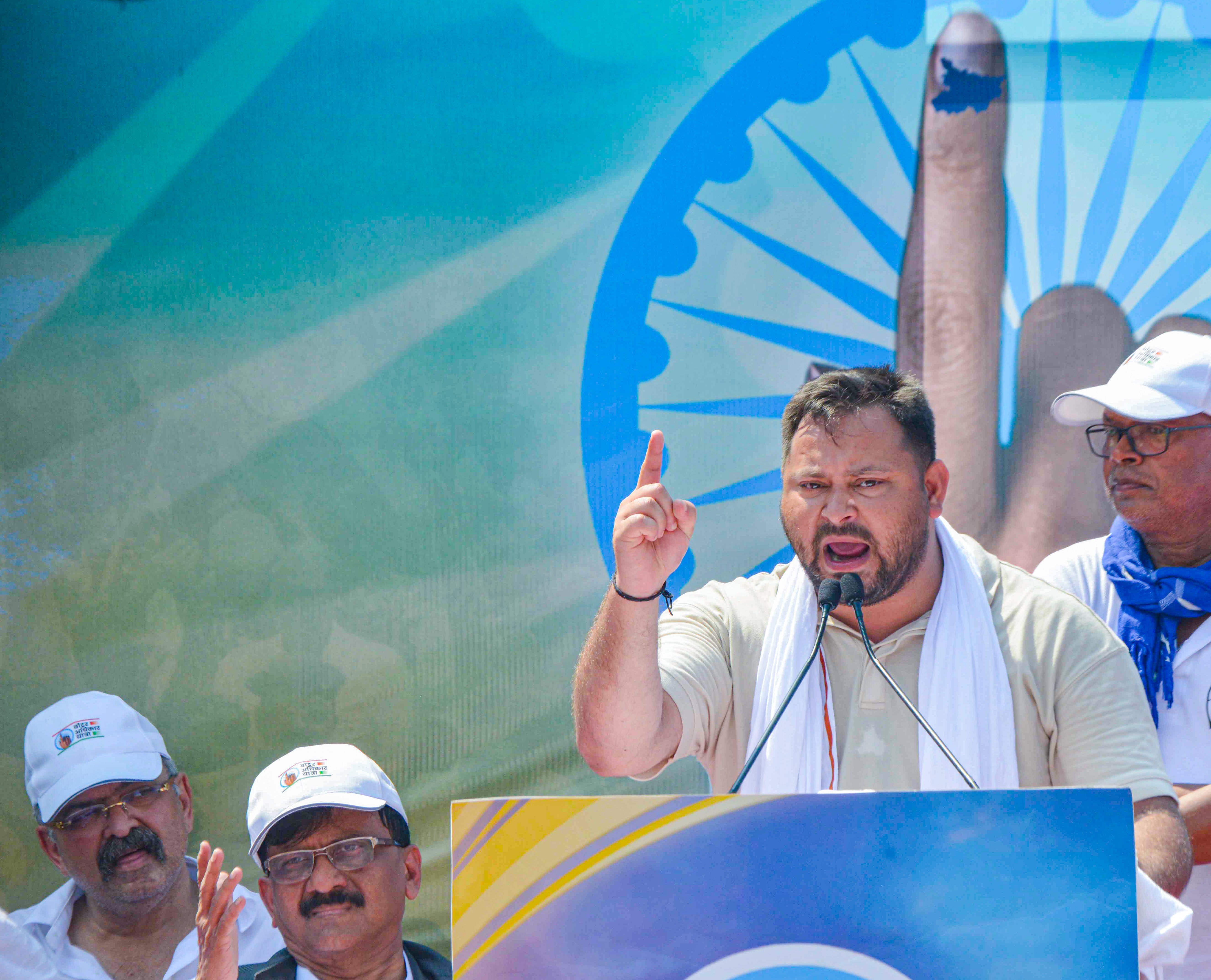
While critics call it populist and unrealistic, the promise has resonated deeply among Bihar’s vast unemployed youth population. Congress MLA Shakeel Ahmad has backed the move, calling it a “collective decision of the Mahagathbandhan.” The opposition’s messaging now combines social justice — RJD’s traditional plank — with a new emphasis on economic empowerment, seeking to appeal to a generation weary of migration and underdevelopment.
Adding intellectual heft to its campaign, the Congress has released a sharp critique titled “Bees Saal Vinaash Kaal” (20 Years of Bad Governance), a detailed booklet highlighting alleged failures of the “double-engine government.” At a press conference in Patna, senior Congress leaders Jairam Ramesh, Ashok Gehlot, and Bhupesh Baghel underscored that Bihar stands “at a decisive juncture,” with two clear paths: one of “social harmony and economic growth” under the Grand Alliance, and another of “stagnation under the NDA.”
The Mahagathbandhan’s narrative is emotionally charged. Tejashwi’s repeated line — “umr kacchi hai, par zubaan pakki hai” (“I may be young, but my word is firm”) — has become both slogan and statement of intent. By combining youthful energy with Lalu Prasad Yadav’s legacy of social justice, Tejashwi hopes to transcend the old caste lines and present himself as a new face of Bihar’s future.
Yet, challenges remain. Seat-sharing talks within the alliance are still ongoing, and ideological differences among partners could complicate campaign coordination. Still, for the first time in years, the Grand Alliance appears to have a message that connects both emotionally and economically with Bihar’s voters.
The Kishor Factor
Amid the familiar NDA–Mahagathbandhan duel, Prashant Kishor’s Jan Suraaj has emerged as a wildcard capable of redrawing Bihar’s political geography. Once a celebrated political strategist for multiple national parties, Kishor is now attempting to transform from backroom tactician to front-line reformer. His movement, built on grassroots mobilization and promises of clean governance, has released its first list of 51 candidates and plans to contest all 243 seats.
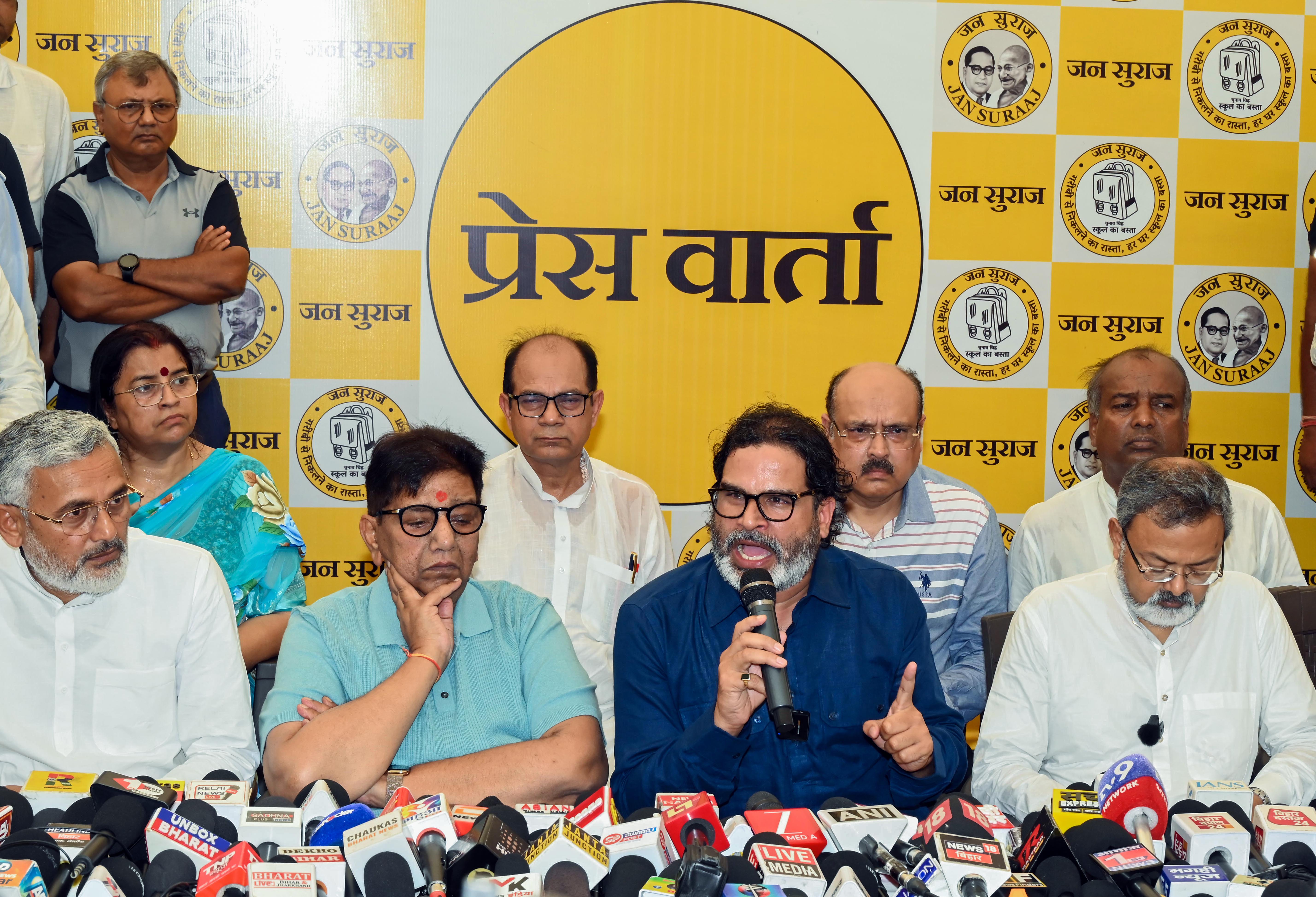
Jan Suraaj presents itself as an alternative to the “corrupt and complacent” political class, positioning Kishor as a people’s reformer rather than a conventional politician. His campaign stresses local governance, decentralization, education, and healthcare, themes that resonate with an electorate fatigued by years of political instability.
Unlike the rhetoric-heavy campaigns of established parties, Kishor’s approach has been methodical — blending extensive field research with direct engagement across districts. His team claims to have reached thousands of villages during the “Jan Suraaj Padyatra,” building a network of volunteers and local influencers. Though the party lacks the organizational machinery of its rivals, its clean image and strategic discipline make it a factor that neither the NDA nor Mahagathbandhan can ignore.
Political observers believe that even a modest vote share for Jan Suraaj — say, between 5% and 10% — could split votes in key constituencies, especially among young and first-time voters disenchanted with both major alliances. Kishor’s entry has therefore transformed the Bihar election into a truly triangular contest, adding unpredictability to an already complex political field.
The National Picture
The Bihar Assembly election is not just a regional contest; it’s a national political litmus test. For the NDA, a victory would reaffirm its ability to manage regional allies and maintain dominance ahead of the 2026 Uttar Pradesh election and the 2029 Lok Sabha polls. For the opposition INDIA bloc, Bihar offers a chance to showcase unity and prove that an anti-BJP front can mobilize both social justice and economic issues into a cohesive electoral force.
If the Mahagathbandhan performs well, it would boost Tejashwi Yadav’s stature within the INDIA bloc and could influence alliance equations nationally, especially among non-Congress regional leaders. Conversely, if the NDA manages to retain Bihar despite visible fatigue, it will strengthen the BJP’s argument that the INDIA bloc remains fragmented and unviable.
As Bihar heads toward polling day, the air is thick with promises, slogans, and uncertainty. Nitish Kumar’s coalition banks on experience and infrastructure, Tejashwi Yadav’s front rides on emotion and economic hope, and Prashant Kishor’s movement embodies the frustration of a generation that wants change beyond rhetoric.
This triangular contest is more than a fight for 243 Assembly seats. It is a mirror of India’s evolving democracy — where tradition collides with ambition, ideology competes with pragmatism, and old alliances face the test of time. The outcome in Bihar will not just decide who governs Patna; it may also offer the first real glimpse of what lies ahead for Indian politics in the decade to come.