

As Bihar heads into assembly elections, political parties across the spectrum are sharpening their focus on women and backward communities, unveiling a flurry of welfare schemes, cash transfers, and promises of social justice
Our Bureau
Patna/New Delhi
In Bihar’s high-stakes electoral contest, the battle lines are increasingly being drawn around women and backward communities — two constituencies that together shape the state’s social and political landscape. The Bharatiya Janata Party (BJP), its ally Janata Dal (United), the Rashtriya Janata Dal (RJD)-Congress combine, and the broader INDIA bloc are all competing with competing visions, welfare programs, and populist promises designed to secure these votes.
Prime Minister Narendra Modi is set to launch the Mukhyamantri Mahila Rojgar Yojana, a program that will transfer ₹10,000 each into the accounts of 75 lakh women across Bihar. With a total outlay of ₹7,500 crore, the scheme seeks to foster women’s self-reliance through direct financial support and livelihood opportunities. Beyond immediate assistance, the scheme envisions future credit support of up to ₹2 lakh, coupled with training by Self-Help Groups and the creation of local “Gramin Haat-Bazaars” to sustain women-led enterprises.
The BJP and JD(U) are betting on women’s empowerment as a political strategy, hoping to replicate the gains from Nitish Kumar’s earlier moves, such as 50% reservation for women in panchayats and prohibition laws. Women, particularly from rural and marginalized backgrounds, have often played a decisive role in Bihar elections, and the NDA is determined to consolidate this advantage.
Not to be outdone, Tejashwi Yadav has unveiled the “Mai Bahin Maan Yojana”, a direct cash transfer scheme promising ₹2,500 per month to women from backward and economically vulnerable families. Framing it as a response to the NDA’s “copycat” governance, Tejashwi has tried to build his campaign around dignity, welfare, and the promise of “change.”
The RJD’s strategy is rooted in mobilizing women as active political stakeholders rather than passive beneficiaries. By pledging regular, guaranteed income, the party is also targeting families at the bottom of Bihar’s economic pyramid, where women’s earnings directly determine household survival. This approach ties into the RJD’s long-standing positioning as the voice of backward castes and marginalized groups.
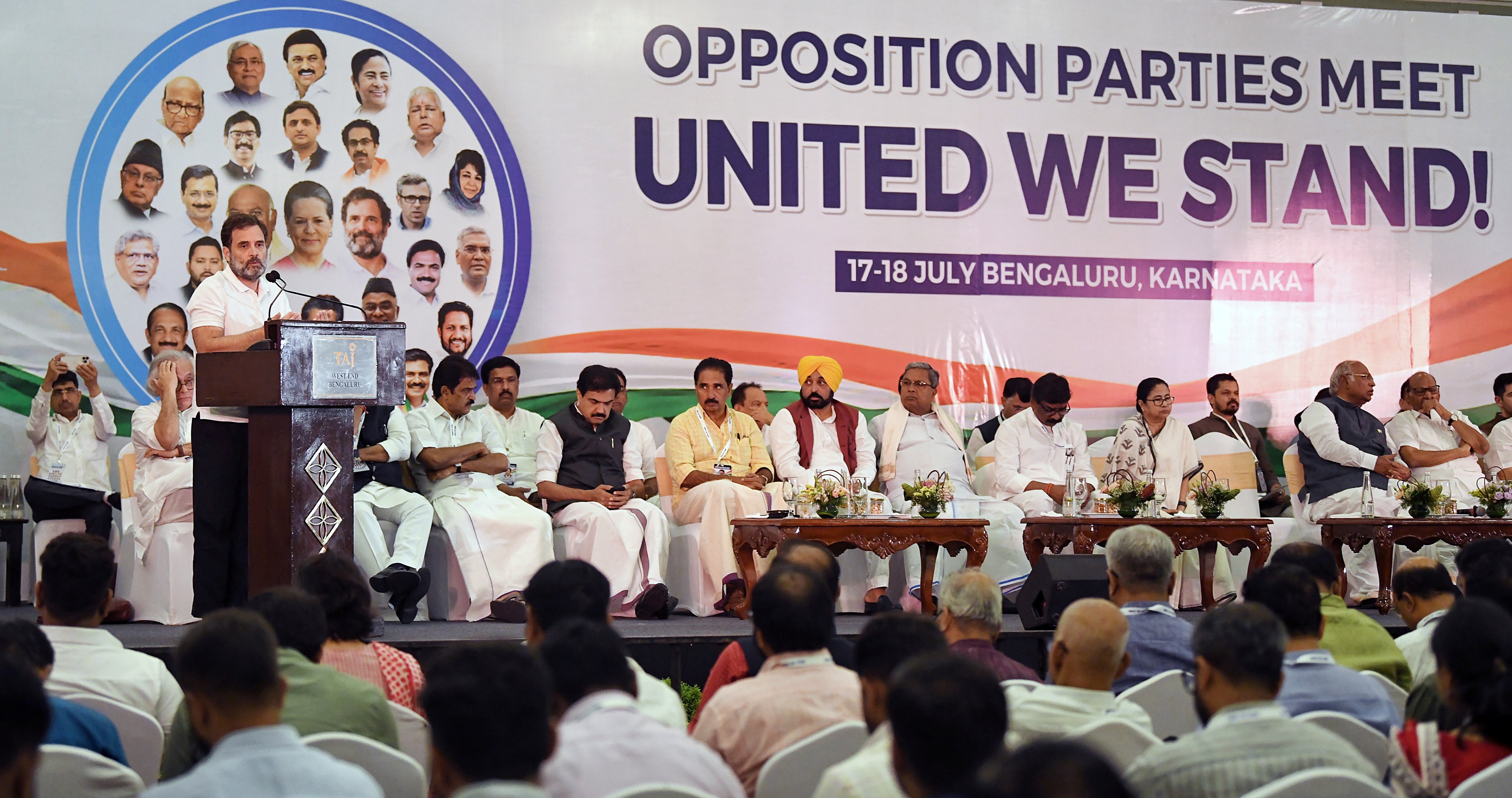
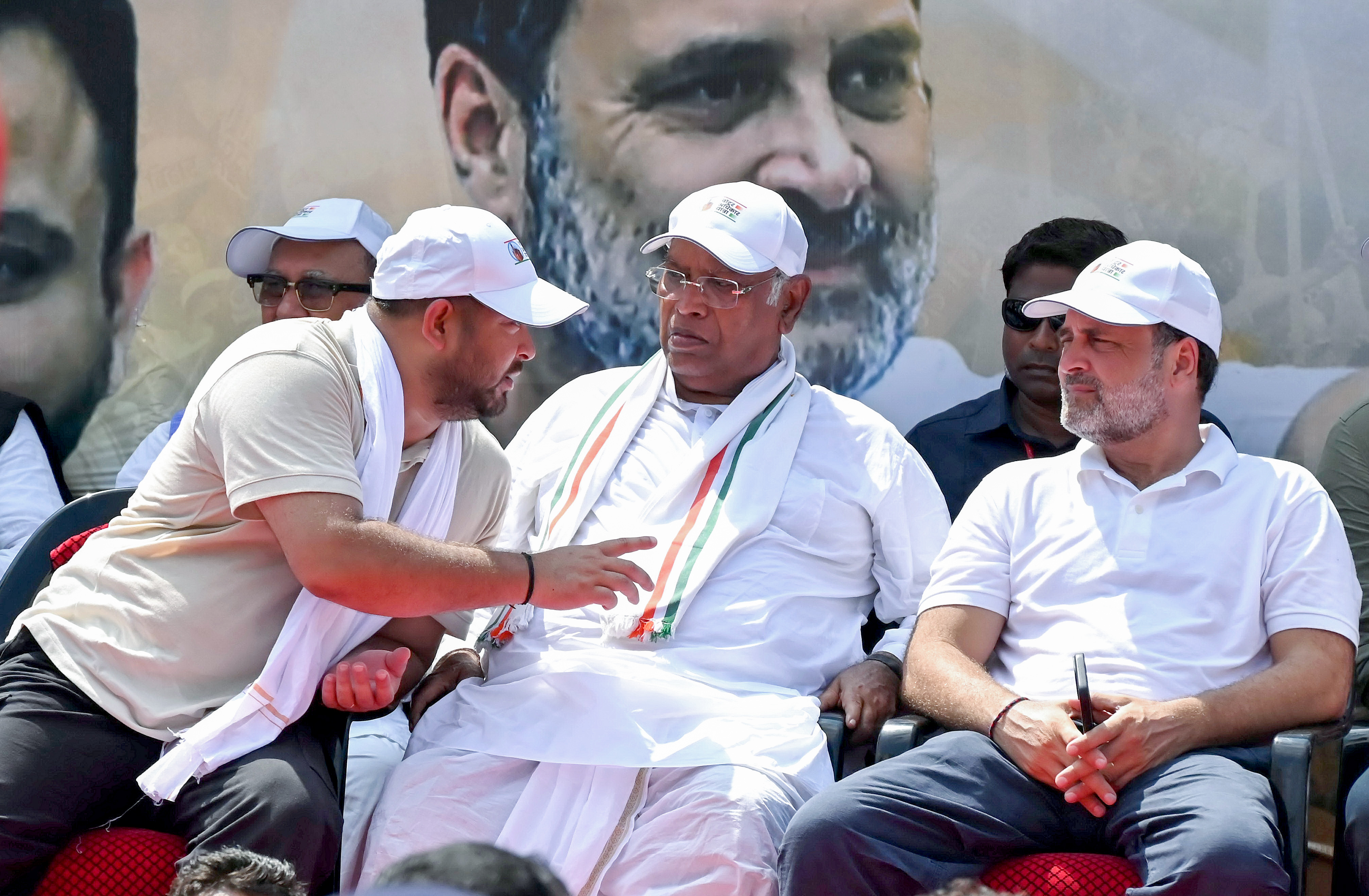
The Congress, meanwhile, has launched its “Most Backward Justice Manifesto,” underscoring its focus on Dalits, tribals, minorities, and the Extremely Backward Classes (EBCs). Rahul Gandhi has promised to expand reservations into private colleges and universities, allocate half the reserved seats in private schools to marginalized groups, and abolish discriminatory practices in public appointments.
The INDIA bloc’s strategy is to broaden the definition of social justice beyond symbolic politics, anchoring it in structural guarantees like education, housing, and government contracts. Priyanka Gandhi Vadra has gone a step further by promising a new law against atrocities on EBCs, coupled with enhanced reservation in local bodies. These pledges aim to build a coalition of the marginalized, presenting the bloc as a platform of equity against what it calls the BJP’s “diversionary conspiracies.”
While the rhetoric differs, the underlying strategy of all parties is similar: secure women and backward communities by promising financial empowerment, social justice, and dignity. For the NDA, the emphasis is on self-employment and entrepreneurship, framed within Modi’s larger narrative of Aatmanirbhar Bharat. For the RJD, the appeal is monthly income security, targeting women as household anchors. For Congress and its allies, the focus lies on structural rights and expanded reservations.
The convergence reflects both political pragmatism and demographic realities. Women account for nearly half of Bihar’s electorate, and the state has one of the highest proportions of backward classes in the country. Together, these groups have the power to tilt the electoral balance, making them the fulcrum of this year’s campaign.
The rush of welfare schemes also highlights a shift in Bihar’s electoral politics — from identity-driven mobilization alone to a hybrid model that mixes caste arithmetic with direct economic benefits. The challenge, however, lies in credibility. While cash transfers and manifestos may attract attention, their effectiveness will depend on implementation, fiscal sustainability, and the perception of fairness.
As the campaign heats up, the battle for Bihar is less about abstract ideology and more about who can deliver tangible benefits to women and marginalized communities. The next government’s legitimacy will rest not just on votes, but on whether these promises translate into durable change in one of India’s most socially complex states.