

Our Bureau
New Delhi
There is a new wave in the global politics scene as India and China, five years after a pitched battle in Galwan, are looking to stitch new bonds. A major reason behind this bond can be the tariff war that the President of the United States, Donald Trump has started with unreal taxes imposed on India while warning being given to China as well.
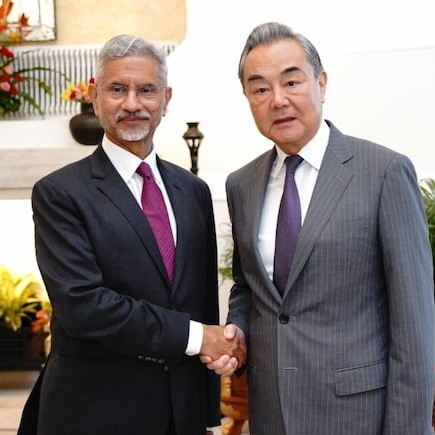
Chinese Foreign Minister Wang Yi is visiting India and was seen in a discussion with External Affairs Minister Dr S Jaishankar yesterday. This visit is a huge milestone that might become the start of betterment of the diplomatic ties of the two Asian superpowers in order to counter the global disruptions caused by Trump’s tariff war.
At the meeting, Dr Jaishankar has highlighted that Wang’s visit provides an opportunity to improve the bilateral ties which will require candid efforts from both the nations. He stated three points that could guide their relations – mutual respect, mutual sensitivity and mutual interest.
“Having seen a difficult period in our relationship, Excellency, our two nations now seek to move ahead. This requires a candid and constructive approach from both sides. In that endeavour, we must be guided by the three mutuals – mutual respect, mutual sensitivity and mutual interest. Differences must not become disputes, nor competition conflict,” the External Affairs Minister said.
The Chinese Foreign Minister discussed border issues with India’s National Security Adviser Ajit Doval on August 19th. S Jaishankar has stated that this is a very important step for any positive momentum in our ties to maintain peace at the border.
“This is very important because the basis for any positive momentum in our ties is the ability to jointly maintain peace and tranquillity in the border areas. It is also essential that the de-escalation process move forward,” Dr Jaishankar said.
“Overall, it is our expectation that our discussions would contribute to building a stable, cooperative and forward-looking relationship between India and China, one that serves both our interests and addresses our concerns,” he added.
On the other hand, Wang Yi has stated that as the two largest developing countries both India and China can set an example for the majority of developing countries. A statement coming from China after the meeting stated that Wang Yi expressed that the world is undergoing a “once-in-a-century transformation at an accelerating pace”. He also highlighted the pressure that the US is trying to build on all the countries, calling it “unilateral bullying is rampant.”
“As the two largest developing countries with a combined population of over 2.8 billion, China and India should demonstrate a sense of global concern and responsibility as major countries, set an example for the vast majority of developing countries to unite and strengthen themselves, and contribute to promoting a multipolar world and the democratization of international relations,” he said.