

As Donald Trump’s 25% tariff hammer falls on Indian goods, New Delhi is crafting a mix of resilience, recalibration, and realpolitik to weather the storm—and perhaps, even emerge stronger
Our Bureau
New Delhi | Washington, DC
The second Trump presidency’s tariff barrage has triggered alarms across global markets. For India, slapped with a 25% tariff plus an additional penalty for its continued oil trade with Russia, the challenge is steep. But the response is not panic—it’s pragmatism. India’s policymakers, business leaders, and exporters are calibrating a multi-pronged counterstrategy that combines diplomatic negotiation, trade diversification, and internal economic resilience to withstand what some are calling the “Trump Tariff Tsunami.”
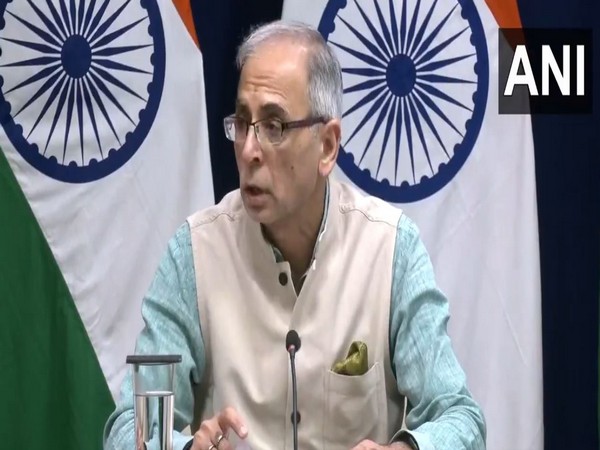
At the heart of India’s strategy is a calculated calm. Ministry of External Affairs (MEA) spokesperson Randhir Jaiswal’s response was telling: “We have taken note of the sanctions, we are looking into it.” Behind the diplomat’s stoicism lies a complex reality: the US is India’s largest trading partner, accounting for over $120 billion in annual bilateral trade. But India is no pushover. The country’s growing economy, its record forex reserves, and its strategic importance to the West—especially in tech, pharma, and defence—make it harder for Washington to treat India like a transactional partner.
Commerce Minister Piyush Goyal struck a confident tone in Parliament: “The Government gives utmost priority to the welfare of farmers, labourers, MSMEs and exporters… Aatmanirbharta ki ore Bharat aatmavishwas se badh raha hai.” Translation: India is ready to meet this head-on with self-belief and structural strength.
Short-Term Pain, Long-Term Pivot
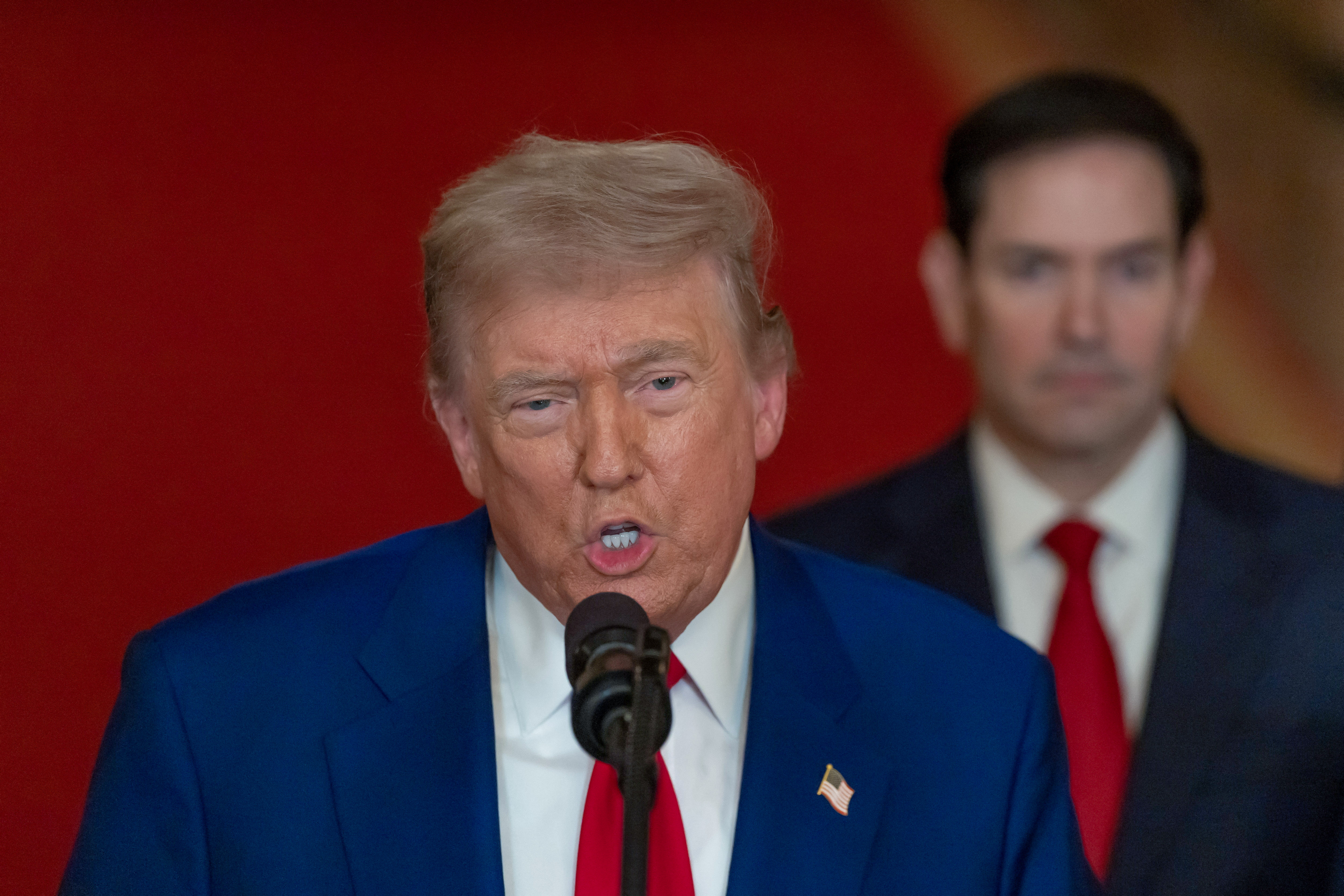
Donald Trump’s global tariff war, reignited in his second presidency, marks a return to aggressive economic nationalism. Built on the “America First” doctrine, Trump’s strategy involves slapping steep tariffs—often unilaterally—on allies and adversaries alike. India, China, the European Union, Mexico, and even Canada have all been targets. Ostensibly aimed at correcting trade imbalances and reviving domestic manufacturing, the tariffs have triggered retaliatory measures, fractured global supply chains, and unsettled markets.
China remains the primary battlefield. Trump’s imposition of hundreds of billions in tariffs on Chinese goods has fueled a prolonged decoupling of the world’s two largest economies. But the fallout extends globally. European steel, Canadian aluminum, Indian pharmaceuticals, and even Japanese cars have faced higher duties. Trump’s transactional style turns trade into a weapon, linking tariffs to issues like defense spending, immigration, or geopolitical allegiance.
While the U.S. economy has seen short-term manufacturing bumps, long-term costs include price hikes, disrupted industries, and diplomatic backlash. Developing nations like India, seeking multi-alignment and trade diversification, find themselves forced into strategic recalibration. Trump’s tariff war is less about economics and more about asserting dominance in a multipolar world—using trade not just as policy, but as leverage in a broader contest of power.
Experts agree the tariffs will sting—especially for sectors like pharma, rice, and textiles. According to a Ventura Securities report, India may lose between $5 and $6.75 billion in exports, potentially shaving off 0.15–0.2% from GDP growth. But the same report underscores India’s key advantage: resilience.
“Even with a 25% US tariff, India remains competitive,” the report notes, pointing to India’s Free Trade Agreements (FTAs) with Australia, the UAE, and ASEAN that can cushion losses and reroute exports. Trade with the EU is also poised to expand, and Indian companies are moving quickly to increase presence in Latin America and Africa.
Real estate magnate Sushil Mohta is blunt: “Our economy is very strong today. The common people in India work very hard. Our growth is not dependent on any one country.”
Industry Reacts
Among India’s largest export contributors is the rice sector. Dev Garg, Vice President of the Indian Rice Exporters Federation (IREF), admits the concern but sees opportunity too.
“Thailand and Pakistan face 19% tariffs. We now have a 6% gap, yes—but the rupee is weak, and we have record surpluses. We could actually increase our rice exports to the US despite the tariff,” Garg said.
In the pharmaceutical sector—where India supplies nearly 47% of the US generic drug market—the stakes are higher. A 25% tariff could cause US drug prices to jump 20–25%, warned Girdhar Gyani of the Association of Healthcare Providers. “It’s unclear whether the US healthcare system can absorb such an impact,” he cautioned.
Yet, Indian pharma giants are far from helpless. Many have already invested in Mexico- and US-based manufacturing facilities to circumvent tariffs. Others are shifting to high-value, complex generics and combination drugs, which are less price-sensitive.
Manufacturing at a Crossroads
India’s textile, electronics, and automotive industries—especially suppliers to major global brands—are also under scrutiny. For many firms, this could be the inflection point that forces strategic investments in ASEAN, African, or Latin American manufacturing units, echoing China+1 trends.
Electronics producers, particularly in smartphone assembly, are already seeing production clusters shift further inland, bolstered by Production Linked Incentive (PLI) schemes. “The time to be cost-efficient, value-adding, and tech-integrated is now,” said a senior official at Dixon Technologies.
India’s export economy is now being forced into a high-efficiency orbit. For some, the tariffs are painful—but for others, they’re the needed push to retool.
Washington’s Mixed Signals
Former President Trump’s social media suggestion that India might buy oil from Pakistan was met with bemused silence in New Delhi. The MEA declined to comment, but insiders saw it as political theatre rather than policy.
Instead, India has continued importing Russian oil, rejecting Western pressure. “Energy sourcing is based on market conditions,” Jaiswal reiterated. Washington may be irked, but India’s position is consistent with its strategic autonomy doctrine—one that it applied in the Ukraine war and continues to uphold.
While US-India relations remain fundamentally strong, as evidenced by USIBC President Atul Keshap’s comments, “there is impatience” in the White House. India initiated the bilateral trade deal, yet other countries like Vietnam and South Korea have leapfrogged in finalizing deals. The $500 billion trade target seems distant unless the pending negotiations—now paused until mid-August—are quickly revived.
Keshap’s warning was sharp: “If we fumble this negotiation at the goal line, we are all going to live to regret it.”
Politics & Protectionism
The political context matters. Trump’s tariffs have a domestic audience—aimed at projecting strength before the 2026 midterms. But his trade gambit may backfire. American businesses, especially in pharmaceuticals, are alarmed by rising costs. Indian goods might get more expensive, but they won’t be easily replaceable.
On the Indian side, politics too plays a key role. The US demand for access to Indian agriculture and dairy markets has stalled progress. “Farmers are a crucial electoral group,” notes an S&P report. With state elections approaching and 2029 in sight, the Modi government is unlikely to concede on such sensitive sectors.
Instead, it is choosing to wait out the storm—hoping for a softened US stance or, perhaps, a post-tariff equilibrium.
The Road Ahead
The long-term trajectory of the India-US trade relationship will depend on how both sides handle this disruption. The Modi government is betting on strategic patience, relying on its growing domestic capacity, rising exports to alternate markets, and the weight of its economy.
Already the world’s fifth-largest economy, India aims to be the third by 2027. The sense in New Delhi is that this moment is more a bump than a blockade. As one policy analyst put it, “Trump’s tariffs are firecrackers. They make a lot of noise, but don’t burn down the house.”
Still, the urgency remains. A final trade deal that protects Indian interests—while reassuring American allies—is vital. As Atul Keshap noted, “We have a future together to work on AI, semiconductors, defence production… this is critical to the free world.”
India, it seems, is not just withstanding the Trump tariff test—it may be using it to reshape its global trade destiny.