








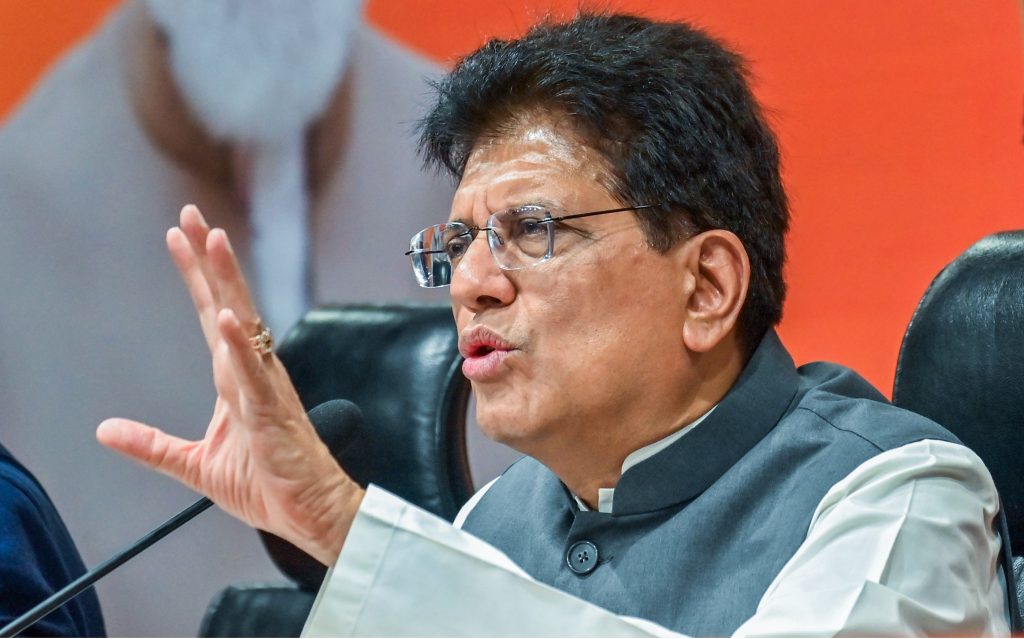
India’s government has signaled a cautious reassessment of its trade strategy and diplomatic approach, emphasizing legal review before tactical responses
H S Panaser
On February 20, 2026, the U.S. Supreme Court ruled that former President Trump’s broad unilateral tariff regime exceeded the authority granted under the International Emergency Economic Powers Act (IEEPA), invalidating that basis for sweeping tariffs imposed in 2025.
In response to the ruling, the White House swiftly pivoted to a different statutory authority to maintain protective levies on imports — setting off a rapid reconfiguration of tariff policy.
1. The 15% Temporary Import Surcharge
- New Legal Basis: The administration invoked Section 122 of the Trade Act of 1974, a rarely used provision allowing the President to impose import surcharges up to 15% for a period of 150 days without congressional approval.
- Tariff Ceiling: The legal maximum under this authority is 15%, which was announced after an initial 10% rate.
- Effective Date: The surcharge is scheduled to take effect at 12:01 a.m. ET on Tuesday, February 24, 2026.
- Duration: The Section 122 surcharge can remain in force for up to 150 days (roughly five months) unless extended via congressional approval.
This move preserves a scope of tariff protection for U.S. industries, while staying within statutory bounds after the Court’s ruling.
2. What This Means for India’s Exports
Unlike the prior high duties under the struck-down regime:
- Many Indian products face a lower effective tariff than during peak 2025 tariffs, which had reached as high as 50% due to combined reciprocal and sectoral duties.
- The new 15% surcharge applies broadly to imports from all trading partners, including India, subject to statutory limits.
Expert analysis suggests this reset could make India’s exports more competitive at the U.S. border than under the highest previous tariff levels, although prevailing Most Favoured Nation (MFN) standard duties and remaining sector-specific tariffs still apply.
3. A Revised Tariff Timeline — India’s Journey
| Date | Legal Basis | Tariff Rate (India) |
| Before April 2, 2025 | WTO MFN | Baseline rates only |
| April – August 6, 2025 | Reciprocal Tariffs | ~26% |
| Aug – Feb 2026 | Peak Reciprocal + Penalty | ~50% |
| Early February 2026 | Interim framework agreed | ~18% |
| Feb 20, 2026 | Supreme Court nullifies IEEPA | 0% (briefly) |
| Feb 21–24, 2026 | Section 122 invoked | 10% → 15% |
| Next 150 days | Section 122 in force | 15% ceiling |
(Note: table based on the changing tariff context; official U.S. tariff classifications and specific HS codes may vary.)
4. New Delhi’s Response & Strategic Posture
Following the Supreme Court decision and tariff reset:
- India’s government has signaled a cautious reassessment of its trade strategy and diplomatic approach, emphasizing legal review before tactical responses.
- The previously discussed interim trade deal framework — which envisioned reducing duties to ~18% — now faces uncertainty given the altered legal context.
- India’s planned trade delegation to Washington has been delayed amid tariff uncertainty, with Commerce Ministry officials evaluating next steps.
This measured stance reflects concerns about retaliatory measures, implications for bilateral negotiations, and the need to recalibrate in light of evolving U.S. trade policy.
Summary: The “New Normal” for U.S.–India Trade (2026)
- A flat 15% temporary surcharge on imports — including Indian exports — will be in effect for the next 150 days under Section 122 of the Trade Act of 1974.
- The tariff reset marks a legal shift from emergency powers to statutory trade authority, giving exporters a clearer, if temporary, framework for planning.
- Longer-term tariff regimes — whether extended by Congress or replaced by legislative and negotiated trade tools — remain to be determined later in 2026.
References & Media Sources
This analysis draws upon reporting and coverage from the following leading international and financial publications:
- Reuters – Coverage on U.S. Supreme Court ruling on tariff authority and invocation of Section 122 of the Trade Act of 1974 (February 2026)
- The Economic Times – Analysis of tariff rate shifts affecting Indian exports and reciprocal trade structures (February 2026)
- Mint – Commentary on India’s export competitiveness and macroeconomic implications of U.S. tariff adjustments (February 2026)
- The Guardian – Reporting on U.S. domestic legal and political developments related to the tariff reset (February 2026)
- Business Standard – Coverage of India–U.S. trade negotiations and Commerce Ministry response (February 2026)
H S Panaser: Chairman, Global Indian Trade and Cultural Council, USA l Business Development Consultant in Pharmaceuticals, IT and AI I EDP I Advisor in merger and acquisitions I GSK I Ex Chair, USINPAC I President at Global Indian Diaspora Alliance l Associated with Prof. Harkishan Singh Foundation I Social Activist I Columnist