








As the interim India–US trade agreement moves towards fine print, a fierce political battle has erupted over tariffs, cotton imports and the future of India’s textile backbone
Our Bureau
New Delhi/Washington
The India–US interim trade agreement, unveiled after a February 2 phone call between Prime Minister Narendra Modi and US President Donald Trump, was meant to signal momentum towards a broader Bilateral Trade Agreement (BTA). Instead, it has triggered an intense political confrontation, with the government projecting it as a “game changer” and the Opposition branding it a “trap deal” that could hurt cotton farmers and textile exporters.
At the heart of the clash lies a deceptively simple question: does the new tariff regime open unprecedented opportunity for India, or does it corner the country into difficult trade-offs?
A Calibrated Opening
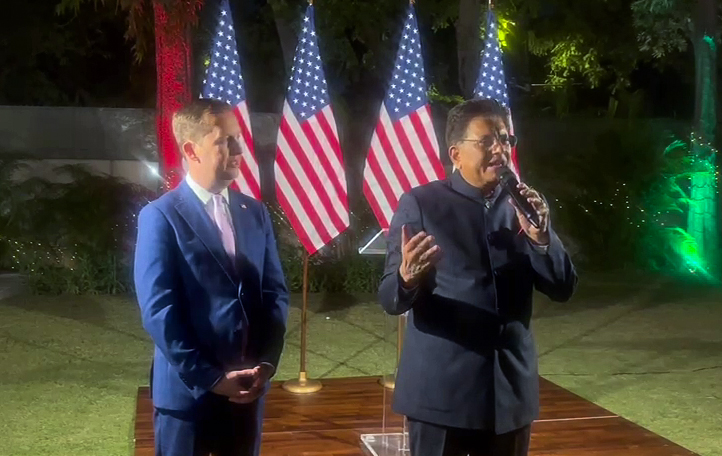
Union Commerce Minister Piyush Goyal has framed the deal as part of a larger strategy. Speaking at a press conference on the #ViksitBharatBudget, he underlined that “nearly 70 per cent of global trade markets are open to India, where preferential access has been ensured through Free Trade Agreements (FTAs).” India, he said, has concluded “9 FTAs with 38 developed countries,” providing “special advantages compared to other countries.”
“These 9 FTAs protect all sensitive sectors while allowing calibrated openings in areas where imports are needed. They create policy stability, clarity, and predictability, which attract large-scale investments,” Goyal asserted.
On the US specifically, the headline number is significant. Since August 2025, Indian goods entering the US had faced a 50 per cent tariff. Following the leaders’ phone call, that tariff has been reduced to 18 per cent on selected Indian goods including textiles, apparel, leather, footwear and certain machinery. Upon full implementation, US tariffs on generic pharmaceuticals, gems and diamonds, and aircraft parts will be removed.
Goyal has described this as historic. “India has received the lowest tariff rates from the US compared to other developing economy competitors. I believe this is a game changer for India’s future progress and development,” he said.
The textile sector is central to the government’s optimism. Through the 9 FTAs, markets worth nearly Rs 45 lakh crore are opening up for Indian goods. The US alone buys Rs 9 lakh crore worth of textiles, while the European Union buys over Rs 22 lakh crore. According to SBI Research, the US currently imports around USD 7.5 billion of textiles from India and a similar amount from Bangladesh.
“There are tremendous opportunities opening up for India’s textile sector. I am confident that Indian entrepreneurs will take full advantage of this opportunity, capture large markets, increase exports, and generate employment,” Goyal said.
A key provision has drawn particular attention: the “yarn forward” principle. As Goyal explained to ET NOW, “It’s called a yarn forward — if you buy cotton or yarn from the US and process it and produce garment, you are able to export it to the US at zero duty.” He stressed, “The same concession is available to India also.”
In other words, Indian garment exporters can access the US market at 0 per cent duty if they use American cotton or yarn — a benefit similar to that extended to Bangladesh, which recently secured a 19 per cent reciprocal tariff and zero-tariff access for garments made with US cotton and man-made fibre.
For Goyal, this does not threaten Indian farmers. On the contrary, he predicts surging demand. “We will actually need to focus more on increasing productivity because there’s tremendous demand coming in for cotton given the EU FTA, given all the 38 countries whose markets we have opened up. So I can see before my eyes huge requirement for more cotton and a huge and a wonderful future for our country,” he said.
The government’s broader ambition is to more than double bilateral trade with the US from USD 191 billion to USD 500 billion by 2030. The BTA, proposed in February 2025, aims to address non-tariff barriers and expand market access across industrial and agricultural goods.
A “Trap” for Farmers
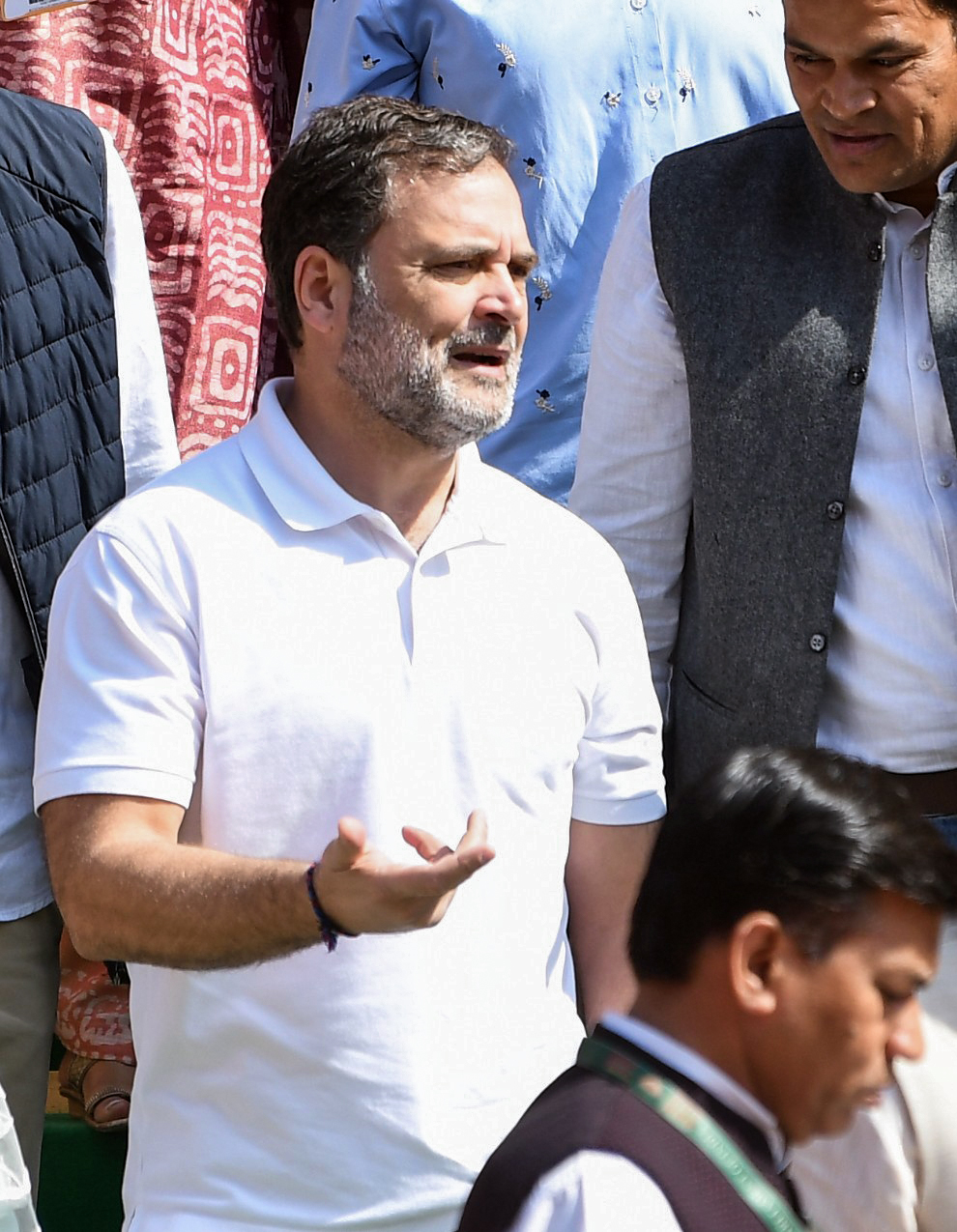
Leader of Opposition Rahul Gandhi sees the same numbers differently. In a sharply worded post on X, he wrote: “18% Tariff vs 0% — Let me explain how the expert liar Prime Minister and his cabinet are spreading confusion on this issue. And how they are cheating India’s cotton farmers and textile exporters through the India-US trade deal.”
Gandhi’s central argument is comparative. Bangladesh, he noted, is being given “0% tariff benefit on garment exports to the US — the only condition is that they import American cotton.” By contrast, Indian garments face an 18 per cent tariff unless they also import US cotton.
He questioned why this conditionality was not highlighted earlier. “If we also want the same benefit, we will have to import cotton from America. Why was this fact hidden from the country till now?” he asked, referring to a ministerial reply in Parliament.
For Gandhi, the policy creates a dilemma: “If we import American cotton, our own farmers will be ruined. If we don’t import it, our textile industry will lag behind and get destroyed.” He described it as a “well in front, ditch behind” situation.
The stakes, he argued, are enormous. “The textile industry and cotton farming are the backbone of livelihood in India. Crores of people’s daily bread depend on these very sectors. Attacking these sectors means pushing millions of families into the pit of unemployment and economic crisis.”
He accused the government of failing to negotiate in the national interest: “A visionary government that thinks in the national interest would have negotiated a deal that protects and ensures the prosperity of both cotton farmers and textile exporters. But exactly the opposite has happened.”
Opposition MPs echoed this criticism in Parliament during the Budget session, calling the interim agreement a “trap deal.”
Amit Shah’s Counterattack
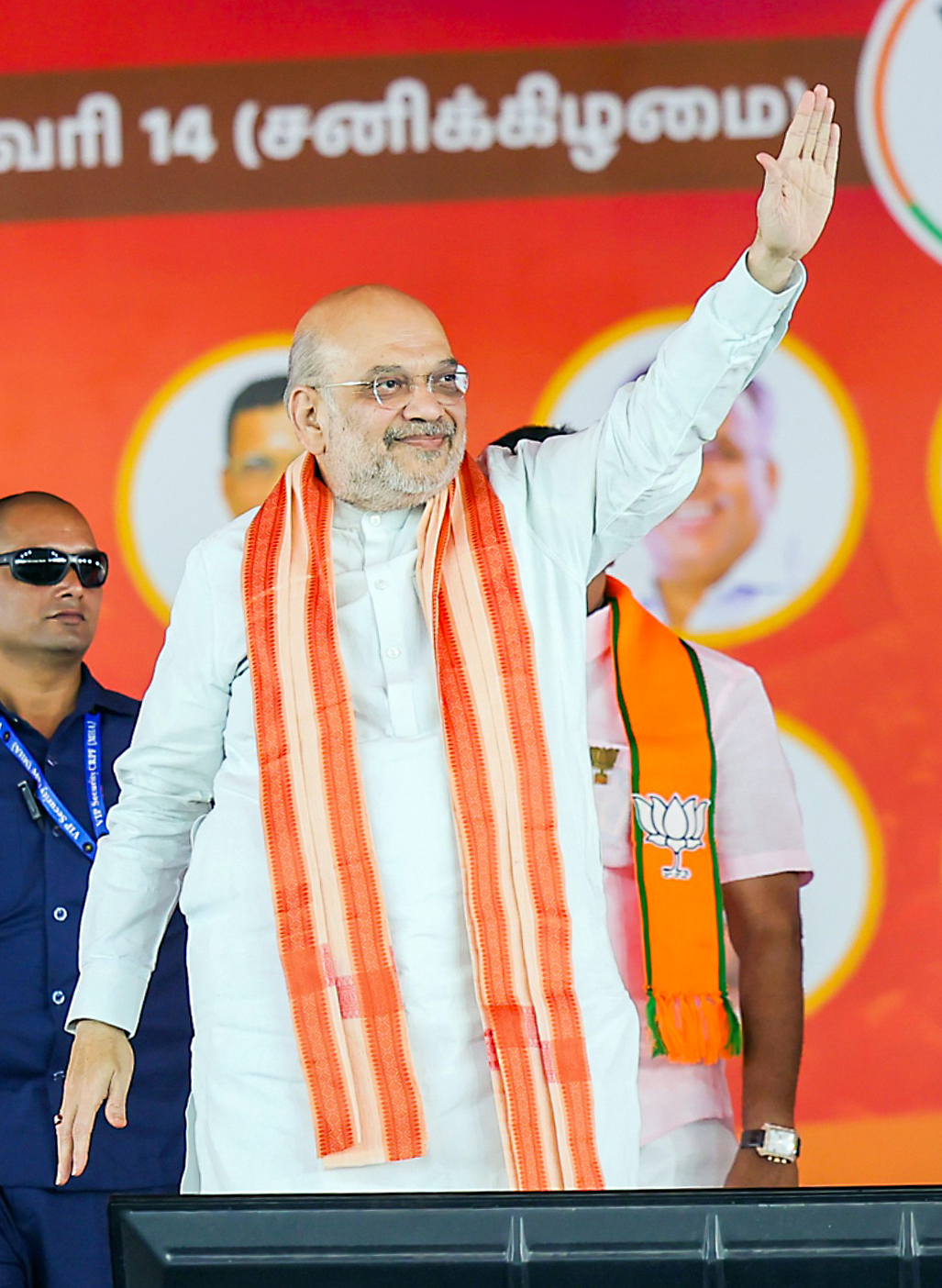
The government has responded with equal force. In Karaikal, Union Home Minister Amit Shah accused Gandhi of spreading misinformation. “Rahul Gandhi wants to mislead the country’s fishermen and farmers. He wants to spread confusion by telling lies,” Shah said.
Defending the FTAs with the US, UK and EU, Shah insisted they would “be of great benefit to our country’s fishermen.” He contrasted the Modi government’s approach with that of the previous Congress-led administration, alleging that under Manmohan Singh “farmers’ interests were sold” in global agreements.
“PM Narendra Modi has worked to provide 100 per cent protection to our farmers and livestock owners,” Shah said, dismissing Gandhi’s critique as part of a pattern: “Rahul Gandhi’s policy is to lie, speak loudly and publicly, and repeat the lie repeatedly.”
The rhetoric has escalated beyond trade arithmetic into a larger ideological battle over who truly represents farmers and workers.
Economic & Politics
Stripped of political invective, the debate turns on three economic questions.
First, will the 18 per cent reciprocal tariff significantly erode India’s competitiveness vis-à-vis Bangladesh and others? Given that US imports USD 7.5 billion each from India and Bangladesh, even small differentials matter in a price-sensitive sector.
Second, how large will the shift towards US cotton be under the yarn-forward rule? If exporters pivot heavily to American inputs to secure zero duty, domestic cotton demand could adjust in complex ways. Goyal argues overall demand will surge due to expanded markets across 38 countries, offsetting any substitution effect. Gandhi fears displacement.
Third, can India leverage the interim deal into a more comprehensive BTA that addresses non-tariff barriers and eliminates remaining tariffs on key sectors?
The fine print, expected in March, will be critical. Goyal himself has said that “when the interim agreement is finalized… one would get to see it in the fine print.”
For now, the India–US trade deal has become a proxy battlefield — over economic nationalism, farmer protection, industrial competitiveness and political credibility. The government sees a calibrated integration into global value chains, backed by 9 FTAs and expanding markets worth Rs 45 lakh crore. The Opposition sees asymmetry and risk, especially for “crores of people’s daily bread.”
As India moves towards 2029 and beyond, trade policy is no longer a technocratic domain. It is electoral terrain. And in that terrain, tariffs are not just percentages — they are political weapons.