








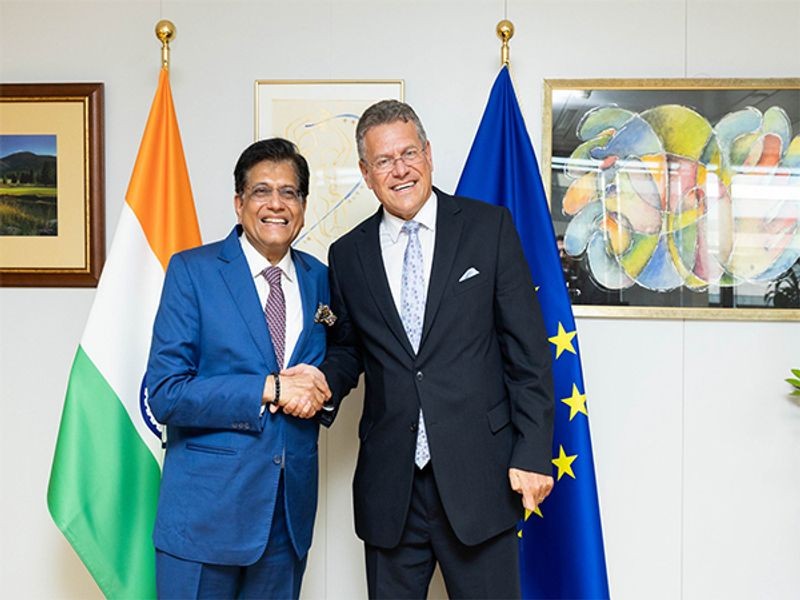
Our Bureau
New Delhi
India and the European Union are set to announce the conclusion of their long-awaited Free Trade Agreement (FTA) during the 16th India-EU Summit on January 27, coinciding with India’s 77th Republic Day celebrations. Top EU leaders, including European Council President António Costa and European Commission President Ursula von der Leyen, will join Prime Minister Narendra Modi as chief guests, marking a historic first for the bloc at the parade. The pact, excluding sensitive agriculture sectors, promises tariff cuts on Indian exports like textiles, pharmaceuticals, and auto parts, while opening India’s market to European autos, wines, and medical devices.
Negotiations, relaunched in 2022 after a 2013 stall, have covered 20 of 24 chapters in intense recent rounds, focusing on goods, services, IT, finance, and telecoms. Bilateral trade hit $136.53 billion in 2024-25, with India exporting $75.85 billion, underscoring the deal’s potential to diversify markets amid US tariff hikes and reduce China reliance. For the EU, it taps India’s growth as a manufacturing hub; for India, it boosts integration into global value chains.
Challenges persist, however. The Global Trade Research Initiative flags gaps in tariff reductions, EU carbon border taxes on steel and cement, and limited professional mobility for Indian IT workers. India seeks visa eased and qualification recognition, but EU politics constrain commitments. Despite optimism, further talks may be needed.
Strategically, the FTA aligns with India’s export ambitions and EU de-risking from Russia and China, alongside summit’s talks on security, clean energy, and business forums. If sealed, it redefines India’s trade ties, balancing access with safeguards—though GTRI warns true gains hinge on climate and services outcomes.