








By Ekta Saxena
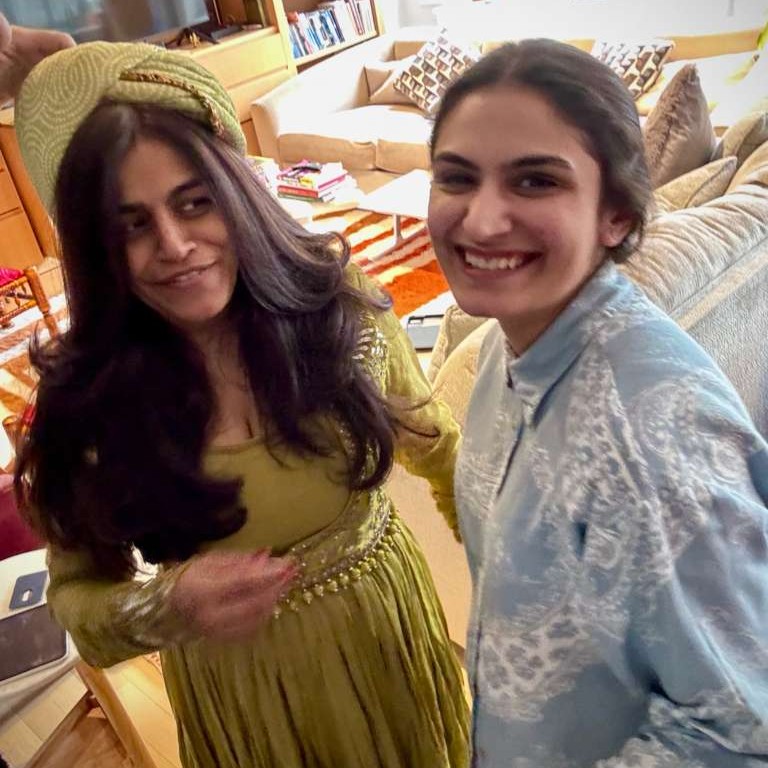
In an industry where creativity often races against fleeting trends, Bhagyashri Soni is a fashion designer and stylist whose work blends haute couture with research-driven innovation. A graduate of NIFT with a master’s in Strategic Design and Management from Parsons School of Design, she has worked as designers for New York Fashion Week and Bridal Asia, before debuting as celebrity stylist by styling the Grammy award winner, Falu Shah.
What inspired you initially to study at NIFT, and how did your master’s in Strategic Design and Management at Parsons influence your transition from fashion design to haute couture?
My interest in fashion sparked very early, largely from observing how clothing can communicate identity, culture, and emotion without saying a word. That curiosity naturally led me to NIFT, where I built a strong technical base — from pattern-making to surface design techniques and draping. But more importantly, it opened my eyes to the power of narrative behind fashion, not just the construction.
Parsons really shifted my entire perspective. In the Strategic Design and Management program, I stopped seeing garments as standalone pieces and started understanding them as part of larger systems — cultural, psychological, behavioral, sustainable, and strategic. It made me think beyond aesthetics and interrogate the forces that shape fashion.
That systems-thinking approach helped me gravitate toward haute couture and creative direction, where craftsmanship naturally intersects with storytelling. Couture, for me, isn’t simply about creating intricate garments — it’s about precision, symbolism, and emotional impact. Parsons taught me how to weave those deeper layers into my work, which ultimately defined my voice as both a designer and a stylist.
Can you walk us through a memorable project — from concept to final execution — that best represents your creative journey so far?
Styling Falu Shah for SURRENDER was, definitely, a turning point in my creative career. It really began with one question: How do you portray surrender as both strength and softness? That single idea shaped the entire direction. I built the visual language around a palette of warm olive, olive yellow, and muted gold — colors that sit deeply within Indian spiritual symbolism, but I wanted to reinterpret them through a modern, global lens. I spent time creating moodboards, studying her music, and understanding how her sound carried both heritage and contemporary energy.
There on, Intentionality became the backbone. Around that time, I saw Punit Balana’s latest collection, fresh off the runway, and the pieces immediately clicked with the emotional world I was trying to build. The fabric’s drape, the sculptural headpiece, the layered textures, the way everything moved under stage light — each element served the story. I wanted the look to feel rooted yet elevated, spiritual but not literal.
I drew inspiration from two iconic portrayals of feminine strength and vulnerability — Deepika Padukone’s Mastani from Bajirao Mastani and Manisha Koirala’s Mallikajaan from Heeramandi. Both characters embody a kind of regal surrender, where resilience and softness coexist. That duality felt perfectly aligned with Falu’s artistic identity.
How did the opportunity to style Grammy Award–winning artist Falu Shah come your way, and what made you confident that this was the right moment to debut as a celebrity stylist?
It actually unfolded very organically. Someone recommended me to Falu, and I began styling her for a few of her other shows. During that process, she introduced SURRENDER to me. As I started shaping her look for the project, she immediately recognized my strength in visual direction. The deeper we went, the clearer it became that fashion wasn’t just an accessory to the narrative — it needed to lead it. Falu really saw my vision and trusted my sensitivity to both aesthetics and cultural nuance, which made the collaboration feel incredibly natural.
It felt like the right timing. I had been designing and styling for American clients for about four years, and I was curious to shift my focus toward the Indian American diaspora — a space that felt both familiar and creatively rich. I knew I had the technical foundation, the conceptual thinking, and the creative clarity to produce something that wasn’t just visually appealing, but meaningful.
Styling Falu wasn’t just a “first big project.” It was the right project — one that allowed me to work with intention, authenticity, and a strong narrative lens, while also stepping into a more expansive creative-directorial role.
What was your creative vision for Falu Shah’s look, and how did you blend her cultural identity with contemporary fashion trends?
My goal was to design a look that honored her Indian roots while still speaking to a global audience. Falu embodies a duality — she’s a classical Indian vocalist with deep cultural grounding, yet she’s also a modern performer who moves fluidly across contemporary stages. Her fashion needed to hold both identities with equal grace.
I started with traditional Indian silhouettes — the natural fluidity of drapes, the gentle movement of handcrafted textiles, and the symbolism of warm olive, a color that sits at the intersection of nature, balance, and quiet sophistication. From there, I merged those elements with modern minimalism and couture-level structure.
The final look carried the emotional and cultural depth of Indian heritage, but it also photographed and performed with the clean lines, precision, and refinement of contemporary high fashion. That harmony between heritage and modernity was the heart of the vision.
As this was your first project as a celebrity stylist, what were the biggest challenges you faced behind the scenes, and how did you navigate them?
The toughest part was balancing creativity with real-world logistics. Couture-level details demand time, precision, multiple fittings, sourcing the right pieces, and constant fine-tuning. Managing all of that while making sure the final look still aligned with Falu’s comfort and artistic expression was a huge learning curve.
Stepping into a new professional identity had its own challenge. I was navigating unfamiliar territory, and the only way to steady myself was to trust the process — diving into research, prototyping, testing silhouettes, refining details, and keeping an open, continuous dialogue with Falu.
In the end, those challenges didn’t just shape the project; they sharpened my instincts and strengthened my confidence as a stylist moving forward.
How has styling a global icon like Falu Shah shaped your approach to fashion going forward, and what can we expect next from you as a rising stylist in the industry?
Styling Falu really reaffirmed something I’ve always believed — fashion is at its most powerful when it respects culture, tells a story, and feels deeply personal to the person wearing it. It reminded me that styling isn’t just about creating something visually striking; it’s about translating identity into form.
This project has encouraged me to lean even further into concept-driven styling and creative direction, especially for performers. I’m excited to explore work that blends cultural narratives with haute couture, and collaborations that blur the lines between fashion, storytelling, and emotion. That intersection — where meaning and aesthetics meet — is where I want to keep building.
As someone shifting between designing, research, and trend forecasting, how do you foresee the future of luxury fashion evolving with Indian-Americans?
Luxury fashion is entering a new era, one defined by cultural authenticity and hybrid identity. Indian-American consumers, in particular, are shaping this shift through cross-cultural aesthetics, sustainable craftsmanship, personalized, meaning-driven fashion, and the blending of traditional textiles with modern silhouettes. We’re moving beyond surface-level “ethnic inspiration” toward genuinely respectful and rooted cultural integration.
I believe Indian-American designers, stylists, and artists will play a central role in redefining luxury. They bring a unique combination of craftsmanship, spirituality, color psychology, and storytelling into contemporary design. The future of luxury, in my view, will be less about exclusivity and more about emotional connection and cultural truth — and Indian-American voices are poised to lead that transformation.