








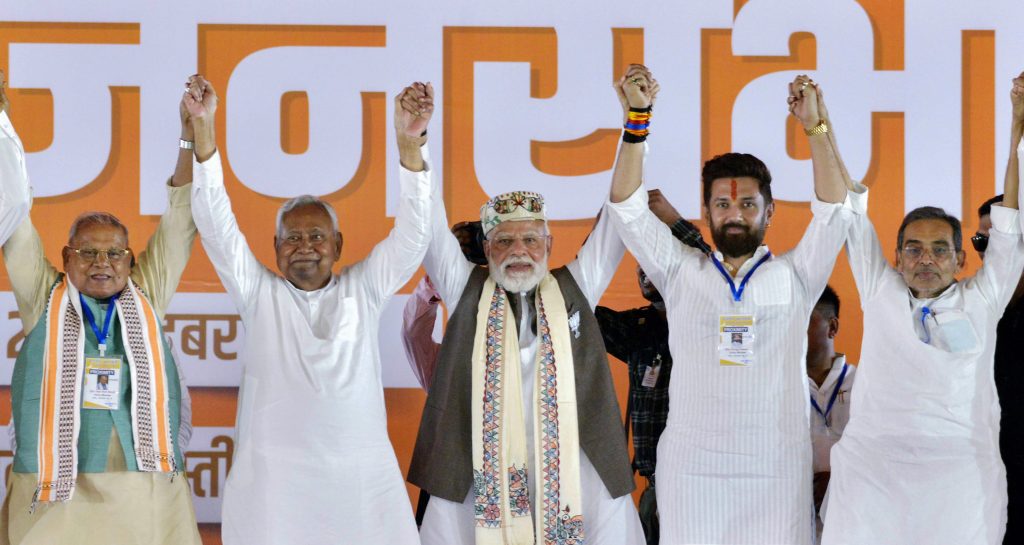
As Bihar heads to the polls in November, PM Modi’s calls for “good governance” meet resistance from RJD and the insurgent campaign of Jan Suraaj — turning the 2025 Assembly elections into a referendum on Bihar’s past, present, and political future
Our Bureau
Patna / New Delhi
Prime Minister Narendra Modi’s arrival in Samastipur on Friday signaled more than the start of the NDA’s campaign — it was the reassertion of a political narrative built on “susaasan,” or good governance. In rally after rally, Modi’s speeches have sought to revive a familiar contrast: between the lawlessness of “jungle raj” under the Rashtriya Janata Dal (RJD) and the developmental stability promised by the BJP-JD(U) alliance.
Standing before large crowds in Samastipur and Begusarai, Modi invoked the memory of socialist leader Karpoori Thakur, blending social justice with a message of prosperity. “We transformed ‘jungle raj’ into good governance. Now the time has come to turn good governance into prosperity,” he told supporters. The symbolism was powerful: aligning the NDA’s vision with Bihar’s long-cherished ideals of social upliftment, while claiming the moral legacy of backward-class leaders once championed by the opposition.
Modi’s campaign also sought to highlight tangible achievements — improved roads, electrification, new rail lines, internet expansion, and the six-lane highway linking Samastipur to Purnia. “The NDA government doesn’t see roads or electricity as mere facilities,” he said. “They are instruments of empowerment.” By pointing out that Bihar has received three times more funds under his government than under previous Congress regimes, Modi aimed to project continuity and control.
But at the heart of his appeal lay a political warning. The RJD, he claimed, was synonymous with chaos, extortion, and fear. “Law and order cannot exist where RJD is in power,” he declared, adding that Bihar’s “mothers and sisters, Dalits, and backward classes” suffered most during that era. His call for the electorate to keep “jungle raj walon ko door” (keep the jungle-raj forces away) was as much about reviving fear as it was about consolidating loyalty among women, youth, and marginalized voters — the NDA’s expanding support base.
Tejashwi’s Promise of Change
Across Bihar’s plains, Tejashwi Yadav’s rallies present a mirror image of Modi’s campaign. Where the prime minister speaks of order and progress, Yadav paints a picture of exhaustion and betrayal. “For 20 years, the people of Bihar have been exploited,” he said in Saharsa, as enthusiastic crowds chanted his name. “We will do in 20 months what this government couldn’t do in 20 years.”
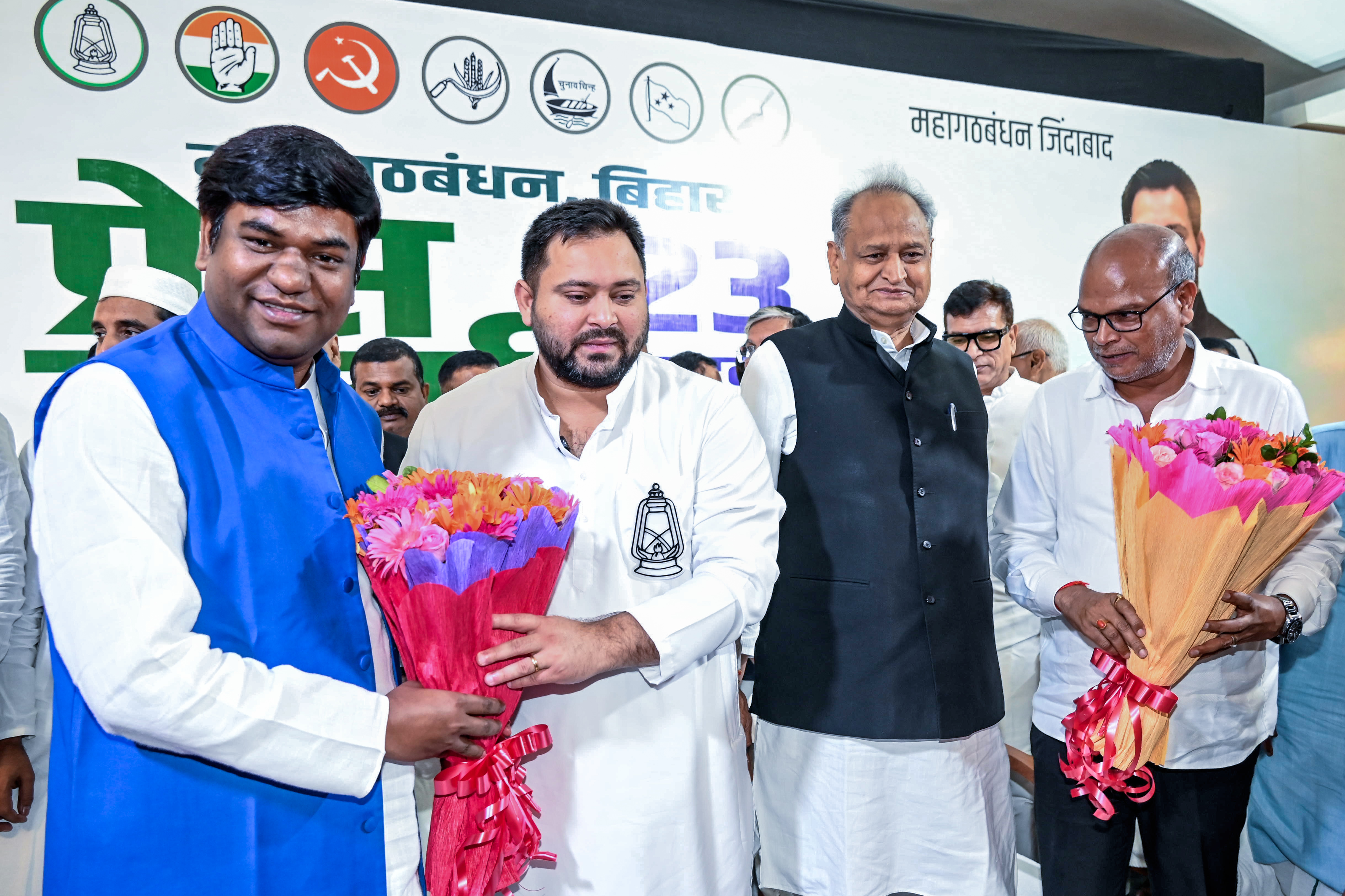
Tejashwi, now the face of the Mahagathbandhan, is banking on a narrative of generational change. His pitch mixes youthful defiance with class resentment — a deliberate attempt to draw a line between the “Baharis” (outsiders) from Gujarat, a pointed jab at Modi and Amit Shah, and “Biharis,” the people who must reclaim their state’s destiny. “PM Modi wants factories in Gujarat but votes in Bihar,” he said, accusing the BJP of neglecting Bihar’s industrial and employment needs.
The RJD’s central argument is that the so-called “double-engine” government — BJP at the Centre and JD(U) in the state — has failed to translate governance into opportunity. Tejashwi and his sister, Misa Bharti, have questioned why Bihar still lags behind in industrialization, education, and employment despite two decades of NDA rule. Bharti’s sharp rebuke — “Has a single factory been set up in 20 years?” — encapsulates the RJD’s messaging: that Bihar’s development story under Nitish Kumar and Modi is more promise than performance.
Tejashwi’s campaign also has an emotional undercurrent. By invoking his father, Lalu Prasad Yadav, as the original voice of the poor and backward classes, he frames the election as a moral struggle against persecution. “If Laluji didn’t fear Modi, will his son?” he asked defiantly. He has promised multiple Deputy Chief Ministers to represent Bihar’s diversity, naming Mukesh Sahani as one, and pledging that others will come from minority communities. The move is a political masterstroke — broadening his coalition’s social reach while subtly countering the BJP’s Hindutva appeal.
For RJD, the 2025 election is more than a fight for power; it’s an ideological comeback. The party seeks to replace the stigma of “jungle raj” with the promise of social justice and renewal. Its strategy — emotional outreach, caste consolidation, and youth mobilization — could test the NDA’s stronghold in regions like Mithilanchal, Bhojpur, and Seemanchal.
A Third Voice Rising
While the BJP and RJD trade charges, a quieter but potentially disruptive campaign is unfolding under Prashant Kishor’s Jan Suraaj. Once the master strategist behind Modi’s and Nitish Kumar’s electoral triumphs, Kishor now casts himself as Bihar’s reformer-in-waiting — the man determined to “end political bonded labour.”
Campaigning in West Champaran, Kishor’s speeches are less fiery but no less pointed. “A bullet train worth ₹1 lakh crore is being built in Gujarat, while Bihar’s youth struggle to get a seat in a train to come home for Chhath,” he said — a line that has gone viral across Bihar’s villages. His message — that both the NDA and RJD have reduced Bihar’s voters to captive electorates of fear — resonates deeply among first-time voters and the middle class.
Kishor’s Jan Suraaj movement, launched over three years ago, has been systematically building grassroots networks in all 243 constituencies. The campaign’s strength lies not in charisma but organization: padayatras, citizen consultations, and promises of local governance reform. His slogan, “Vote for yourself, not for fear,” encapsulates a challenge to both Modi’s and Tejashwi’s personality-driven politics.
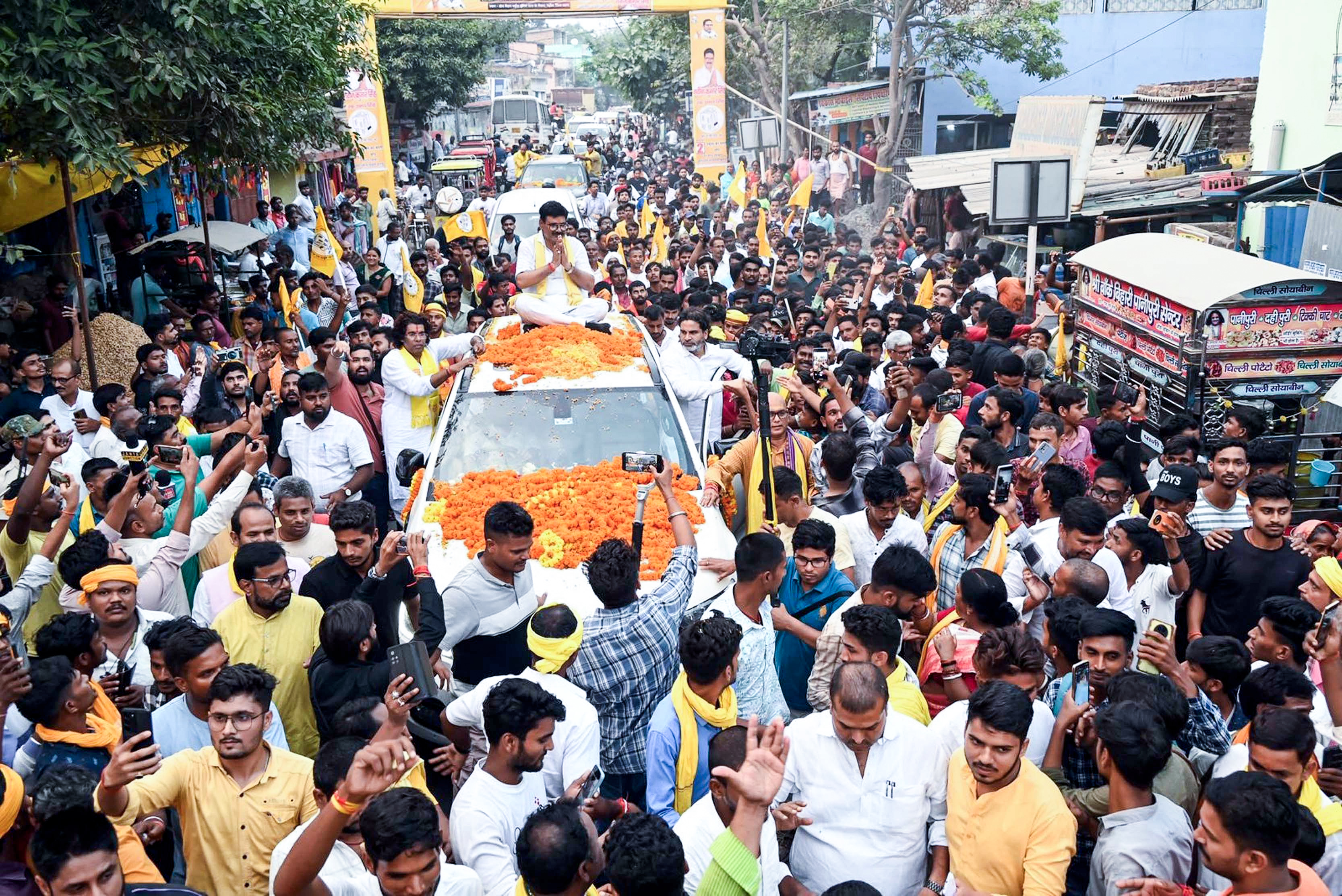
Analysts say Kishor’s impact may not immediately translate into seats, but it could significantly affect margins in key constituencies, especially in North Bihar and Champaran. His insistence that “people of Bihar have been voting out of compulsion, not conviction” hints at an attempt to redefine Bihar’s political consciousness. Even if Jan Suraaj doesn’t win big, it could play spoiler in tight races, fragmenting the anti-incumbency vote or drawing away disillusioned youth from both alliances.
Stakes Higher Than Ever
The 2025 Bihar Assembly elections are not just about who governs Patna — they are a political test for India’s three major currents of power.
For the NDA, a victory would reaffirm the BJP’s dominance in the Hindi heartland and consolidate its image of governance and stability. Nitish Kumar’s continued partnership with the BJP remains critical for both — for the BJP to maintain its northern coalition, and for Nitish to preserve relevance in the twilight of his political career. A strong win would also allow Modi to showcase Bihar as proof that “development politics” trumps caste arithmetic.
For the RJD-led Mahagathbandhan, this election is existential. Having tasted power intermittently but struggled with internal contradictions, the alliance must prove that it can modernize its politics while preserving its social justice legacy. Tejashwi Yadav’s leadership will be tested on two fronts: his ability to attract youth disenchanted with joblessness and to hold together a broad coalition of caste, class, and ideology. A loss could weaken his standing as Lalu’s heir; a strong showing could catapult him into the national opposition space.
And for Prashant Kishor’s Jan Suraaj, these elections are a baptism by fire. Winning even a handful of seats would signal the arrival of a new centrist, reform-oriented alternative in Bihar’s politics — something the state hasn’t seen in decades. Kishor’s challenge is formidable: to convert admiration into votes and build credibility in a deeply polarized environment. But his rise could reshape the language of politics in Bihar, moving the debate from “who rules” to “how we are governed.”
Why Bihar Matters
Beyond its 243 assembly seats, Bihar’s elections are a mirror of India’s political mood. For the BJP, a resounding victory would strengthen its national narrative ahead of 2026 — that welfare, infrastructure, and governance can overcome anti-incumbency. For the opposition, Bihar offers a laboratory to test coalition unity and social mobilization in a state where caste identities remain powerful but aspirations are rapidly shifting.
The outcome will also influence the shape of the national opposition bloc. If the Mahagathbandhan performs well, it could embolden regional parties in Uttar Pradesh and Jharkhand to pursue stronger anti-BJP coordination. If the NDA sweeps again, it would confirm the BJP’s continued dominance in India’s heartland, giving Modi a symbolic victory over both old rivals and new reformers.
Meanwhile, the emergence of Prashant Kishor introduces a wildcard — a reminder that Bihar’s political soil, though shaped by tradition, is fertile for disruption.
As Bihar prepares to vote on November 6 and 11, the campaign trails of Modi, Tejashwi, and Kishor reveal a state standing at a crossroads. The prime minister’s rallies evoke pride in progress and fear of regression; the RJD’s counters promise justice, jobs, and dignity; and Kishor’s quiet revolution whispers of renewal.
Together, they make this election not just a contest for power — but a struggle for the political soul of Bihar.