








Archan Mehta
Often hyped, India vs Pakistan in T20s is like a Bollywood blockbuster but the twist is that India always plays the hero while Pakistan keeps getting typecast as the sidekick. From the very first clash in Durban 2007, which ended in a tie and a famous bowl-out, India have largely dictated terms. Out of the 14 matches before today, India had won 10, Pakistan just 3, with one tie. With this latest win in Dubai, that margin stretches to 11-3 less a rivalry and more a record of dominance.
That dominance has been defined by big-match moments and standout performances. Gautam Gambhir’s gritty knock in the 2007 World Cup final, Virat Kohli’s iconic 82 at Melbourne in 2022*, and Rohit Sharma’s effortless fifties in crunch encounters all stand out as markers of India’s composure under pressure. For Pakistan, their 10-wicket thrashing of India in Dubai 2021 remains the outlier, powered by Shaheen Afridi’s dream spell. But if Afridi’s fire was a one-night show, India’s batters and bowlers have built a series of blockbusters, turning encounters into masterclasses in planning and execution.
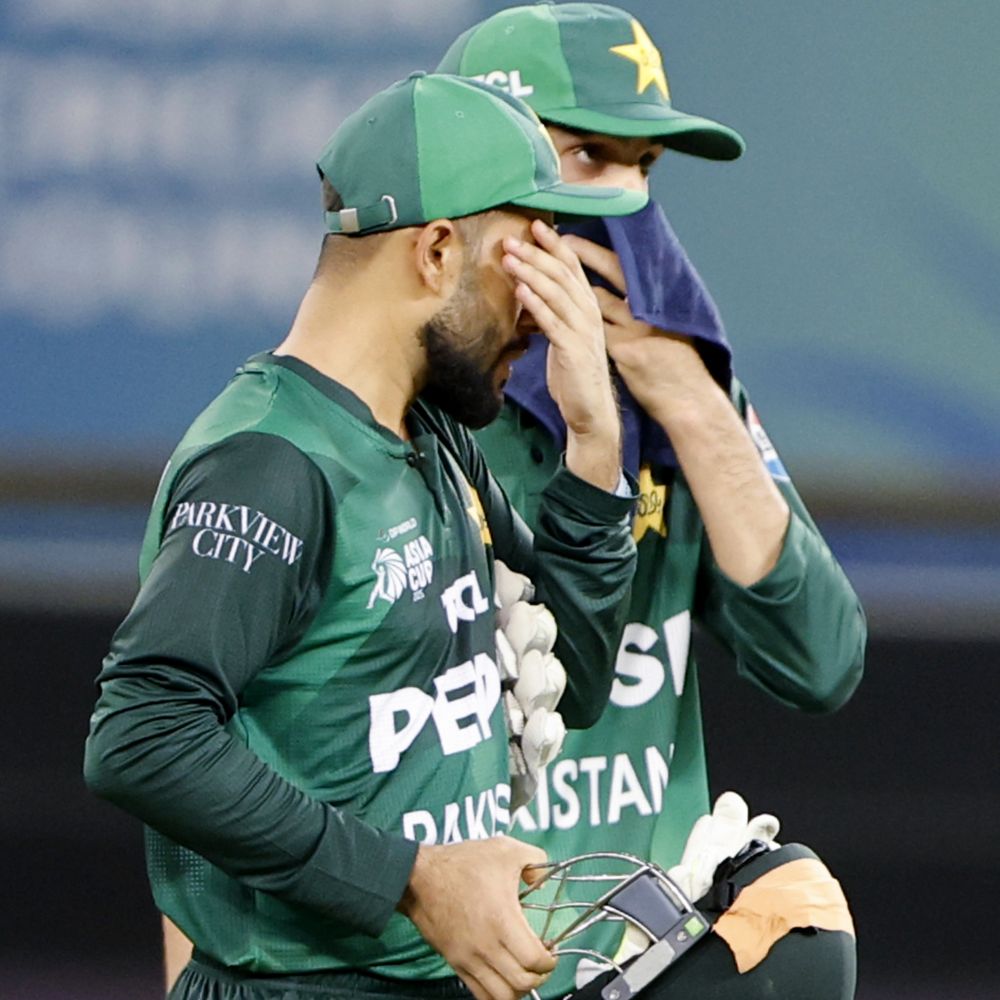
This contrast between India’s clarity and Pakistan’s chaos has remained the story of this rivalry. Pakistan often brings mercurial unpredictability, India leaves with points. And in the 2025 Asia Cup in Dubai, the same pattern repeated itself. India’s bowlers, led by Kuldeep Yadav’s wizardry, once again squeezed Pakistan dry. Kuldeep’s 3 for 18, Axar Patel’s sharp 2 for 18, and Bumrah’s surgical strikes reduced Pakistan to 127/9. Even Varun Chakravarthy joined the party, while Pakistan consumed a staggering 63 dot balls, essentially throwing away half an innings without scoring.
With the bat, Pakistan looked as brittle as ever. Sahibzada Farhan top-scored with 40, but his 44-ball crawl drained all momentum. Captain Salman Agha scratched out 3 off 12, while Mohammad Haris’ intent wilted against Bumrah’s pace. Shaheen Afridi’s late flourish (33* off 16) only made the scorecard look slightly less grim, but it did little to disguise the larger issue. Once again, Pakistan’s middle order was like hotel Wi-Fi — unreliable when you need it most.
India’s response, in contrast, was both ruthless and effortless. Abhishek Sharma tore into Shaheen Afridi with a four and six off the first two balls of the chase, blasting 31 off 13 to kill any suspense. Suryakumar Yadav played his part with an unbeaten 47. India reached the target in 15.5 overs, with 60 runs in the Powerplay making it look like a casual net session rather than the sport’s most hyped rivalry. It was less a chase, more a statement: India are operating on a different level altogether. IPL has to be given a lot of credit due to the sheer pressure situations it creates which builds intent and character of Indian players.
Looking ahead, India appears frighteningly well-balanced. Their bowling attack has the perfect blend of spin tri-strangulation and Bumrah’s deathly precision, while the batting is evolving with fresh aggression from Abhishek Sharma alongside Gill and SKY’s consistency so far in this year’s Asia Cup. Pakistan, meanwhile, faces uncomfortable questions. Without the Babar-Rizwan cushion, their batting is fragile and lacks structure, and their over-reliance on Shaheen with the ball makes them predictable. Unless Pakistan revamp roles, trust their middle order, and back more spinners in UAE conditions, they will continue to play catch-up. For now, this “great rivalry” feels one-sided. India treats it like business as usual; Pakistan keeps calling it do-or-die but the script rarely changes.
Archan Mehta is a writer dedicated to telling compelling stories about athletes, teams, and the world of cricket