








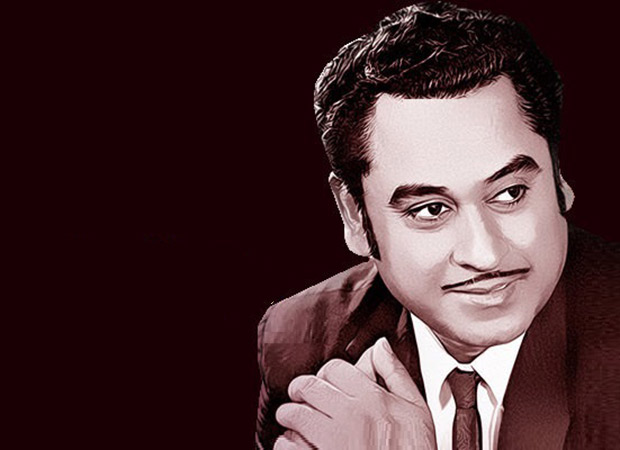
As playback legend Shaan warns, Bollywood music today faces a double crisis—singers struggling to find original voices and artificial intelligence threatening to erase the authenticity of those who came before.
Our Bureau
Mumbai
Bollywood music, once a space of unending innovation and cultural resonance, finds itself at a crossroads. On one side is the shrinking pool of original voices—singers who can carry a distinct style and leave a timeless imprint. On the other side is the dizzying rise of artificial intelligence, which can mimic legends but risks reducing art to imitation. Together, these two forces are reshaping the soundscape of India’s most influential industry.
Playback singer Shaan, who has spent nearly three decades in the industry, is among the few voices sounding the alarm. Known for unforgettable tracks like Chand Sifarish and Behti Hawa Sa Tha Voh, Shaan has seen the golden years of Bollywood playback evolve into today’s digitally driven, algorithm-heavy music scene. His assessment is blunt: reality shows, which once promised to nurture raw talent, have become entertainment spectacles, producing singers who excel at imitation but rarely at originality.
“Technically, they are all fantastic,” Shaan admits, “but they haven’t found their own voice. They are singing Sonu Nigam’s songs like Sonu Nigam, Arijit Singh’s songs like Arijit Singh. Where is their style, their USP?” His words reflect a deeper crisis in the industry—an inability to nurture individuality. For decades, Bollywood produced stars whose voices defined eras: Kishore Kumar in the 70s, Kumar Sanu and Udit Narayan in the 90s, Sonu Nigam and Shaan himself in the 2000s, and Arijit Singh in the 2010s. But in today’s crowded musical marketplace, fresh voices are struggling to cut through the noise.
The reason is partly structural. Television singing competitions, once considered stepping stones to playback careers, now focus more on spectacle than substance. Contestants belt out pitch-perfect covers, often winning applause for reproducing classics rather than experimenting with their own music. The result, Shaan warns, is a generation of singers who are technically polished but creatively stunted.
And just as this shortage of originality has begun to pinch Bollywood, another storm has arrived: artificial intelligence. The same technology that powers voice assistants and deepfakes has now entered music, allowing users to generate covers in the voices of legendary singers. With a few clicks, Kishore Kumar can be made to croon Saiyaara or Mohammed Rafi can be inserted into a 21st-century EDM track.
The danger is twofold. For one, the sanctity of the original work is compromised. A Kishore Kumar song sung by Kishore himself carries the weight of his era, his life, and his creative choices. An AI-generated cover strips all that away, reducing artistry to data. Second, the audience—especially younger listeners—risks confusing imitations with originals, blurring the lines between homage and counterfeit.
This crisis comes at a time when the Bollywood music industry is already facing criticism for over-reliance on remixes and formulaic soundtracks. With AI adding another layer of duplication, the industry’s creative bandwidth looks even narrower. Instead of investing in new voices and encouraging experimentation, there is a temptation to lean on nostalgia—whether through endless remakes of 90s hits or through digital recreations of singers who are no longer alive.
Yet, the solution, Shaan insists, lies not in technology but in education. “There has to be a different schooling,” he says. Artists need platforms where they are taught not just to sing well but to sing themselves. Original compositions, fresh lyrics, and daring experiments must be celebrated as much as technical brilliance. Only then can the industry hope to produce voices that last beyond one viral moment.
Ironically, Shaan himself continues to look backward even as he pleads for originality. Later this month, he will dedicate an entire concert to Kishore Kumar, a singer who remains unmatched in versatility and charm. The show, Forever Kishore Shaan Se, is less about replication and more about reverence—a reminder that tributes need not erase originality. Shaan’s renditions will be his own, filtered through his journey, rather than borrowed through AI.
Bollywood music has always mirrored India’s cultural heartbeat. From the soul-stirring ghazals of Talat Mahmood to the disco frenzy of Bappi Lahiri, from A.R. Rahman’s Oscar-winning fusion to Arijit Singh’s melancholic ballads, the industry has thrived on reinvention. The current crisis—of missing originality and artificial imitation—poses perhaps its toughest challenge yet.
| Bollywood Music in Numbers |
| 70% of Bollywood hits in 2022 were remixes or rehashed versions of older songs |
| 3 out of 5 winners of reality singing shows in the past decade have struggled to sustain playback careers |
| AI voice cloning apps in India saw a 200% rise in downloads in 2023 |
| Arijit Singh remains the dominant voice in Bollywood—he featured in more than 45% of top 100 streamed Hindi film songs in 2021–23. |
| Independent music on platforms like YouTube and Spotify grew 25% year-on-year |
| Audiences are now open to new voices outside the Bollywood films system |