








Signs of broad-based strength are emerging in the Indian economy, with latest data on industrial production, retail consumption, and stock market performance all pointing to sustained momentum despite global uncertainties.
Our Bureau
Mumbai / New Delhi
India’s economic outlook received a boost this week as the Ministry of Commerce and Industry reported a rise in the Index of Eight Core Industries (ICI), fresh projections showed online retail on an explosive growth path, and stock markets closed higher on strong domestic inflows. Together, these indicators underline resilience in Asia’s third-largest economy at a time when global headwinds remain a challenge.
Core sector gains
The ICI, which maps the performance of coal, crude oil, natural gas, refinery products, fertilizers, steel, cement and electricity, registered a 2 per cent growth in July 2025 over the same period last year. The uptick was powered by strong double-digit growth in steel (12.8 per cent) and cement (11.7 per cent) production, underscoring robust demand from infrastructure and construction activity. Fertilizers and electricity also posted modest increases.
While output of coal, crude oil, natural gas and refinery products contracted, analysts suggest the momentum in steel and cement reflects India’s infrastructure drive and housing push. Given that the eight industries together make up over 40 per cent of the Index of Industrial Production (IIP), the July numbers are seen as a positive signal for the broader economy.
Digital consumption rises
Parallel to industrial activity, India’s consumer economy is witnessing a major transformation. A new FICCI-Deloitte report projects online retail to rise from USD 75 billion in 2024 to USD 260 billion by 2030, doubling its share in overall retail from 7 per cent to 14 per cent.
Fuelled by Gen Z’s spending power, rapid smartphone adoption, and deeper internet penetration, the shift is altering India’s consumption map. Tier II and III cities now account for more than 60 per cent of e-commerce transactions, highlighting how digital inclusion is broadening the consumer base.
Quick commerce, in particular, is surging at 70–80 per cent annual growth, making India the fastest-growing quick commerce market globally, with adoption spreading even to mid-sized towns. Electronics, fashion, and groceries are expected to lead category growth in the coming years, supported by the rise of India’s middle class, which is set to comprise 60 per cent of the population by 2047.
Stock markets jump
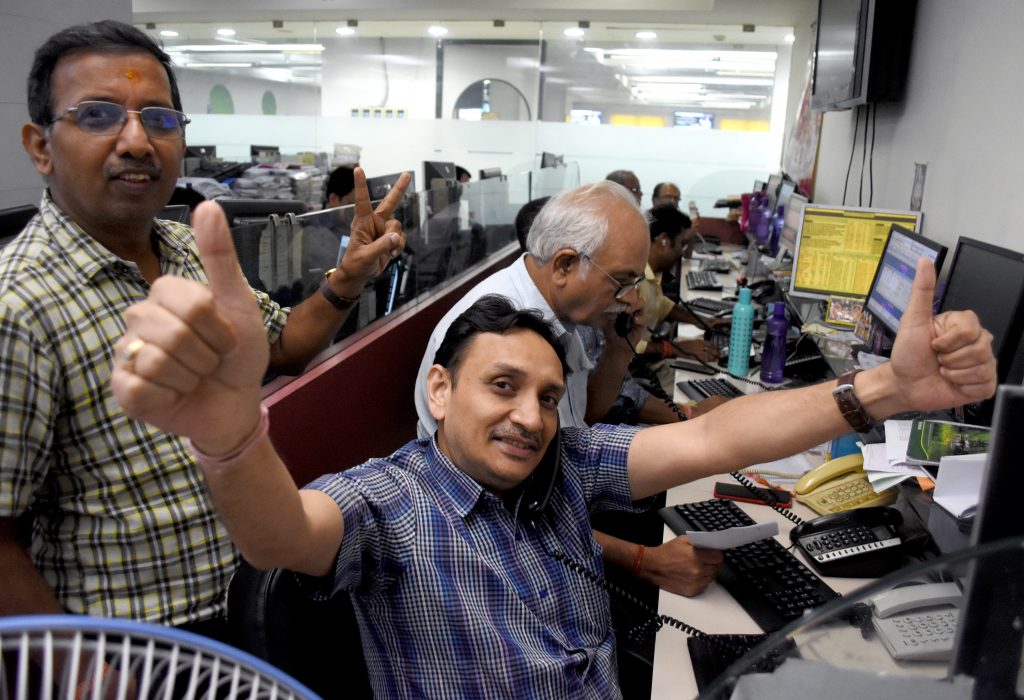
Investor sentiment echoed the positive momentum as Sensex closed 213 points higher at 81,857.84 and Nifty rose 69.90 points to 25,050.55 on Wednesday. Both benchmarks have advanced more than 2 per cent over the past week, buoyed by optimism around proposed GST reforms and stable global cues.
According to analysts, Nifty’s decisive break above the 25,000 mark has bolstered confidence, while steady inflows from domestic investors continue to support valuations. IT and FMCG stocks led the rally, though experts cautioned that external risks — particularly U.S. tariffs and sanctions on Russian crude — could influence sentiment in the months ahead.
Together, the data points reflect a broadening economic recovery. The industrial sector is showing resilience despite energy-related contractions, the digital economy is expanding at a record pace, and equity markets remain buoyant on the back of domestic liquidity and reforms.
Economists say that sustaining this momentum will depend on continued infrastructure spending, policy stability, and global trade conditions. For now, however, the numbers indicate that India is positioned to stay on a high-growth trajectory, balancing traditional industrial strength with digital consumption and capital market depth.