








H S Panaser
In a significant escalation of trade tensions, the United States has imposed a 50% tariff on several Indian goods, raising existing duties by an additional 25%. This decision has wide-ranging implications, especially for sectors like textiles, electronics, and steel. Notably, pharmaceutical products — including generic drugs and APIs — are currently exempt, highlighting the US dependence on India’s drug manufacturing capabilities.
Pharmaceutical Exemption: A Temporary Relief
India plays a pivotal role in the US healthcare system by supplying nearly 40% of generic drugs used in the country. Acknowledging this, the US has excluded pharmaceuticals from the new tariffs. However, the Section 232 investigation—focused on national security concerns—could change this landscape. A final report is expected by December 27, 2025, with presidential action due by March 2026.
If tariffs were imposed on Indian pharmaceuticals:
- US healthcare costs may rise due to limited access to affordable generics.
- India could retaliate, potentially imposing reciprocal tariffs on US pharma products, disrupting global medical supply chains.
- Multinational drug companies may face delays and price volatility, harming R&D and consumer access worldwide.
Impact Analysis: Winners, Losers & Strategic Shifts
For India:
Potential Gains:
- India may diversify its export base and strengthen regional trade ties, especially within BRICS and Global South.
- Tariffs might encourage local value addition and promote domestic manufacturing.
Potential Losses:
- Reduced access to the US market for key industries could affect jobs and GDP growth.
- Uncertainty in pharma trade may strain the $50+ billion pharmaceutical export industry.
For the US:
Potential Gains:
- Tariffs may offer temporary protection to domestic manufacturers in selected sectors.
Potential Losses:
- Rising consumer costs, particularly if generics are eventually included.
- Diplomatic fallout with India, a key Indo-Pacific strategic partner.
- Risk of losing credibility as a consistent trade partner due to perceived double standards.
Double Standards? Comparing US Policy on India, Russia & Europe
The US has criticized India for continuing to import discounted Russian oil post-Ukraine war, while Europe has significantly increased its energy imports from Russia via indirect routes or exemptions. At the same time, the US itself maintains non-sanctioned trade channels with Russia, particularly for specific commodities like nuclear fuel and aerospace materials.
This inconsistency:
- Weakens US credibility on the global rules-based order.
- Pushes emerging economies to question the fairness of US foreign and trade policy.
- Encourages closer ties between Russia, India, and China, as nations seek strategic autonomy from Western-led systems.
BRICS: A Rising Bloc of Strategic Counterweight
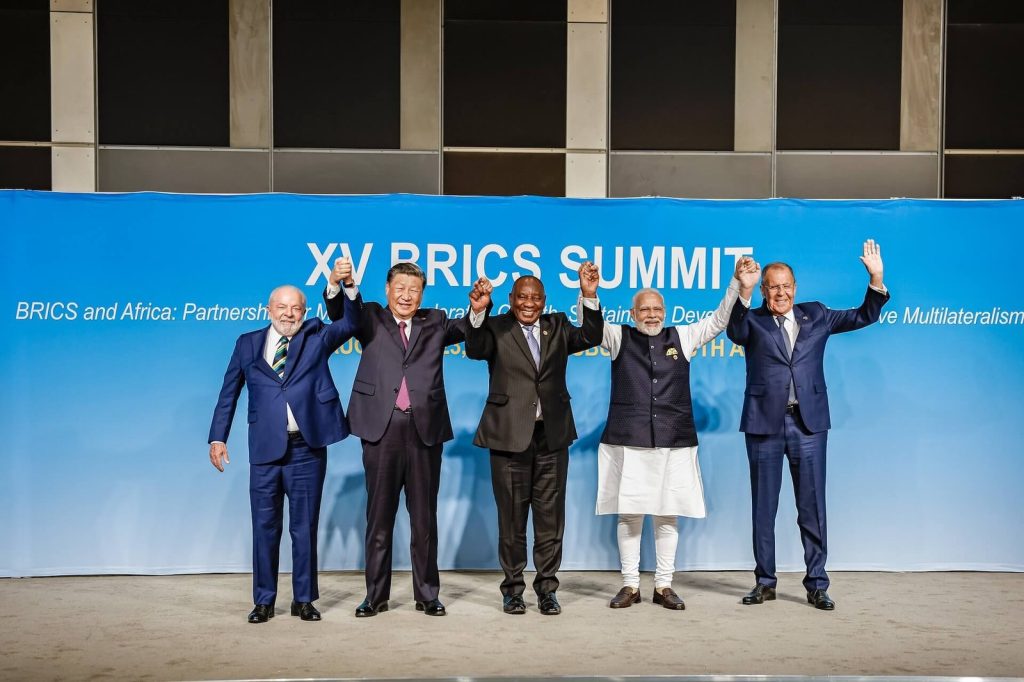
India, China, and Russia — as core BRICS members — are increasingly aligned in areas of commerce, defense, and technology. Recent expansions and initiatives such as:
- BRICS currency discussions
- Alternative payment systems to SWIFT
- Defense collaborations between Russia and India
…are reinforcing a multipolar global order.
If the current tariff-driven trade fragmentation continues:
- BRICS could emerge as a counterforce to G7, reshaping trade and diplomacy.
- Non-Western alliances may expand, including new members from Africa, the Middle East, and Latin America.
Could Russia Shut Off Gas to Europe?
If geopolitical tensions escalate — especially over continued sanctions or Western support to Ukraine — Russia may consider halting or rerouting natural gas supplies to Europe:
- Such a move would escalate energy insecurity in Europe.
- It could further solidify Russia’s pivot to Asia, with India and China becoming major energy partners.
- This would accelerate Europe’s shift to alternative energy sources, but not without short- to mid-term economic pain.
Conclusion: A Pivotal Moment in Global Trade Realignment
The 50% US tariffs on Indian goods are more than just a bilateral economic policy — they are part of a broader geopolitical recalibration. As the US selectively applies trade penalties while maintaining exemptions (like pharmaceuticals) and demonstrates inconsistent standards on Russian trade, countries like India are rethinking their long-term strategic alignments.
India’s potential response — including tariffs on US pharma or deeper integration with BRICS — could reshape global trade dynamics, potentially weakening US influence and accelerating a more multipolar world order.
H S Panaser is the Chair, Global Indian Trade and Cultural Council l Consultant: Business Development, Pharmaceuticals, IT, Healthcare and AI l EDP I Project Management I President, Global Indian Diaspora Alliance