








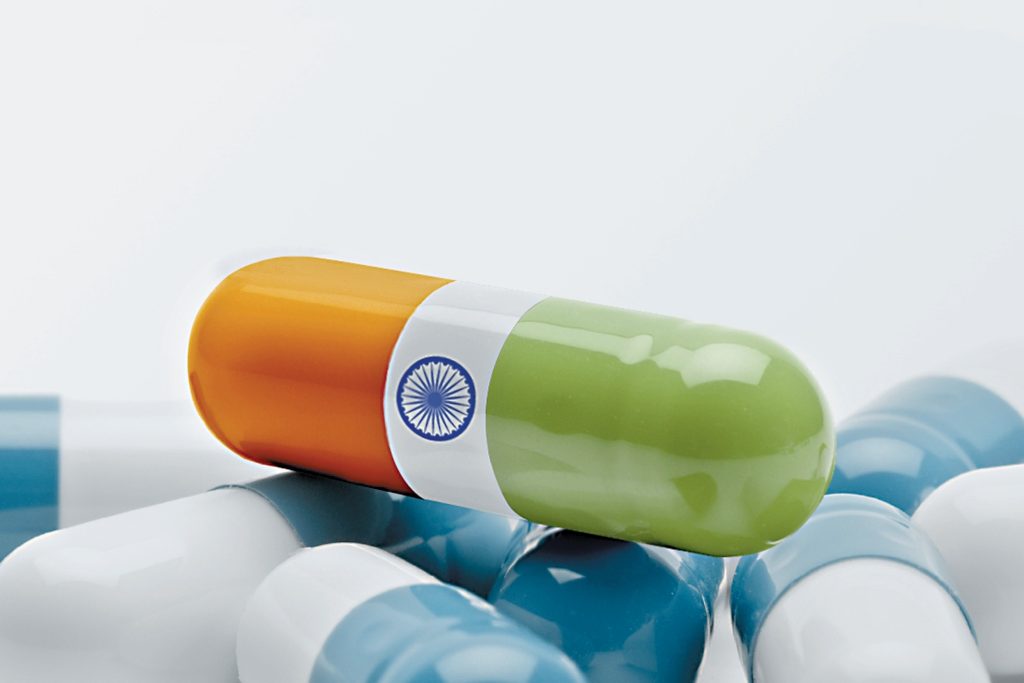
As the U.S. slaps steep tariffs on Indian goods, the pharmaceutical industry — backbone of American generics — is fighting back with strategy, scale, and sharp warnings
Our Bureau
Mumbai
India’s pharmaceutical industry — the world’s pharmacy and a critical pillar of U.S. healthcare — is bracing for turbulence. With President Donald Trump’s latest executive order imposing a flat 25 per cent tariff on all goods from India, including potentially pharmaceuticals, the message from New Delhi’s pharma corridors is clear: we’re ready, we’re resilient, and America may feel the pain more than we do.
Indian manufacturers currently supply nearly 47 per cent of generic drugs in the U.S., from life-saving cancer treatments and antibiotics to essential chronic disease medication. That supply chain, built over decades, has been a pillar of affordability in the American healthcare system. But with Trump’s tariffs threatening to disrupt this delicate balance, Indian pharma leaders are preparing a two-pronged counteroffensive.
Girdhar Gyani, Director General of the Association of Healthcare Providers (India), called the decision “short-sighted” and warned of immediate consequences for American consumers. “If enforced, these tariffs could increase U.S. drug prices by 20 to 25 per cent annually — a burden of nearly USD 6 to 7 billion. It’s unclear if the U.S. healthcare system can absorb that kind of shock,” Gyani said.
Rather than panic, Indian firms are already adapting. One key strategy involves ramping up production in U.S.- and Mexico-based plants owned by Indian pharma giants — a move that would sidestep the tariffs entirely while maintaining supply lines. Indian firms like Sun Pharma, Dr. Reddy’s, and Lupin have long invested in overseas facilities, giving them flexibility others lack.
The second strategy is about evolution, not evasion. Gyani explained, “We’re shifting focus from basic generics to value-added combination drugs — single pills combining multiple medications.” These combination therapies offer more convenience to patients and command higher prices, allowing Indian firms to maintain margins even under a tariff regime.
The industry’s confidence is echoed by Dilip Kumar, Chairman of Medical Tourism at the Chamber of Commerce. “Trump is trying to kill the Indian market, but it won’t work. The U.S. is dependent on Indian and Chinese pharmaceutical exports. Their system needs us more than we need their market.”
Kumar also noted that Indian exporters are exploring alternative markets, including Europe, Africa, and Latin America, to cushion any potential hit. “We’ve survived tougher times. We’ll bounce back,” he said.
At the core of this controversy is India’s unique position in the global pharmaceutical supply chain. According to Pharmexcil Chairman Namit Joshi, Indian firms are irreplaceable in providing high-quality, affordable medicines globally. “Our drugs keep prices low in the U.S. — especially in critical areas like oncology, cardiology, and infectious diseases. Any disruption could cause shortages and cost spikes,” Joshi warned.
And the problem isn’t short-term. While Trump’s policy might aim to encourage domestic manufacturing, building local pharma capacity in the U.S. will take years. “Establishing meaningful API production and manufacturing facilities will take at least 3–5 years,” Joshi said. In the meantime, U.S. patients and hospitals could bear the brunt.
There’s also confusion in the air. In an earlier April announcement, the Trump administration had exempted pharmaceuticals from tariff coverage. Whether this fresh 25 per cent blanket tariff now includes drugs remains unclear — and that ambiguity itself is causing market jitters.
Still, Indian industry leaders aren’t waiting around for clarity. They’re building resilience — not just in supply chains, but in diplomacy. Gyani believes ongoing dialogue between New Delhi and Washington could lead to a “reconsideration” or targeted exemptions, especially once the impact on American drug prices becomes undeniable.
The stakes are high. India’s pharmaceutical exports to the U.S. were valued at $8.5 billion in 2024, with the figure projected to grow steadily as aging populations drive up demand for affordable generics. Disrupting this flow could cause economic and political headaches on both sides of the Atlantic.
For now, Indian pharma’s message is one of calm strength. Far from being a casualty, it is positioning itself as a case study in global adaptability. With diversified manufacturing, upgraded product portfolios, and longstanding trust in global markets, the industry is showing how soft power, science, and supply chain smarts can counter even the most aggressive trade policy.
As the battle over tariffs heats up, one thing is clear: Indian pharma is not backing down. Instead, it’s gearing up — not just to survive Trump’s tariff storm, but to emerge stronger, smarter, and more indispensable than ever before.