








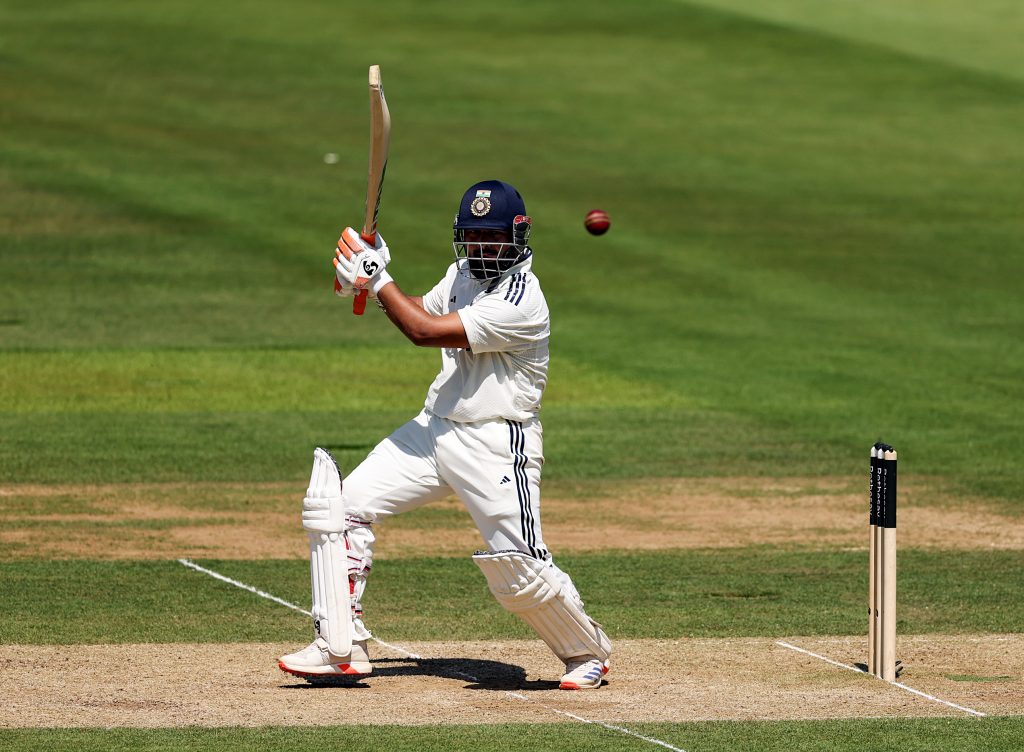
Both Sydney and Manchester showed that for India, a draw can be as satisfying as a win if earned the hard way. One was fought with bruised bodies and taped hamstrings, the other with steely nerves and calm decision-making
By Archan Mehta

Only in Test cricket can a draw feel like you just stole the crown jewels and walked away with a smile! The Sydney Test in 2021 against Australia and the Manchester Test in 2025 against England weren’t just regular draws they’ve become legendary for how India held on against the odds. These weren’t just matches India survived; they were hard-fought battles where the team refused to give up despite being in deep trouble. In Sydney, India’s injured and tired players dug deep to force a memorable draw, which helped them level the series and set up a historic win at the Gabba. Four years later in Manchester, England posted a huge 669, and India were struggling at 0 for 2. But once again, India found a way to fight back with courage and skill.
Both Sydney 2021 and Manchester 2025 were iconic draws, showcasing India’s grit, fight, and fearless spirit. In these games, India found themselves behind the eightball, necessitating a defiant batting effort to secure the draw and stay alive in the series. Key batting partnerships were crucial in both escapes, with Rishabh Pant’s 97 (while batting with a fractured elbow) and the epic stand of Hanuma Vihari and R Ashwin (42.4 overs, 259 balls with injuries) defining Sydney, while Shubman Gill and KL Rahul’s 174-run partnership followed by an unbroken 203-run stand from Ravindra Jadeja and Washington Sundar both scoring centuries stood tall at Manchester.
In Sydney, it was a show of pure physical resilience. Hanuma Vihari batted with a torn hamstring, R Ashwin with a battered body, and together they faced over 250 balls to save the match. Without Indian captain at the time Virat Kohli, the team rallied around shared grit, frustrating a world-class Aussie bowling attack. Add Tim Paine’s dropped catches and failed sledges, and India walked away with a draw that felt like a win. At Sydney, India blocked everything but hospital beds.
Manchester 2025 brought a very different kind of challenge. India were mentally under pressure after England posted a towering 669. But Shubman Gill, the young captain, led with composure and scored his fourth century of the series. He and KL Rahul stitched together a solid partnership, before Ravindra Jadeja and Washington Sundar, both hitting their maiden Test hundreds, shut the door on England. At Manchester, they blocked everything including England’s patience! However, India’s bowling had a tough time. Jasprit Bumrah looked off-colour, Mohammed Siraj lacked sting, and debutant Anchul Kamboj was thrown straight into the fire. Tactically too, questions were raised especially around the delayed introduction of Washington Sundar.
England’s top order took full advantage, with Joe Root and Ben Stokes both scoring centuries. Only a fatigued and injured Stokes’ limited bowling kept England from pushing harder for a result. Frustration visibly grew when India, instead of accepting the draw early, chose to bat on and allow Jadeja and Sundar to complete personal milestones. Ben Stokes later explained that he had offered the draw to protect his fast bowlers from further injuries and manage workload, particularly since Liam Dawson was already cramping and exhausted. But what followed made England’s irritation obvious, part-time bowlers began deliberately bowling loose deliveries, unhappy with India’s refusal to shake hands early. It led to an awkward and unusual ending to what had been a fascinating Test match. What could’ve ended as a gentleman’s agreement instead wrapped up with cold shoulders and tired smiles.
In the end, both Sydney and Manchester showed that for India, a draw can be as satisfying as a win if earned the hard way. One was fought with bruised bodies and taped hamstrings, the other with steely nerves and calm decision-making. These games underlined the soul of Test cricket: unpredictable, unforgiving, and unforgettable. India didn’t just draw, they stood tall. Turns out, the only thing stronger than India’s middle order was their refusal to lose!
Archan Mehta is a writer dedicated to telling compelling stories about athletes, teams, and the world of cricket