








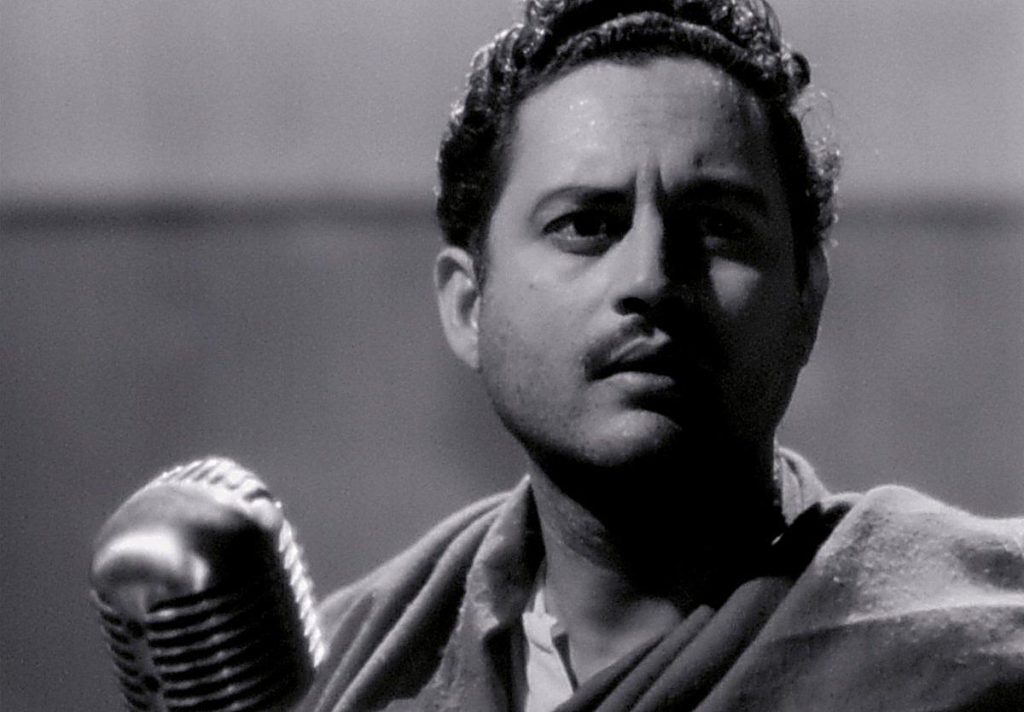
As India celebrates 100 years of Guru Dutt, a new generation is rediscovering the genius of the filmmaker whose black-and-white classics continue to shape the soul of Indian cinema
Our Correspondent
Mumbai
In an era of CGI spectacles and instant streaming, the news of Guru Dutt’s cinematic gems returning to the big screen feels almost like a gentle rebellion. As part of his centenary celebrations, restored versions of iconic films such as Pyaasa, Chaudhvin Ka Chand, Mr. & Mrs. 55, and Baaz will be screened in theatres across India this August. These 4K restorations, undertaken by NFDC-NFAI and Ultra Media & Entertainment, aren’t just a tribute — they are a revival of an imagination that defined Indian cinema’s golden age.
Guru Dutt, born on July 9, 1925, wasn’t merely a filmmaker — he was a poet of the screen. His camera did not just record; it revealed. With visual finesse, complex characters, and haunting music, Dutt’s work transformed black-and-white film into a language of emotional depth and socio-political commentary. From the doomed poet of Pyaasa to the fading director in Kaagaz Ke Phool, his protagonists were often reflections of his own anguish — misunderstood, romantic, unyielding.
Now, thanks to Ultra Media’s efforts and the National Film Heritage Mission of India’s Ministry of Information and Broadcasting, audiences will be able to relive that magic in crystal clarity. “Restoring Guru Dutt’s films goes far beyond reviving old reels. It’s about safeguarding a priceless legacy that defines the soul of Indian cinema,” says NFDC’s Prakash Magdum.
What sets Guru Dutt apart even today is the timelessness of his themes — unrequited love, artistic struggle, and the chasm between dreams and reality. His films exist in a world that is as emotionally complex as it is visually rich. In Sahib Bibi Aur Ghulam, he explored the decaying feudal order through the melancholic lens of a woman’s desire for love and dignity. In Mr. & Mrs. 55, he married satire with romance, creating an unforgettable snapshot of urban India’s post-independence confusion.
That his work continues to inspire is evident in the growing interest among younger cinephiles. From film schools in Pune and New York to underground cine-clubs in Bengaluru and Berlin, Guru Dutt’s name evokes reverence. His frames are dissected in lectures, his scripts referenced in screenwriting workshops, and his songs still play at midnight gatherings of film lovers.
Internationally, the Indian Film Festival of Melbourne (IFFM) has joined in the tribute. As part of its 2025 edition, IFFM will screen Pyaasa and Kaagaz Ke Phool, offering global audiences a glimpse into Dutt’s universe. Festival director Mitu Bhowmick Lange describes him as “far ahead of his time, both in cinematic technique and emotional depth.”
Though Guru Dutt died young — at just 39 — his legacy feels eternal. He gave Indian cinema not just stories, but a visual vocabulary for loneliness, passion, and hope. His mastery of chiaroscuro lighting, deep-focus shots, and carefully composed frames elevated mainstream Hindi cinema to a visual art form. In films like Kaagaz Ke Phool, his use of light and shadow conveyed emotional turmoil with breathtaking subtlety. His collaboration with cinematographer V.K. Murthy resulted in some of Indian cinema’s most iconic visuals. Every frame was purposeful, poetic, and painterly — blurring the lines between cinema and art. Dutt’s brilliance lay not just in storytelling, but in how the story looked, felt, and breathed. He was among the first to merge aesthetics with activism, romance with realism, and personal pain with public art.
For many, the return of his films to theatres is not just a nostalgia trip. It’s a rite of passage. A reminder that before the age of blockbusters and algorithms, there was a man who painted in monochrome but touched every shade of the human heart.
In an India where cinema often chases trends, Guru Dutt remains the master who chased truth. And as lights dim in theatres this August and his frames flicker once more, a new generation will find what countless before them have — that Guru Dutt didn’t just make films. He made feelings.