








As others step in, New Delhi’s silence raises hard questions about leadership, interests and timing
Indian Interest by Shobhan Saxena
There is a rare disquiet in India’s strategic discourse. The immediate trigger is uncomfortable: Pakistan appearing to take the lead in diplomatic efforts around the Iran crisis. For many in India — including sections of Narendra Modi’s own support base — that optics alone has been enough to provoke outrage. But outrage, while understandable, is being misdirected. The problem is not that Pakistan is active. The problem is that India is not.
For a country that is the world’s largest democracy and aspires to be a leading global power, absence in a major regional crisis — one that directly affects its core interests — is difficult to justify. India should have been at the center of peace initiatives, not watching from the sidelines as others fill the vacuum.
Because no major economy is feeling the tremors of this conflict quite like India.
The most immediate impact is energy. Any disruption involving Iran inevitably reverberates through the Strait of Hormuz. For India, which is heavily dependent on imported energy, even partial disruptions translate into higher prices, supply uncertainties and a cascading domestic crisis. Refiners are running around desperately and India’s growth projections are coming under strain.
This is not a distant geopolitical contest; it is a direct economic threat.
Then there is the human dimension. Millions of Indians live and work across the Gulf. Their livelihoods are tied to regional stability. Any prolonged conflict in West Asia risks job losses, delayed wages, or forced returns — all of which would hit India’s remittance inflows. These remittances are not abstract numbers; they sustain households, drive consumption and stabilize India’s external accounts.
Trade too is taking a hit. The Gulf is a crucial market for Indian exports — from food to manufactured goods. Shipping disruptions, rising insurance costs and uncertainty in logistics are already affecting flows. The longer the conflict persists, the deeper the damage to India’s exports.
In other words, India is not a peripheral stakeholder. It is one of the most affected parties.
This really makes New Delhi’s diplomatic restraint all the more puzzling.
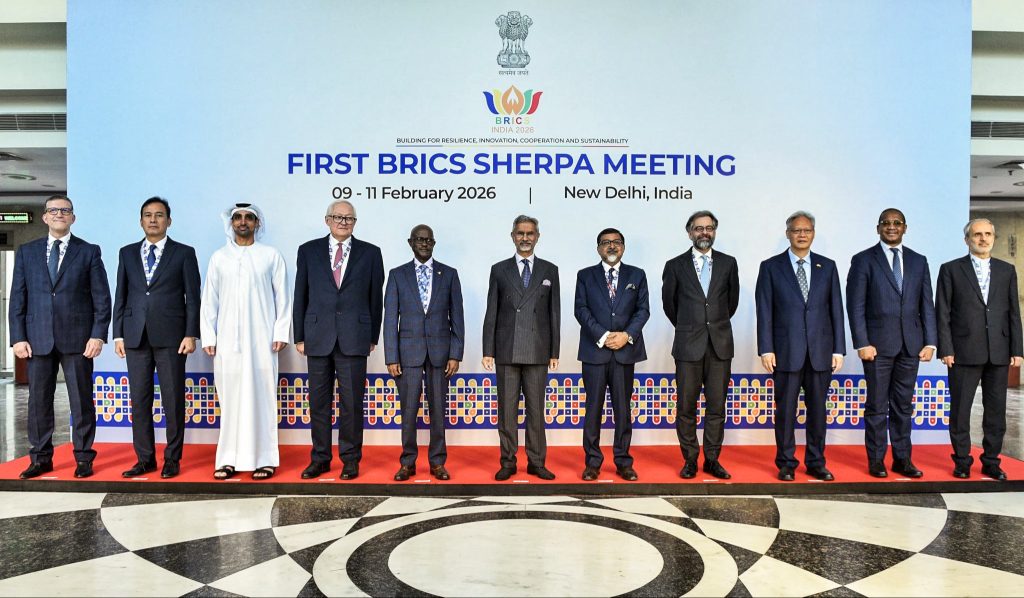
There is also a missed multilateral opportunity. India currently holds the presidency of BRICS, a platform that includes both Iran and other influential global players. Reports indicate that Iran has sought to raise the issue within BRICS, even looking to India to play a role in de-escalation. Yet, there has been little visible movement from New Delhi to leverage this forum as a peace platform.
At a time when global governance structures are fragmenting, such platforms offer rare spaces for dialogue. Leadership here would not just serve India’s interests; it would reinforce its claim to global relevance.
Instead, India appears constrained — perhaps by strategic caution and its complex relationships with the United States and Israel.
But that raises a more fundamental question: whose interests should guide Indian policy?
U.S. President Donald Trump has reportedly indicated that the United States is relatively insulated from disruptions in the Strait of Hormuz. Whether framed as confidence or indifference, the implication is clear — Washington does not face the same stakes as energy-importing economies like India. If anything, it underscores a harsh reality: the U.S. can afford strategic detachment in ways India cannot.
India’s foreign policy cannot be an echo of American or Israeli priorities when its own economy is on the line. Strategic partnerships matter, but they are not substitutes for strategic autonomy. If the crisis threatens India’s energy security, trade flows, and diaspora welfare, then India has both the right and the responsibility to act.
None of this is to suggest that diplomacy is easy. Engaging in a volatile conflict involving Iran requires careful balancing. It risks friction with partners and demands diplomatic capital. But leadership is not about avoiding risk; it is about managing it in pursuit of national interest.
There is still time for India to step in — bilaterally, through backchannel diplomacy, or via platforms like BRICS. Its historical ties with Iran, its credibility in the Global South, and its growing global stature position it uniquely to play a constructive role.
In geopolitics, vacuums do not last. If India does not occupy the space, others will — regardless of how that looks from New Delhi. The anger, then, should not be about Pakistan’s activism. It should be about India’s hesitation.