








Major investments in Gowanus and across New York signal a coordinated effort to tackle extreme weather, pollution and urban resilience.
Our Bureau
New York, NY
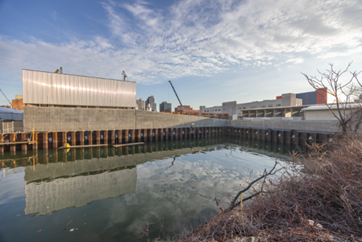
The Mamdani administration has unveiled a sweeping, multi-pronged infrastructure push combining a $24 million climate-focused facility in Brooklyn with a broader $108 million citywide sewer upgrade plan, underscoring what officials describe as a decisive shift toward climate resilience and environmental protection in the face of intensifying weather extremes.
At the center of this effort is the newly completed snow operations and composting facility in Gowanus, Brooklyn — a project that not only strengthens winter preparedness but also clears the way for critical sewage infrastructure aimed at reducing pollution in the long-troubled Gowanus Canal. Simultaneously, City Hall has committed over $100 million to modernize thousands of catch basins across New York City, targeting flood prevention and improved drainage amid increasingly frequent and intense rainfall.
Together, the projects represent a combined $132 million investment in climate adaptation, blending hyper-local upgrades with long-term systemic changes.
Mayor Zohran Kwame Mamdani framed the initiative as both practical governance and a broader environmental imperative. “Investing in resiliency is an affordability strategy we cannot take for granted,” he said, emphasizing that infrastructure upgrades are essential to shielding neighborhoods from “the destruction and devastation severe storms bring.” At the Brooklyn facility inauguration, he added: “This is what public service looks like: the year-round, often unseen labor of City workers who make our streets safer and our environment healthier.”
A Brooklyn Hub for Climate Readiness
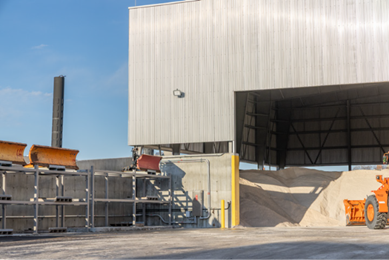
The newly completed 7,600-square-foot facility in Gowanus reflects a layered approach to urban resilience. Designed and constructed by the Department of Environmental Protection (DEP) and operated in part by the Department of Sanitation (DSNY), the site integrates snow response infrastructure, renewable energy generation and composting capacity within a single footprint.
The snow operations component alone marks a significant upgrade. With the ability to store 6 million pounds of road salt — widely considered a first line of defense during winter storms — the facility ensures faster, more efficient responses to hazardous conditions. The structure also includes storage for up to 75 plow blades and brine tanks, supported by a reinforced underground base designed to handle the immense weight.
Rooftop solar panels generating 79,600 watts of renewable energy further align the facility with the city’s broader climate goals, powering on-site lighting and equipment.
Officials say the facility has already proven its value. Since its completion in January, sanitation crews have used it to maintain uninterrupted service through one of the largest snowstorms in recent memory — a test case that underscores the urgency of such investments.
Deputy Mayor for Operations Julia Kerson described the project as “public excellence at work,” highlighting how coordination between agencies can deliver multiple benefits simultaneously. “These facilities will ensure our neighbors in Brooklyn are prepared for the next blizzard while advancing our work to reduce pollution in our waterways and expand composting citywide,” she said.
Composting and Community Impact
Beyond winter operations, the site also revives and expands composting efforts in Gowanus, long a focal point for grassroots environmental activism. Operated by Big Reuse, the facility can process up to 600,000 pounds of organic waste annually — including food scraps, yard waste and wood chips — transforming them into usable compost for local communities.
For environmental advocates, the reopening of the composting site represents a significant victory. Council Member Shahana Hanif called it “a powerful example of what it looks like when a community fights for climate infrastructure and wins,” noting that the project builds on years of local organizing.
Justin Greene, Executive Director of Big Reuse, echoed that sentiment. “We are thrilled by the remarkable efforts of the entire team at DEP, who collaborated with the community to rebuild and enhance the site so we can continue this vital work,” he said, adding that the program supports parks, green infrastructure and neighborhood sustainability initiatives.
Andrea Parker, Executive Director of the Gowanus Canal Conservancy, emphasized the broader ecological and social role of the site. “The Salt Lot has long been the eco-infrastructural heart of Gowanus,” she said, describing plans to integrate public space, education and habitat restoration alongside critical infrastructure. “Today the Gowanus community regains access to the Salt Lot, and we all move forward towards a greener Gowanus.”
Tackling the Gowanus Canal Crisis
Perhaps the most consequential aspect of the Brooklyn project lies beneath the surface. The facility clears space for a major Combined Sewage Overflow (CSO) system — a cornerstone of the federal Superfund cleanup of the Gowanus Canal.
The planned infrastructure includes a 4-million-gallon underground storage tank designed to capture sewage that would otherwise spill into the canal during heavy rainstorms. By intercepting these overflows, the system aims to significantly reduce pollution in one of New York’s most contaminated waterways.
DEP Commissioner Lisa F. Garcia stressed the urgency of such measures. “Every season now tests our resilience, and New York City is meeting that challenge with smart, climate-ready investments,” she said. She noted that the CSO system will help “protect the waterway against more frequent rainstorms,” linking local environmental restoration to broader climate trends.
The Gowanus project is only part of a larger network. A second facility in Red Hook will add another 8 million gallons of storage capacity. Together, the systems will capture up to 12 million gallons of overflow during storms — a substantial step toward mitigating decades of pollution.
Assembly Member Jo Anne Simon described the combined efforts as a “win-win,” highlighting improvements in both water quality and operational capacity. “The new facilities and tank will not only improve the water quality in the Gowanus Canal, but also strengthen our city’s ability to manage snow operations and expand composting,” she said.
Citywide Sewer Overhaul
While the Gowanus project addresses a specific environmental hotspot, the administration’s broader $108 million plan targets systemic vulnerabilities across the city’s vast drainage network.
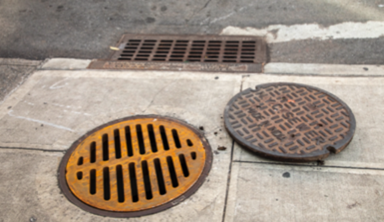
New York City operates more than 150,000 catch basins — curbside grates that channel stormwater into a 7,500-mile sewer system. These basins are critical to preventing street flooding, yet many are outdated or prone to blockage.
Under the new plan, the city will replace 6,708 older catch basins over the next decade, beginning with work in Queens this July. The redesigned basins incorporate modern standards, including improved water flow and bike-friendly features, addressing both safety and functionality.
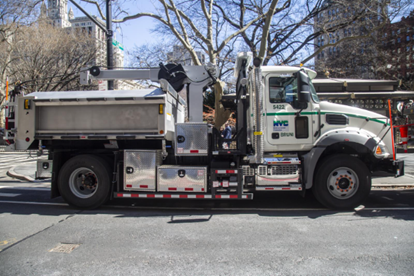
The investment builds on a separate $20 million purchase of 40 advanced catch basin cleaning trucks, aimed at improving maintenance and responsiveness.
Garcia highlighted the importance of these smaller-scale interventions. “No project is too small when it comes to protecting New Yorkers,” she said. “We’re seeing more intense rainfall than ever, and these investments… will help keep streets passable, protect communities from flooding, and ensure our stormwater system is ready for climate challenges.”
Kerson added that the initiative combines “data-driven inspections, modern equipment and long-term capital upgrades,” signaling a shift toward more proactive infrastructure management.
Climate Change Driving Policy
Underlying both the Brooklyn project and the citywide upgrades is a growing recognition that climate change is reshaping urban risk.
Officials repeatedly pointed to more frequent snowstorms, extreme cold spells and heavier rainfall as drivers of the new investments. The convergence of these threats has forced cities like New York to rethink infrastructure not as static systems but as adaptive networks capable of handling increasingly volatile conditions.
Mamdani’s framing of resilience as an “affordability strategy” reflects this shift. By investing upfront in infrastructure, the administration argues, the city can avoid far greater costs associated with flood damage, environmental cleanup and emergency response.
This approach also seeks to integrate environmental goals with everyday services — from snow removal to waste management — ensuring that climate policy is embedded in routine governance rather than treated as a separate agenda.
Community Engagement and Design
A notable feature of the Gowanus project is its emphasis on public engagement and neighborhood identity. The facility’s design incorporates elements reflecting the area’s industrial heritage, including sculptural concrete and textured metal.
Officials say the project followed extensive consultation with residents, shaping both its aesthetic and functional components. District Manager Michael Racioppo credited this process with ensuring the development aligns with community priorities. “This progress has been shaped through meaningful public engagement, ensuring these facilities reflect Gowanus itself,” he said.
Future phases will expand on this approach, including the restoration of public education spaces and the creation of two acres of waterfront open space. Plans include tidal wetlands, a kayak launch and community programming areas — an effort to blend infrastructure with accessible public amenities.