








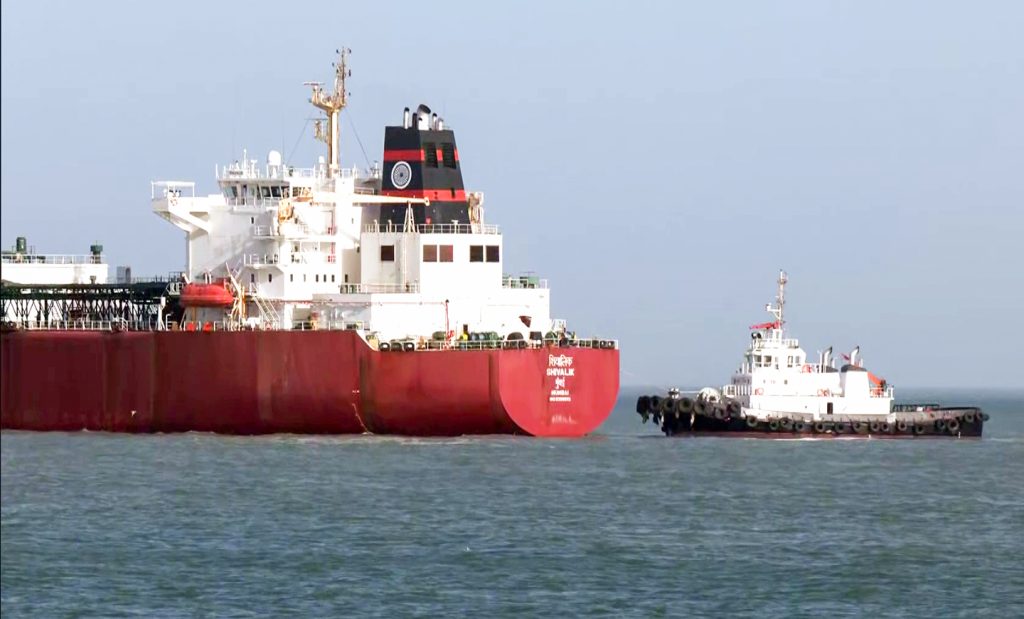
Energy security is no longer just an economic issue; it is a matter of national stability. A prolonged disruption in oil and gas supplies could slow economic growth, weaken the rupee, and reduce investor confidence

Indian Interest by Shobhan Saxena
The ongoing conflict involving Iran has once again exposed a structural weakness in India’s economic framework: its deep dependence on imported energy. While policymakers have long acknowledged this vulnerability, the current crisis underscores the urgency of moving from acknowledgment to action.
India imports more than 80 percent of its crude oil requirements, making it highly susceptible to geopolitical disruptions. The tensions in West Asia, particularly around the Strait of Hormuz—through which nearly a fifth of the world’s oil supply passes—have amplified fears of supply shocks and price volatility. Even the perception of instability in this narrow maritime corridor can trigger global oil price spikes, directly impacting India’s import bill.
If the conflict prolongs, India could face a sustained period of high energy prices. This would not only strain government finances—through higher subsidies and fiscal pressures—but also ripple through the broader economy. Rising fuel costs tend to push up inflation, increase transportation expenses, and raise input costs for industries ranging from agriculture to manufacturing. In a country where millions are still vulnerable to price shocks, this could deepen economic stress and potentially trigger social tensions.
Energy security is no longer just an economic issue; it is a matter of national stability. A prolonged disruption in oil and gas supplies could slow economic growth, weaken the rupee, and reduce investor confidence. For a country aspiring to become a global manufacturing and economic hub, such volatility is a serious risk.
It is, therefore, clearly in India’s strategic interest for the conflict to de-escalate swiftly. Stability in West Asia ensures not only uninterrupted energy flows but also the safety of millions of Indian expatriates in the region. Diplomatic efforts—both bilateral and multilateral—must continue to prioritize peace and stability.
At the same time, India must pragmatically safeguard its immediate energy needs. Maintaining stable and constructive relations with Iran remains crucial, particularly to ensure continued access through the Strait of Hormuz. Any disruption in this route would have immediate and severe consequences for India’s energy imports.
Equally important is India’s continued engagement with Russia as an energy supplier. Over the past few years, discounted Russian crude has played a significant role in cushioning India against global price shocks. Despite geopolitical pressures, this relationship has provided a vital economic buffer and should remain part of India’s broader energy strategy.
However, reliance on a few key suppliers—whether in West Asia or elsewhere—cannot be a long-term solution. India must aggressively diversify its energy import sources. Expanding partnerships with countries in Africa, Latin America, and North America can reduce concentration risks. Long-term contracts, strategic reserves, and investments in overseas energy assets should also be strengthened.
Beyond diversification, the crisis should accelerate India’s transition toward alternative and renewable energy sources. While fossil fuels will remain central in the near term, reducing dependence on imported oil through solar, wind, and green hydrogen initiatives is essential for long-term resilience. Domestic energy production—both conventional and renewable—must be scaled up with urgency.
The lesson from the current crisis is clear: energy security cannot be reactive. It requires a comprehensive, forward-looking strategy that integrates diplomacy, economic planning, and technological innovation. India must build a system that can absorb shocks, adapt to changing geopolitical realities, and ensure uninterrupted energy access for its growing economy.
The war in West Asia is a stark reminder that global conflicts can have immediate domestic consequences. For India, the path forward lies not just in navigating the current crisis, but in fundamentally rethinking how it secures the energy that powers its future.