








Our Bureau
Fort Bend County, TX
The importance of an independent judiciary and an informed public took center stage at a community forum hosted by the Indian American Public Affairs Council (IAPAC), where two Fort Bend County district judges spoke candidly about the courts’ role in safeguarding democracy.
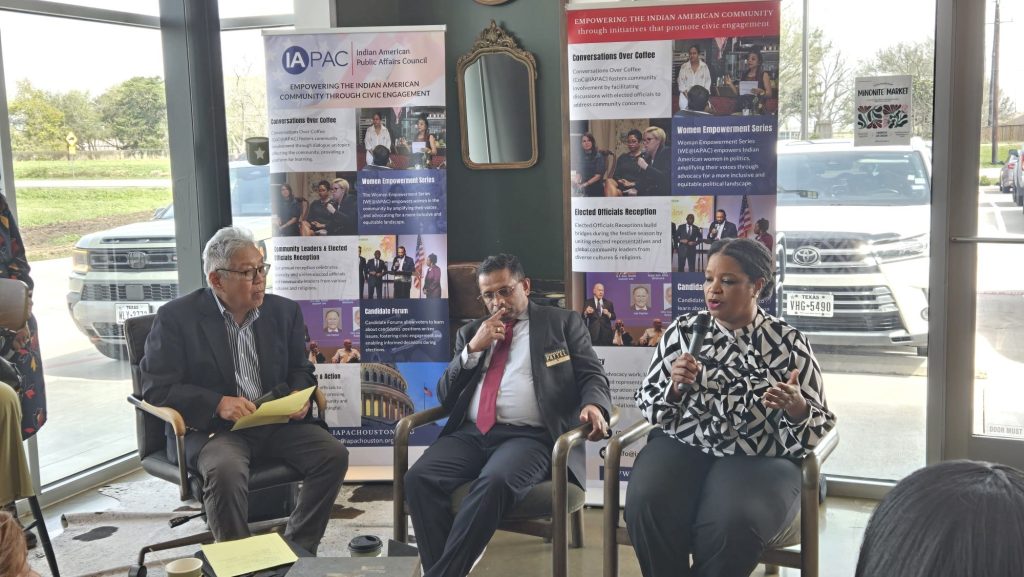
The event, part of IAPAC’s Conversations Over Coffee series, featured Judge Monica Rawlins of the 328th District Court and Judge Surendran Pattel of the 240th Judicial District Court. The discussion was moderated by Gordon Quan, a veteran attorney, former Houston City Council member, and board-certified lawyer with nearly five decades of legal experience.
Addressing a gathering of community members, the judges discussed judicial independence, civic engagement, and the day-to-day workings of the court system, emphasizing the need for public trust in democratic institutions.
“One of IAPAC’s core missions is to strengthen civic awareness and engagement within our community,” said Naveen Kochoth, president of IAPAC. “Programs like Conversations Over Coffee allow residents to engage directly with public officials and better understand the institutions that sustain our democracy.”
Judge Rawlins, who spent more than two decades practicing family law before taking the bench in 2023, spoke about the responsibility judges carry when applying the law.
“When discretion is applied, it’s important that judges understand the pulse of the community and approach cases with both knowledge of the law and compassion,” Rawlins said.
Judge Pattel reflected on his journey from practicing law in India to serving as a district judge in Texas, underscoring the principle of impartiality as the foundation of the justice system.
“A judge must set aside personal opinions and relationships and focus only on the law,” Pattel said. “Our responsibility is to apply the law fairly and impartially so that every person who comes before the court receives justice.”
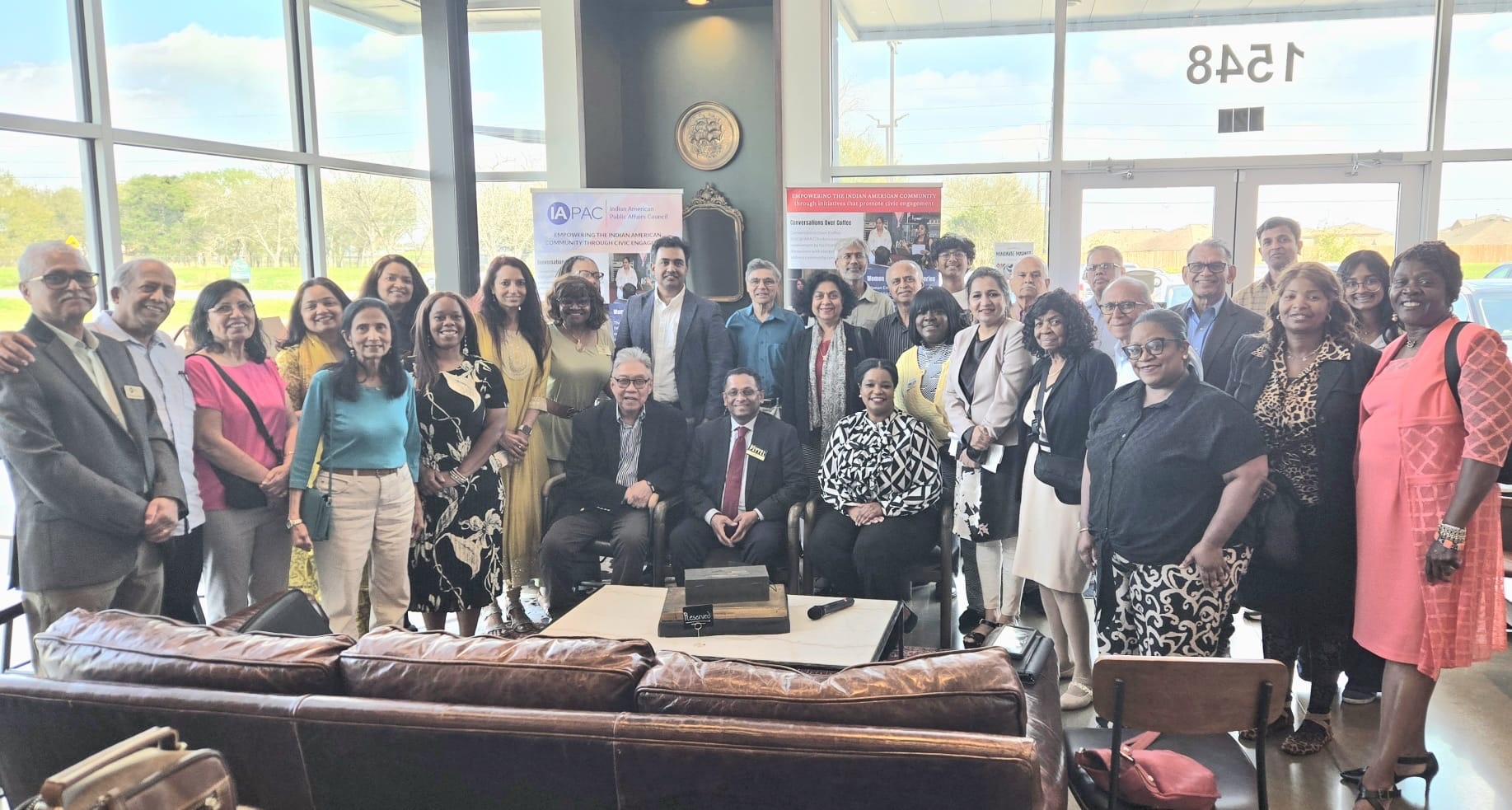
The informal setting of the discussion encouraged open dialogue, according to Dr. Roopa Gir, a founding member and past president of IAPAC.
“The setting allowed for a genuine exchange between community members and the judges,” Gir said. “It helped demystify the courts and gave people a clearer understanding of how our democratic institutions function.”
Quan noted that forums like this play a vital role in strengthening public understanding of the judiciary.
“Our courts are essential to maintaining the balance of power in our democracy,” he said. “Conversations like this help the public better understand how the judiciary works and why judicial independence matters.”
The program concluded with a question-and-answer session, during which attendees asked about court procedures, jury trials, and how judicial independence contributes to public confidence in the legal system.
“By bringing judges out of the courtroom and into the community, IAPAC created a rare opportunity for residents to better understand how our judicial system addresses real issues,” said Madan Luthra, a Houston community leader. “The thoughtful dialogue between the panel and the audience made it a truly meaningful experience.”
The event opened with welcoming remarks from Dr. Rajasree Nambron, an IAPAC board member, and concluded with a vote of thanks by Dr. Parvin Shaikh, also a board member. Organizers expressed appreciation to First Cup Coffee Company for hosting the gathering.
The Indian American Public Affairs Council (IAPAC) is a nonpartisan 501(c)(3) nonprofit organization dedicated to promoting civic engagement, leadership, and public service. Through initiatives such as Conversations Over Coffee, IAPAC brings together community members and public officials to encourage informed civic participation.