








From Congress and state legislatures to the mayor’s office in Los Angeles, Indian Americans are moving beyond symbolic representation to become an increasingly influential force in US politics.
The election of Nithya Raman as the next mayor of Los Angeles marks a significant moment in the political evolution of the Indian American community. Born in India and raised in the United States, Raman defeated incumbent Karen Bass to lead America’s second-largest city, becoming one of the most prominent Indian-origin politicians to hold executive office in the country.
Her victory is part of a broader political story unfolding across the United States. In the November 3 midterm elections, Indian American candidates registered victories in congressional, state and local races, strengthening their presence in American political institutions. From Washington to California, Virginia, Maryland and Florida, politicians of Indian origin are increasingly moving into positions where they can shape legislation, influence public policy and participate in decisions affecting the country.
What makes this moment particularly significant is that the community’s political journey is beginning to move beyond the pursuit of representation. Indian Americans are increasingly emerging as political leaders in their own right, competing for powerful offices, building electoral coalitions and influencing the direction of both major political parties.
Raman’s victory in Los Angeles is perhaps the most striking example. She secured 52 per cent of the vote against Bass’s 48 per cent, becoming the first challenger to defeat an incumbent Los Angeles mayor in more than two decades. Her campaign, which received support from the Democratic Socialists of America, centred on housing affordability, homelessness, public safety and improving the city’s basic services.
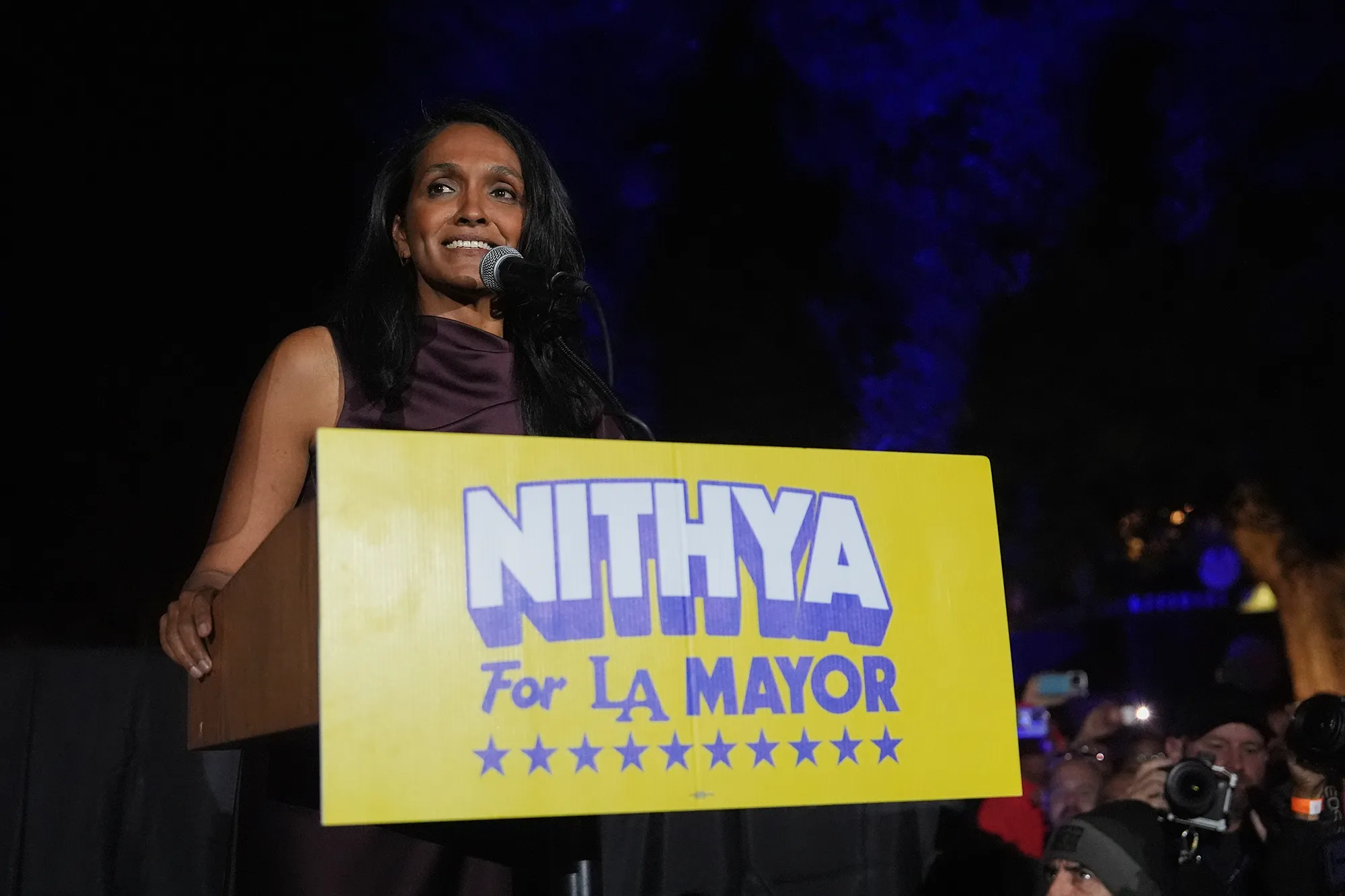
“This city has given me and my family so much — and at a time when the federal government, over the past two years … has rejected immigrants,” Raman said after her victory. “This city has opened its arms to people to come and build their dreams here.”
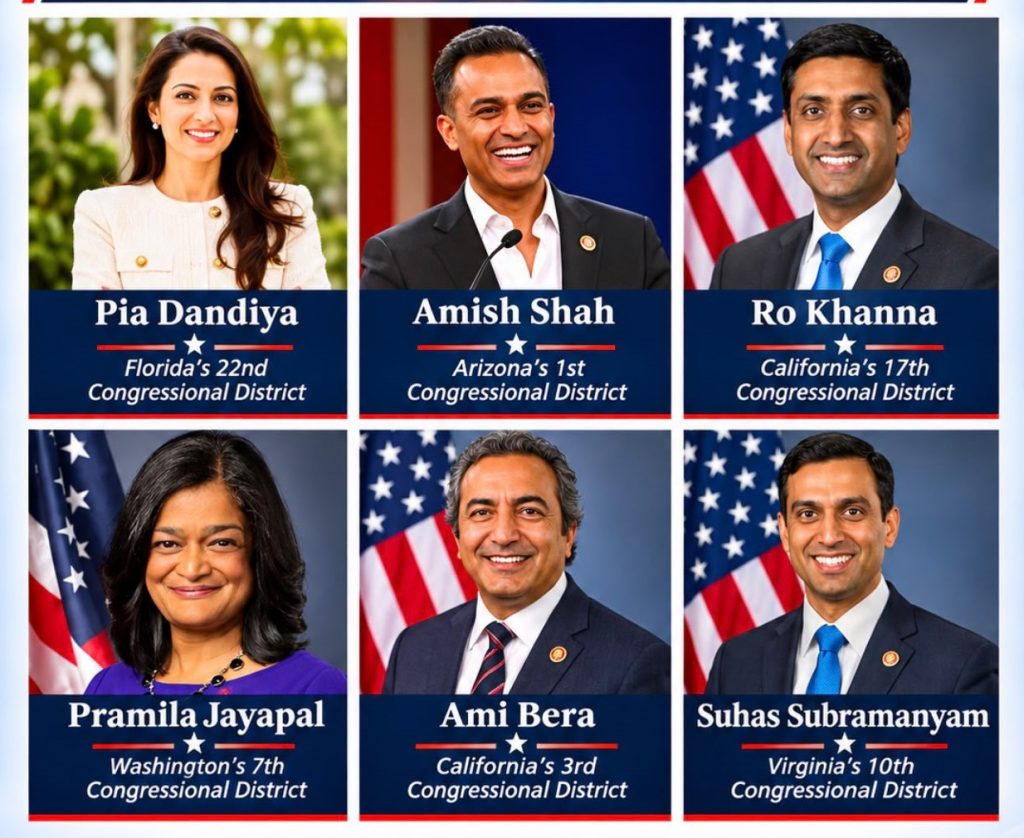
The congressional results reinforce this trend. Four Indian American Democratic lawmakers — Ami Bera, Ro Khanna, Pramila Jayapal and Suhas Subramanyam — retained their seats in the House of Representatives. Pia Dandiya, a former teacher and high school principal whose parents immigrated from India, made her debut in Congress after winning Florida’s 22nd Congressional District.
At the state level, Maryland Lieutenant Governor Aruna Miller won another term alongside Governor Wes Moore. Miller made history in 2023 as the first Indian American woman to become a lieutenant governor in the United States. In Wisconsin, Attorney General Josh Kaul secured a third term. Indian American candidates also won local contests, including Aparna Raj’s election to the Washington DC Council and Jyot Singh’s victory in Georgia’s state House.
But the larger development is not simply the number of Indian-origin candidates winning elections. It is the nature of their political participation. The number of Indian American representatives in the House, for instance, rose from one in 2012 to six in 2024.
Mishi Choudhary, founder of SFLC.in and a technology lawyer, sees this as a transition from economic influence to political participation. “Indian Americans have long had economic influence in the US. What we now see is their willingness to exercise political power,” she said.
She described the victories of Subramanyam and Dandiya as evidence of political maturity, arguing that candidates of Indian origin were increasingly building electoral coalitions beyond their own communities.
That distinction is important. Indian American candidates cannot win competitive elections by relying exclusively on diaspora votes. They have to appeal to a much wider electorate, addressing issues such as healthcare, employment, education, immigration, housing and the cost of living. Their political success increasingly depends on how effectively they connect their personal backgrounds with the everyday concerns of American voters.
Raman’s campaign illustrated this particularly well. Her victory was not primarily a referendum on her Indian heritage. It was a contest over the future of Los Angeles, its housing crisis, homelessness, public safety and the performance of the incumbent administration. Political observers described her appeal as one built around practical municipal concerns rather than ethnic identity.
Yet identity remains significant. For immigrant families, the sight of someone who shares their background occupying positions of political authority carries symbolic weight. Raman acknowledged this when she spoke about the significance of an immigrant winning the mayoralty at a time of growing hostility towards immigration. “The idea that Angelenos voted for an immigrant to be their next mayor at this moment in American history is so deeply moving to me,” she said.
The next challenge is to translate electoral success into lasting policymaking influence.