








India’s semiconductor opportunity is moving beyond chip factories as the country seeks to build the manufacturing, supplier, design and talent ecosystem needed to capture a larger share of the global market.
Our Bureau
New Delhi / Mumbai
India’s semiconductor story is entering a more ambitious phase. The country is no longer merely trying to reduce its dependence on imported chips. It is seeking to become a significant part of the global semiconductor supply chain—and eventually meet a substantial share of global demand.
A report by JM Financials estimates that India could aim to meet around 25 per cent of global semiconductor demand by 2032. Achieving that target, however, will require far more than a handful of fabrication plants. India will need advanced packaging facilities, semiconductor design capabilities, a domestic supplier base, specialised equipment, infrastructure and a large pool of technical talent.
The scale of the opportunity is enormous. The global semiconductor market is projected to expand from around $775 billion in 2024 to $1.6 trillion by 2030, while India’s semiconductor market could reach $110-120 billion by 2030, according to the report.
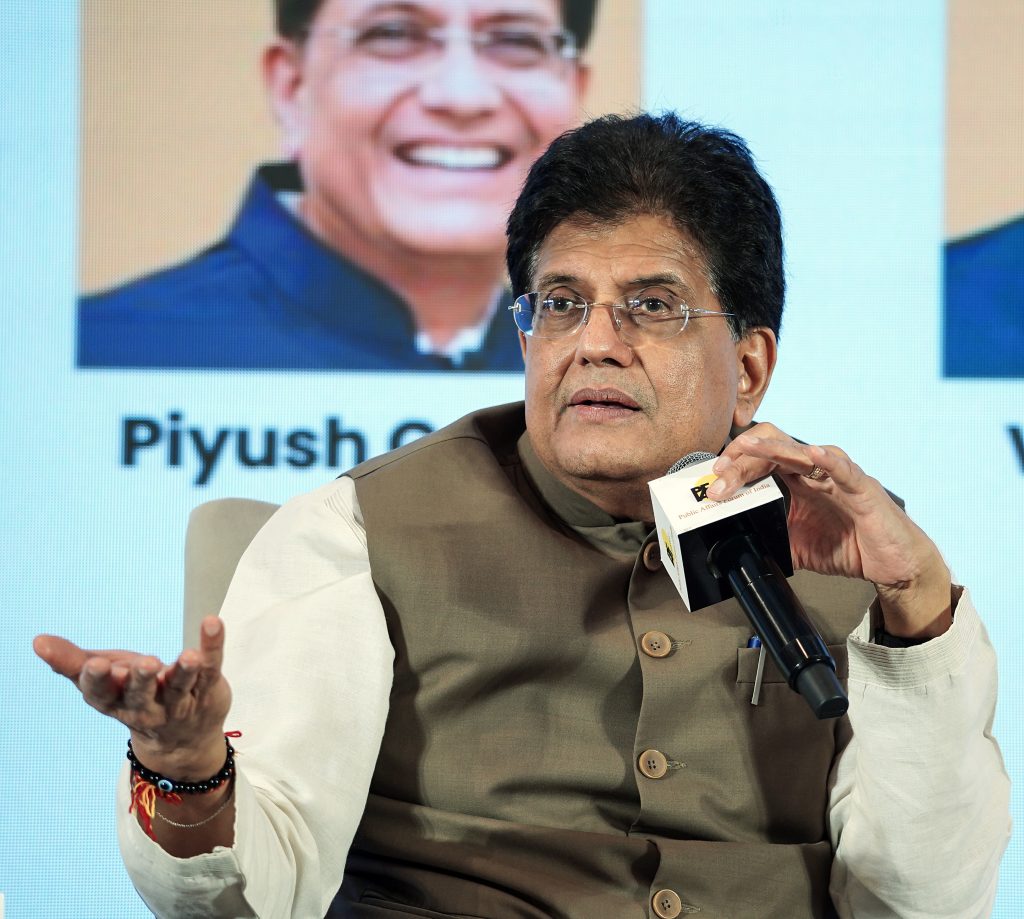
Commerce and Industry Minister Piyush Goyal has put the opportunity even higher, saying India’s annual semiconductor demand could exceed $150 billion over the next five years. The numbers explain why semiconductors have become a strategic industrial priority for India.
But the real challenge is not demand. It is building the ecosystem capable of serving that demand. The first phase of India’s semiconductor push focused heavily on attracting investment in manufacturing. The India Semiconductor Mission approved 12 facilities under its first phase, including fabrication and packaging projects. The government has subsequently introduced ISM 2.0, with greater emphasis on semiconductor design as well as manufacturing.
The next challenge is creating the industrial network around these plants.
Tata Electronics’ proposed fabrication facility at Dholera illustrates the scale of what is required. According to the JM Financials report, the plant will depend on more than 400 suppliers. These suppliers need to be located close to the facility because semiconductor manufacturing leaves little room for delays in equipment maintenance or replacement.
Tata Electronics is therefore developing a vendor park covering more than 350 acres at Dholera, designed to provide plug-and-play facilities for global suppliers.
This is the difference between building a semiconductor factory and building a semiconductor industry.
A modern chip plant cannot operate in isolation. It requires equipment manufacturers, materials suppliers, maintenance companies, logistics providers, packaging facilities, testing infrastructure and specialised engineering services.
The investment requirements are correspondingly large. Projects approved under ISM 1.0 alone are expected to require around $12-13 billion in capital equipment, apart from the technical workforce and maintenance infrastructure needed to operate the facilities over the long term.
India is increasingly attracting the companies that can provide this industrial backbone.
Applied Materials has announced its India Vision 2035, including a planned $5 billion investment aimed at expanding local supply-chain capacity and developing a network of more than 100 suppliers. Lam Research has committed ₹10,000 crore to develop its first vertically integrated silicon-component manufacturing unit in India.
India’s large pool of engineers is another potential advantage, but it will need to be converted into semiconductor-specific expertise.
The global industry is expected to require more than one million additional skilled workers by 2030, according to Deloitte. India will therefore have to compete not only for investment but also for specialised talent.
For India, developing this talent pipeline will be critical. Semiconductor manufacturing requires engineers who understand processes, equipment, design, testing and increasingly complex technologies. The country’s semiconductor ambitions will ultimately depend on whether education and industry can produce enough people with these specialised skills.
The government’s policy support is also evolving. The JM Financials report says work on ISM 3.0 is already underway, suggesting that semiconductor policy is likely to remain a long-term industrial priority.
That continuity matters because semiconductor investments have unusually long gestation periods. Tata Electronics’ Dholera facility is expected to begin commercial operations by 2028, while Micron’s Sanand facility began manufacturing in February 2026 and employs more than 2,000 people.
State-level support will also remain important. Gujarat and Assam, for example, have supported semiconductor projects with dedicated infrastructure including power and water supplies.
India’s semiconductor opportunity, therefore, is becoming much bigger than the question of how many chips the country can manufacture.
The real objective is to create a complete semiconductor ecosystem—from design to fabrication, packaging and testing, and from equipment and materials to suppliers, engineering services and talent.
If India can build that ecosystem at scale, the projected growth of the global semiconductor market could become an important driver of its own industrial transformation.
The semiconductor race is ultimately a race for technology, capital, talent and supply chains.
India has begun assembling all four.