








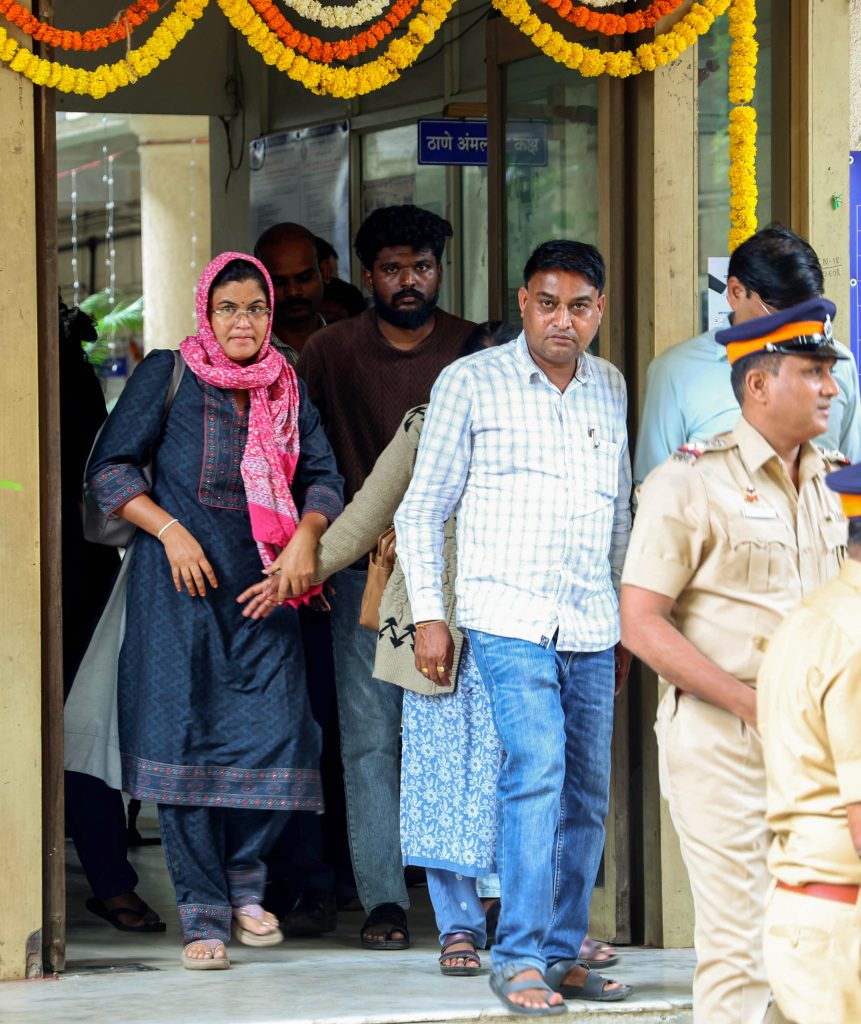
The death of 20-year-old IIT Bombay student Sahil Wakode has triggered a wider investigation and the National Commission for Scheduled Castes seeking an impartial probe into allegations of harassment and caste-based discrimination.
Our Bureau
Mumbai
The investigation into the death by suicide of IIT Bombay student Sahil Ravindra Wakode has widened, with the Mumbai Crime Branch recording statements from students, faculty and staff members while the National Commission for Scheduled Castes (NCSC) has conducted a detailed inquiry at the premier institute.
Wakode, a 20-year-old second-year B.Tech student from the Department of Energy Science and Engineering, died by suicide on September 18. His family has raised allegations of harassment and caste-based discrimination in connection with the circumstances preceding his death. The allegations are being investigated by the Mumbai Police Crime Branch.
According to sources, the Crime Branch has so far recorded the statements of around 20 people, including students and staff members of IIT Bombay. Investigators have questioned students who were present in the examination hall on the day of the incident as well as teachers supervising the examination.
Statements of hostel staff members have also been recorded as investigators seek to reconstruct Wakode’s movements and circumstances before his death.
A key part of the investigation is the student’s mobile phone. Investigators have secured the device, but it remains protected by a pattern lock. As a result, police have so far been unable to determine whom Wakode had called or who had contacted him. Several missed-call notifications were reportedly visible on the phone, but investigators have not yet been able to retrieve substantial information from the device.
The circumstances surrounding an examination on September 18 have also emerged as a major focus of the inquiry. The NCSC, during its spot investigation, examined the examination room where the alleged incident occurred and sought details of the procedures followed after Wakode was allegedly accused of academic malpractice.
NCSC Chairman Kishor Makwana visited IIT Bombay and held discussions with senior administrative officials, including the Director, Deputy Director, Registrar and faculty members. The Commission sought a detailed account of the events leading up to the student’s death and examined the institutional mechanisms available for addressing student grievances and protecting students belonging to Scheduled Castes.
The NCSC team also inspected the Department of Energy Science and Engineering and Wakode’s hostel room. Makwana interacted with classmates to gather information about the student’s experience on campus and the atmosphere in the period preceding his death.
The Commission subsequently held a review meeting with senior police officials, including the Director General of Police, Mumbai Police Commissioner and Crime Branch officers. Makwana called for an impartial and thorough investigation into all allegations.
The NCSC also directed investigators to preserve forensic, documentary and testimonial evidence, including electronic communications and CCTV footage. It asked the police to record statements of the concerned faculty members and students and submit an Action Taken Report to the Commission.
The student’s family has also approached the Commission with a written complaint seeking intervention. The NCSC said it would monitor the Crime Branch investigation in the context of constitutional safeguards available to Scheduled Castes.
The case has also drawn the attention of Union Minister Ramdas Athawale, who on Friday called for an independent investigation. Athawale said he had met the IIT Bombay Director and other senior officials and would write to Union Education Minister Pralhad Joshi seeking his intervention.
Athawale raised questions about the circumstances faced by Scheduled Caste students at the institution, referring to what he described as multiple student suicides at IIT Bombay in recent years. He said an independent investigation was necessary to establish the facts and determine whether discrimination had played any role.
The sequence of events surrounding the examination is therefore likely to remain an important part of the investigation. Establishing what happened inside the examination hall, what communications followed, and what occurred during the student’s final hours will be crucial to determining the circumstances of his death.
IIT Bombay has also issued a formal apology regarding statements made in an earlier communication concerning the circumstances surrounding Wakode’s death.
The institute has maintained that the examination-related incident is being investigated, while the police inquiry continues independently. At this stage, allegations of caste-based discrimination and harassment remain allegations raised by the family and are subject to investigation.
The case has consequently brought together multiple institutions — the Mumbai Crime Branch, IIT Bombay, the NCSC and the Union government — as authorities seek to establish the facts.
For investigators, the immediate challenge is to piece together evidence from statements, electronic devices, CCTV footage and institutional records. For Wakode’s family, the demand remains for clarity about what happened to their son and whether any circumstances surrounding his examination contributed to his death.