








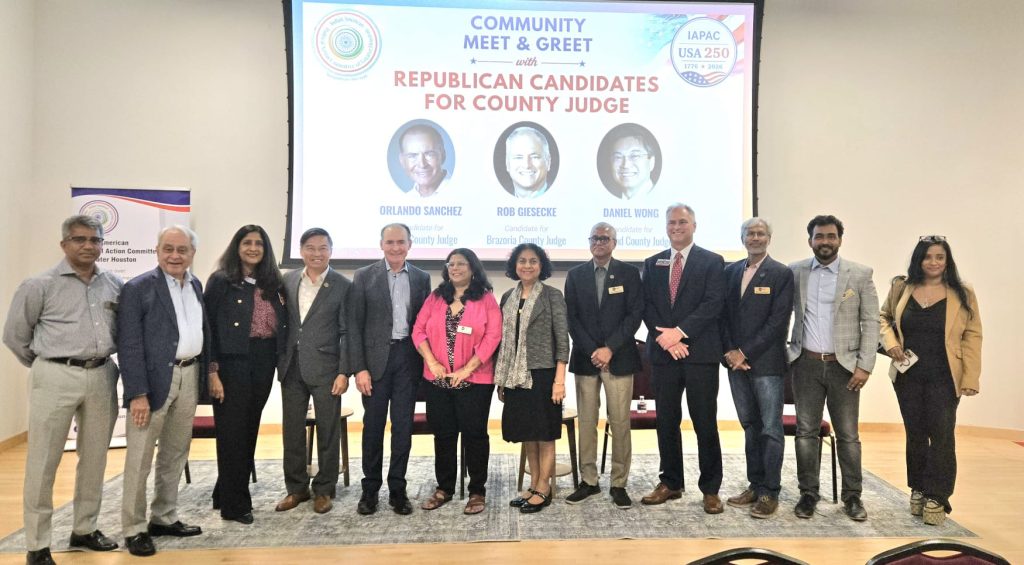
Republican nominees from Harris, Brazoria and Fort Bend counties discuss fiscal management, infrastructure, public safety and government accountability
Our Bureau
Houston, TX
Republican nominees for county judge in Harris, Brazoria and Fort Bend counties addressed some of Greater Houston’s most pressing challenges — from taxes and public safety to infrastructure and rapid population growth — during a community meet-and-greet at the Eternal Gandhi Museum Houston.
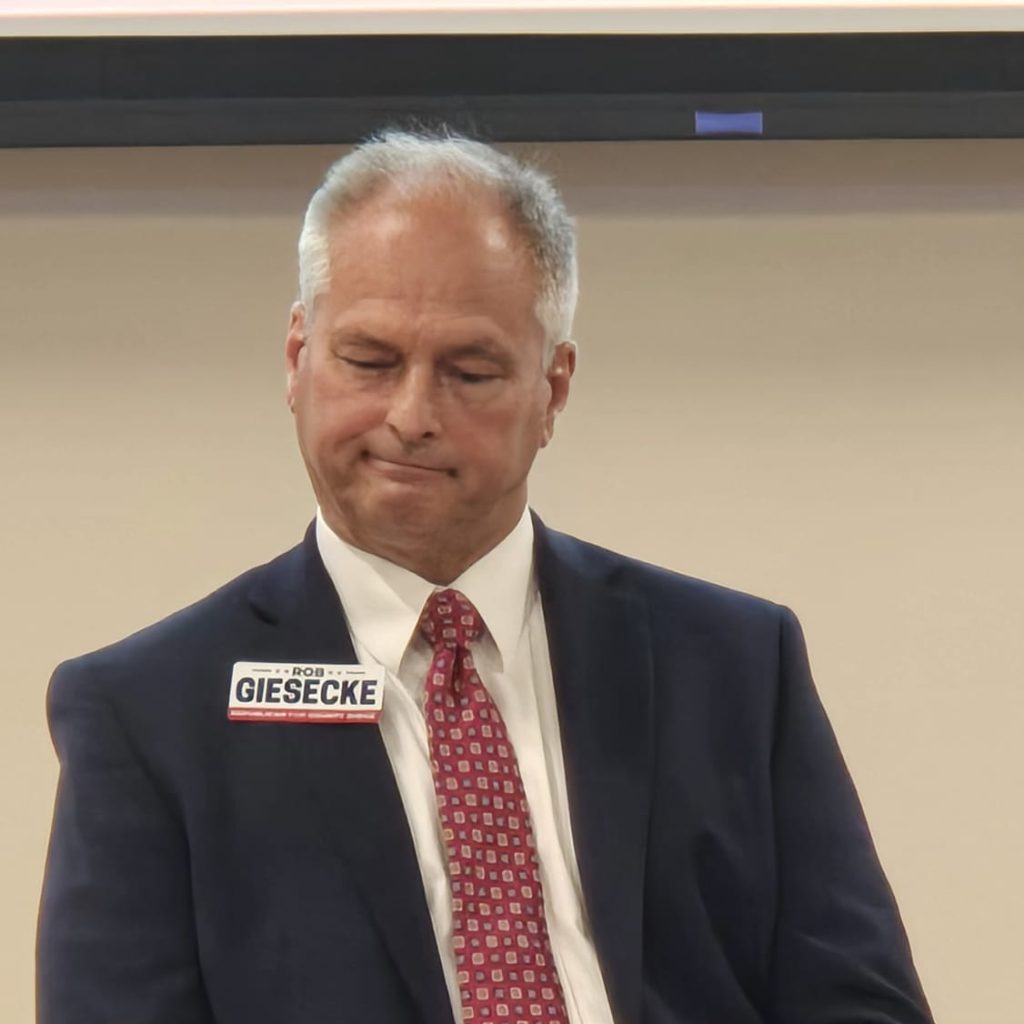
The forum, organized by the Indian American Political Action Committee of Greater Houston (IAPAC-PAC), brought together Orlando Sanchez, Republican nominee for Harris County judge; Rob Giesecke, Republican nominee for Brazoria County judge; and Daniel Wong, Republican nominee for Fort Bend County judge.
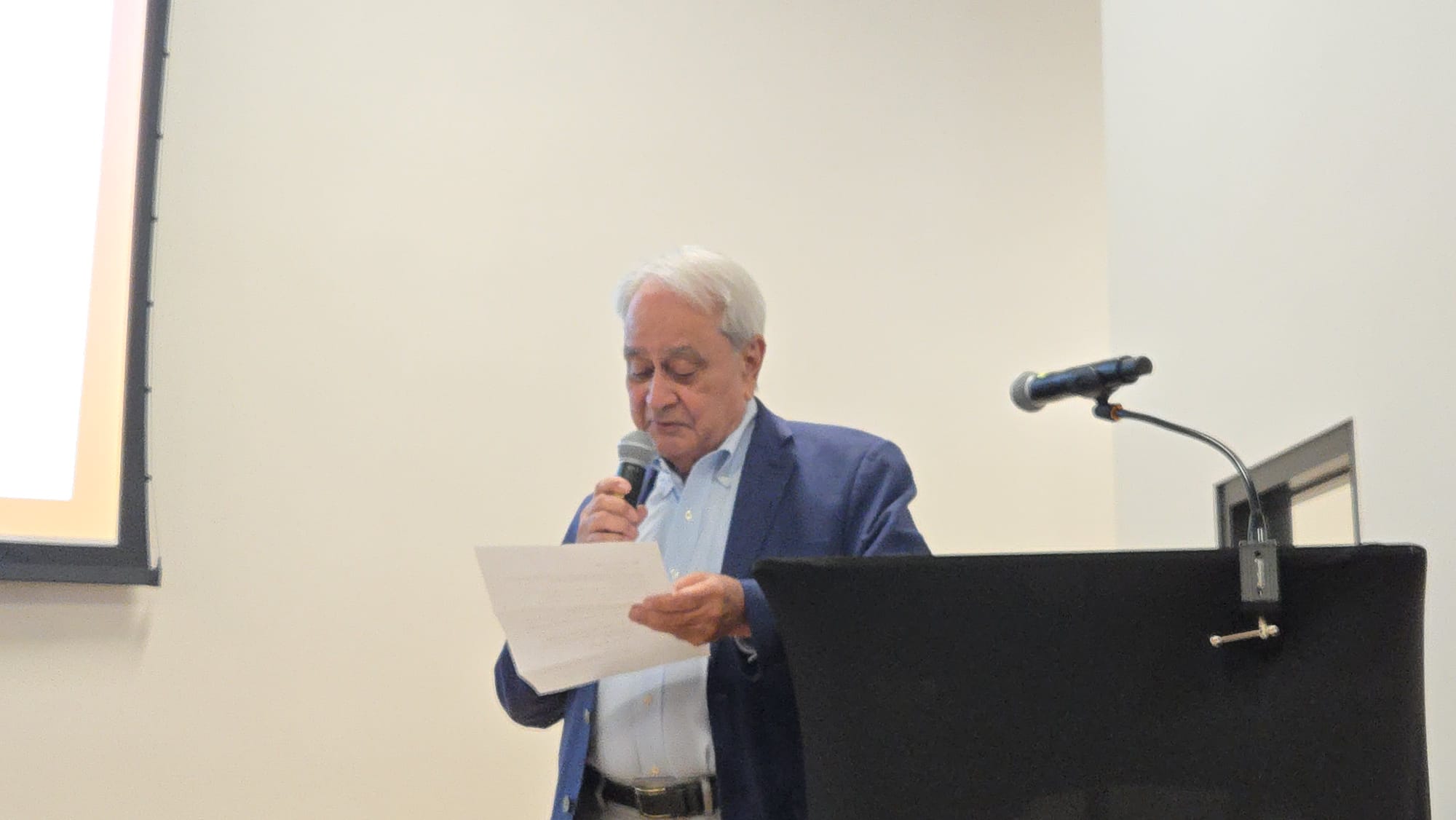
Randhir Sahni, founder of IAPAC-PAC, welcomed attendees and introduced the candidates. The conversation was moderated by Dr. Roopa Gir, past president of the PAC, who guided the candidates through a discussion of their experience, priorities and approaches to county government.
Although the candidates spoke to the circumstances of their individual counties, the discussion revealed considerable overlap in the challenges they face. Population growth is placing increasing demands on roads, drainage, emergency services and public safety, while county governments face pressure to manage spending and demonstrate greater efficiency and accountability.
Sanchez drew on decades of public service, including six years on Houston City Council and 12 years as Harris County treasurer. He recalled first running for the Texas Legislature in 1992 and losing, an experience he said taught him the importance of remaining engaged and continuing to earn the community’s support.
He later won a citywide Houston City Council seat and subsequently served as county treasurer. Sanchez also cited experience in banking, health care, higher education and emergency response as preparation for managing the state’s most populous county.
“Our problems are not just Harris County problems anymore,” Sanchez said, calling for cooperation among Harris, Fort Bend, Brazoria, Montgomery and other neighboring counties.
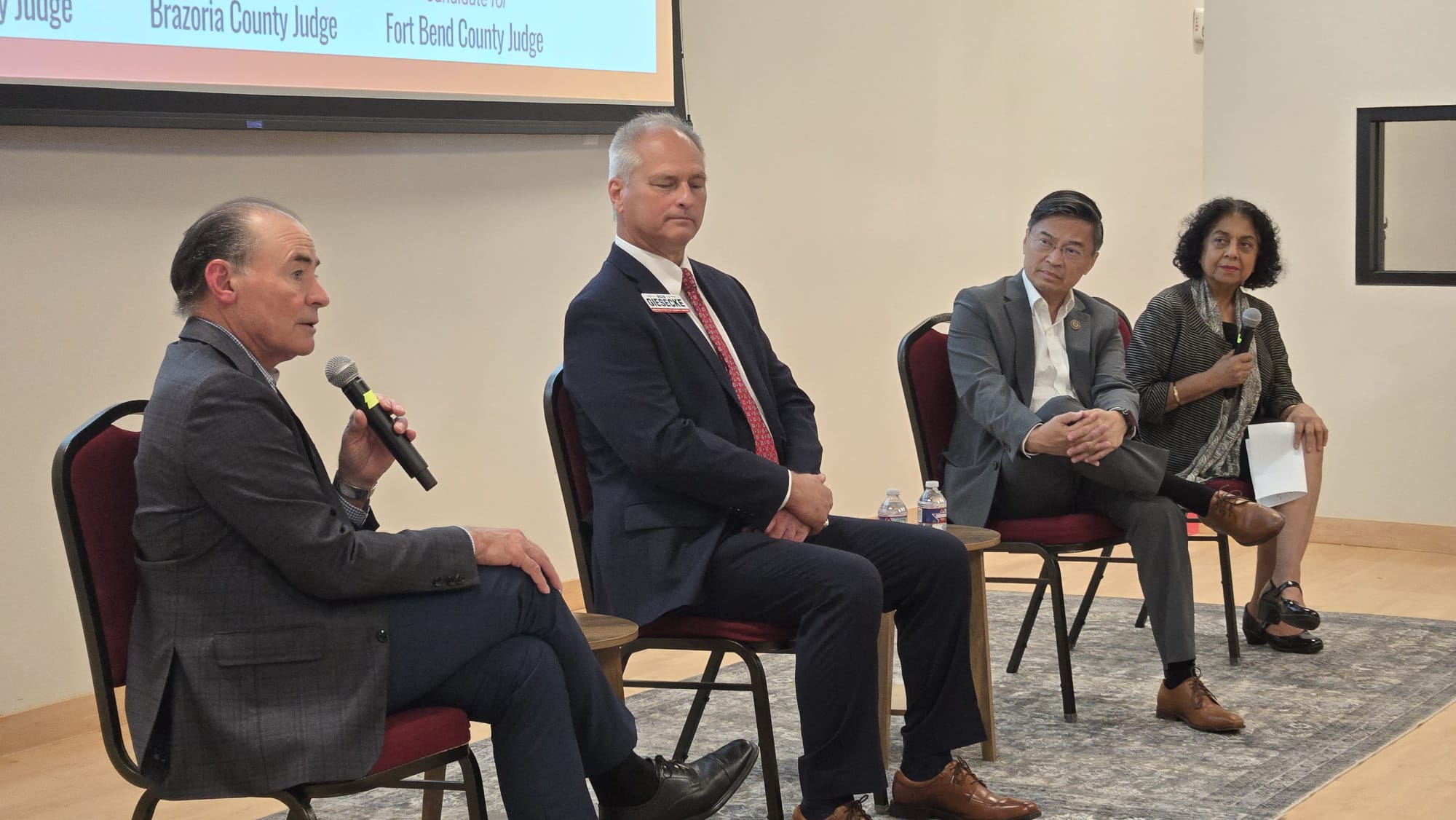
Giesecke, a Brazoria County native and chairman of the Port Freeport Commission, described a career spanning state government, commercial real estate and port governance. He said his early work as a legislative chief of staff taught him how to build coalitions among people with different backgrounds and political views.
At Port Freeport, Giesecke said he campaigned on three commitments: eliminating the port’s property-tax rate, establishing term limits for commissioners and ending spending he considered wasteful. He told attendees that all three were accomplished.
“I’m the guy that will actually make promises, go into office and make those promises happen,” he said.
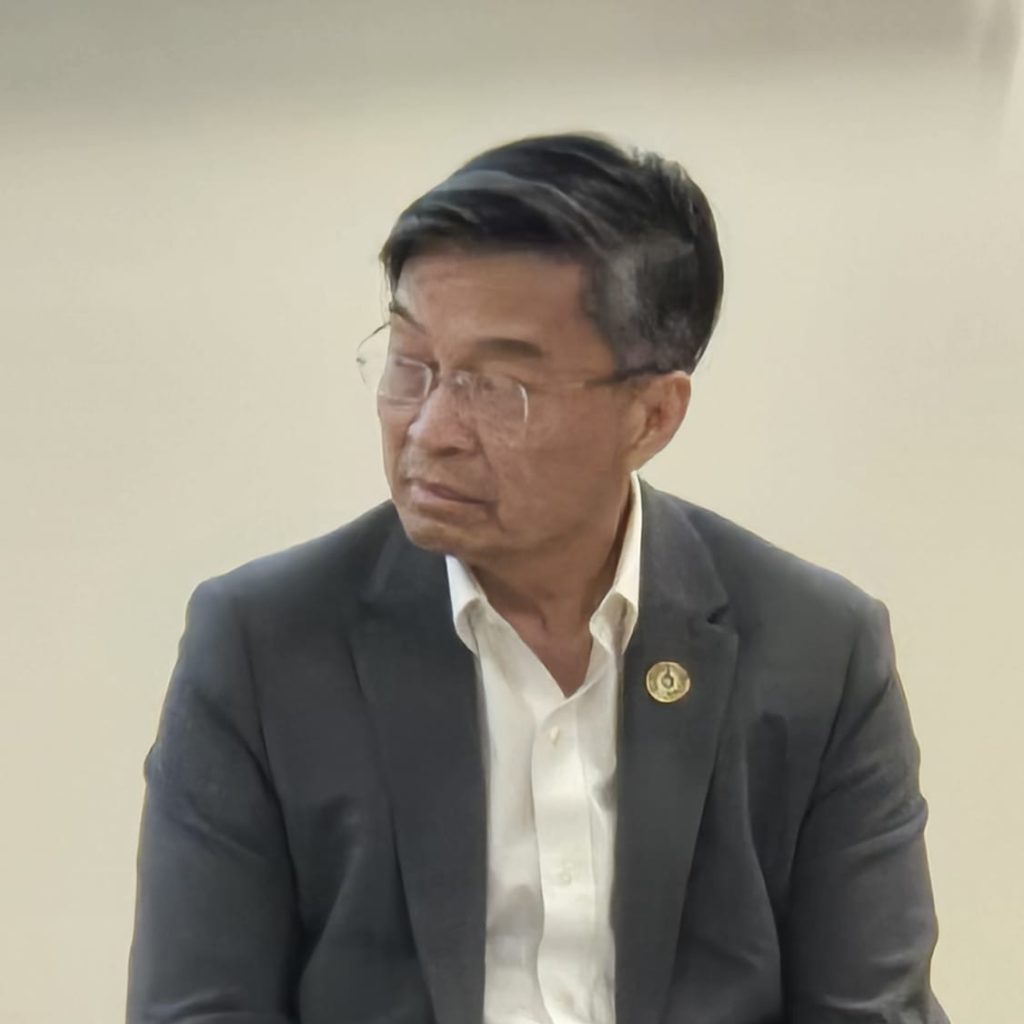
Wong, an engineer and entrepreneur, spoke about arriving in the United States as a teenager and learning English in part through American movies and football. He went on to earn bachelor’s, master’s and doctoral degrees in civil engineering from the University of Houston before building an engineering company with offices across Texas.
His public service has included Sugar Land City Council and state boards overseeing professional engineering and higher education. Wong also discussed his experience serving as Fort Bend County judge during 2026, saying the position had given him direct insight into county operations and finances. He pointed to a recently adopted reduction in the county tax rate as evidence of his approach to fiscal management.
When the discussion turned to priorities, all three candidates placed county finances near the top of their lists, although their approaches reflected the different circumstances of their counties.
Giesecke said Brazoria County benefits from a comparatively low tax rate and pledged to preserve that position while adequately funding law enforcement, courts and the criminal justice system. Infrastructure planning, he said, would also be critical as the county continues to grow.
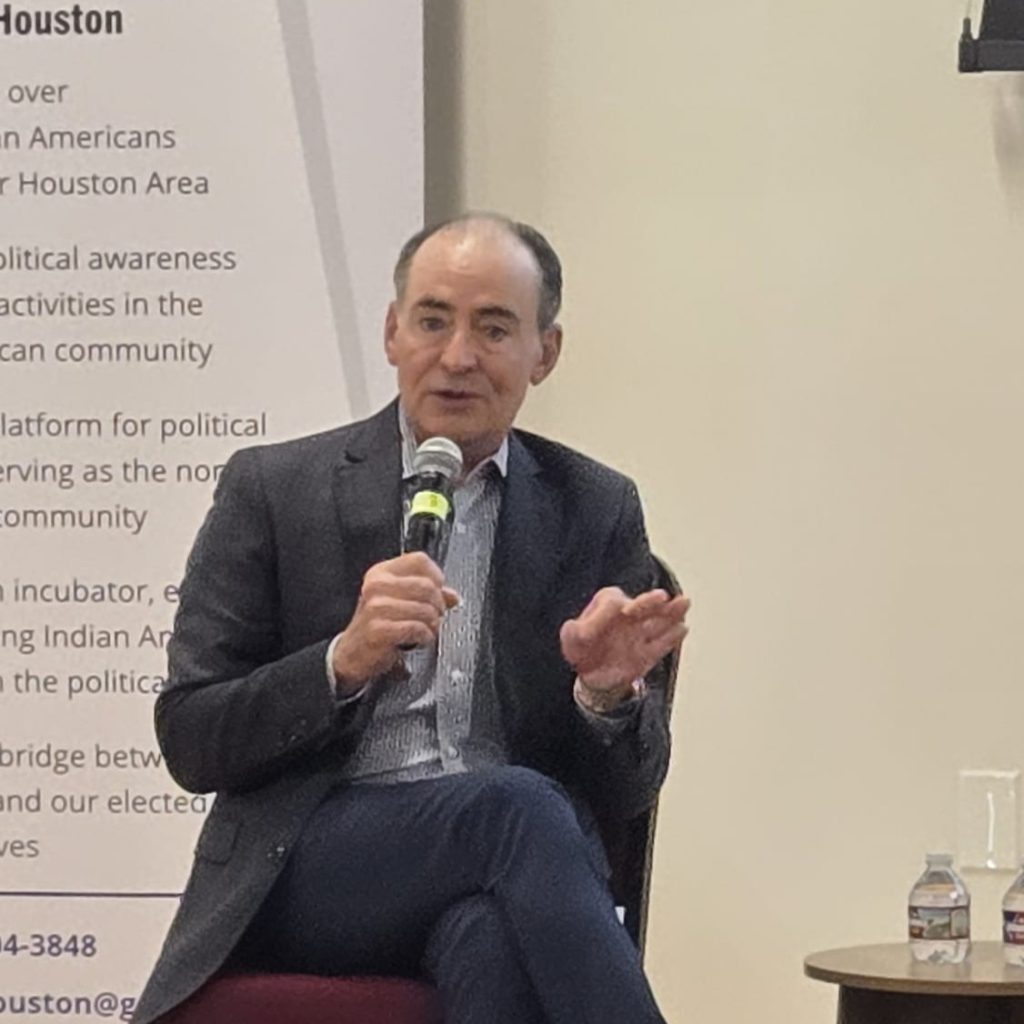
Sanchez said bringing Harris County finances under control would be an immediate priority. He criticized increases in spending and property taxes and argued that county resources should focus on core responsibilities, including public safety, courts, flood control, roads and access to health care.
On public safety, Sanchez called for faster resolution of serious criminal cases and greater oversight of the pretrial system.
Wong described Fort Bend County’s fiscal challenge as a spending problem rather than a revenue problem. As population and commercial activity increase, he said, revenues also grow, making it important for county government to keep expenditures within available resources.
He identified law enforcement, emergency management, infrastructure and economic development as essential priorities. Fort Bend, he said, should compete aggressively for business investment while seeking state and federal support for major infrastructure projects.
Government efficiency and transparency also emerged as significant issues. The candidates were asked whether they would support a review of outdated or duplicative county systems, greater use of automation and artificial intelligence where appropriate, and public measurement of government performance and savings.
Wong said he had begun meeting with major Fort Bend County department directors to better understand their operations and identify areas for improvement. He said county employees should approach residents as the people government exists to serve and supported continued review of county operations.
Giesecke called for a top-to-bottom examination of Brazoria County government and emphasized transparency in spending and decision-making. He also said major bond proposals should be presented directly to voters rather than financed through certificates of obligation without an election.
Sanchez said artificial intelligence and other technologies could help streamline county operations and improve service delivery. He cited expedited permitting as one area where processes could be modernized while maintaining county oversight. He also pointed to transparency initiatives from his tenure as Harris County treasurer, when county financial transactions were made searchable online.
Infrastructure generated some of the forum’s most detailed discussion, particularly as all three counties confront continued population growth.
Giesecke noted that Brazoria County has roughly doubled in population since the 1990s and could grow substantially again in the coming decades. He pointed to congestion along Texas 288, expansion of the Brazoria County toll road and coordination among the county’s seven drainage districts as challenges requiring long-term planning.
He also emphasized cooperation among county officials, mayors, drainage districts and other agencies, particularly during hurricanes and other emergencies.
Wong described a similar challenge in Fort Bend County, where continued residential and commercial growth will require substantial investment in roads and related infrastructure. The central question, he said, is how to finance that expansion while keeping taxes low. He said he would work with state and federal officials to pursue outside funding for major projects.
Sanchez focused in part on Harris County toll-road revenue, arguing that more of it should be directed toward expanding transportation capacity. He also identified flood control as a continuing priority.
On health care, Sanchez advocated earlier access to care, particularly for chronic conditions that become more serious and costly when treatment is delayed.
The candidates returned to experience and collaboration in their closing remarks. Giesecke emphasized that a county judge must work with numerous independently elected officials and said effective county leadership requires building relationships and finding areas of agreement. Sanchez pointed to his experience across city and county government, the private sector and emergency response, while Wong emphasized his engineering, business and county-government experience.
Although Harris, Brazoria and Fort Bend counties differ in size and circumstances, the discussion highlighted challenges that increasingly cross county lines: accommodating population growth, financing infrastructure, maintaining public safety, controlling government costs and coordinating among jurisdictions.
In closing, Shiv Kandavelu, president of IAPAC-PAC, delivered the vote of thanks, expressing appreciation to the candidates for participating and recognizing the Eternal Gandhi Museum Houston, the host committee and volunteers who supported the program.
The forum was part of the PAC’s continuing effort to provide opportunities for the Indian American community to hear directly from candidates and public officials and engage on issues affecting Greater Houston and Texas.
About IAPAC-PAC: The Indian American Political Action Committee of Greater Houston (IAPAC-PAC) is a nonpartisan, nonprofit organization dedicated to strengthening the voice and representation of the Indian American community in the civic and public affairs of Greater Houston and Texas.