








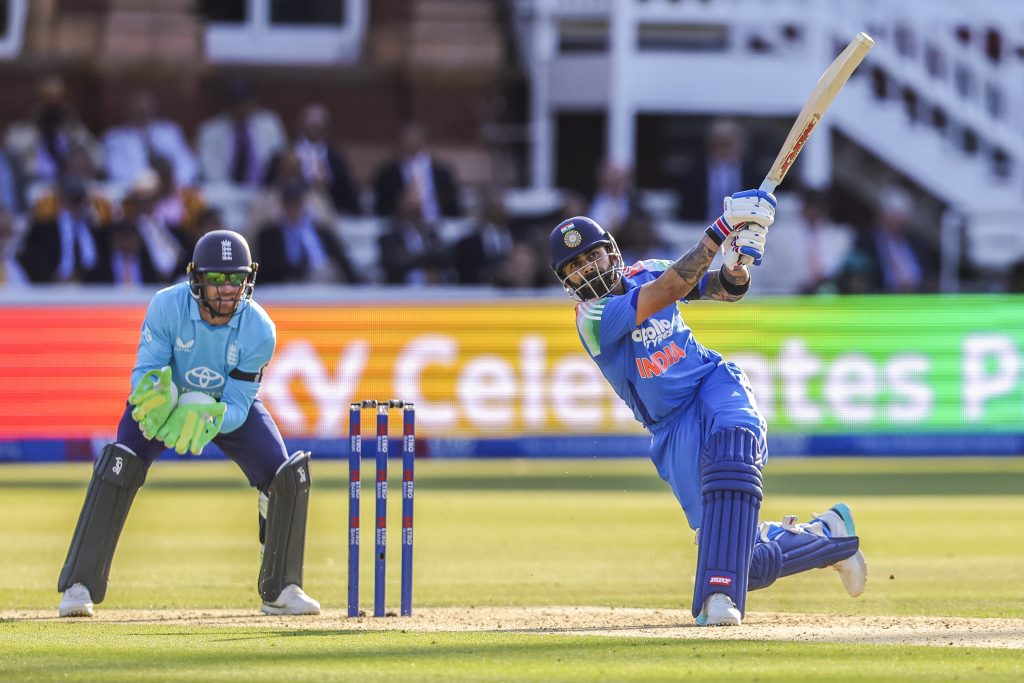
A Look at the remarkable evolution of Indian cricket from Independence in 1947 to the present day
Asim Khanna
New Delhi
When India became independent in 1947, cricket was still a colonial inheritance, played largely by a small urban elite. India had already made its Test debut in 1932, but international cricket remained a distant world dominated by England, Australia and the West Indies. The newly independent nation had talent, enthusiasm and an expanding audience, but not yet the confidence or infrastructure to challenge the established powers.
Nearly eight decades later, Indian cricket stands at the centre of the global game. Its journey from a struggling Test side to a cricketing superpower mirrors India’s own transformation — from a newly independent country finding its feet to a confident global power.
The early years were about learning. India’s first Test victory, against England in Madras in 1952, came two decades after its debut. The team possessed gifted batsmen and, particularly, a rich tradition of spin bowling, but victories overseas remained rare. Indian cricket was respected, but rarely feared.
That began to change in 1971.
Under Ajit Wadekar, India defeated the West Indies in the Caribbean and England in England. It was a psychological breakthrough. The West Indies were among the most formidable teams in world cricket, while England represented the traditional centre of the sport. India’s victories demonstrated that the country could compete — and win — beyond its own conditions.
At the heart of that transformation was Sunil Gavaskar, whose extraordinary debut series against the West Indies announced the arrival of a batsman who would become an Indian sporting icon.
But if 1971 gave India belief, 1983 gave it a sporting revolution.
Kapil Dev’s team entered the World Cup in England as outsiders. Nobody expected them to defeat the mighty West Indies. Yet India did exactly that at Lord’s, lifting the World Cup and changing Indian cricket forever.
The victory created a generation of believers. Children who watched Kapil lift the trophy began dreaming of playing for India. Cricket moved from being merely the country’s most popular sport to becoming a national obsession. Television amplified the effect, bringing cricket into millions of homes and turning players into household names.
The next great transformation arrived with Sachin Tendulkar.
His international debut at 16 in 1989 coincided with an India undergoing economic and social change. Tendulkar became the face of a new, aspirational generation. His battles against the world’s greatest bowlers were followed by millions, while the rapid expansion of satellite television transformed cricket into a commercial spectacle.
By the 1990s, Indian cricket’s influence was increasingly extending beyond the boundary. India’s enormous television audience gave it extraordinary commercial importance. Sponsorship and broadcasting revenues grew, and the Board of Control for Cricket in India gradually became the most financially powerful institution in the sport.
The team itself was changing too.
Sourav Ganguly’s captaincy at the turn of the century brought a new attitude. India became more aggressive and less intimidated by opponents. Rahul Dravid, VVS Laxman, Virender Sehwag, Anil Kumble and Harbhajan Singh formed the backbone of a team that increasingly believed it could win anywhere.
Then came MS Dhoni.
His young Indian side won the inaugural T20 World Cup in 2007, signalling the arrival of a completely new format and a completely new generation. A year later, the Indian Premier League transformed cricket’s economics. The IPL brought international stars and young Indian players together, created a massive entertainment industry and, crucially, gave domestic cricketers exposure to elite competition.
But the evolution did not stop there.
Virat Kohli’s India added a new dimension: relentless fitness and aggression. The emphasis on athleticism, fast bowling and professional preparation changed the character of the team. India began producing a formidable pace attack, led by Jasprit Bumrah, and established itself as a serious force in overseas Test cricket.
The greatest evidence of India’s transformation, however, lies in its depth.
The modern Indian team is no longer dependent on one Tendulkar, one Kohli or one Dhoni. The IPL, domestic cricket, age-group programmes, academies and a vast scouting network have created a continuous pipeline of talent.
Recent years have reinforced that strength. India’s 2023 World Cup campaign ended in heartbreak with defeat to Australia in the final, but the team responded by winning the 2024 T20 World Cup and the 2025 Champions Trophy. In 2026, India won the T20 World Cup again, defeating New Zealand in the final and becoming the first men’s team to win the tournament three times.
The journey from 1947 to 2026 is therefore much more than a collection of victories.
Indian cricket has evolved from survival to belief, from belief to ambition, and from ambition to dominance. It has absorbed global influences, built its own institutions and eventually changed the balance of power in the sport.