








City and State partnership will study first Thermal Energy Network (TEN) in a U.S. transit system as part of the Chambers Street J/Z station renewal project
Our Bureau
New York, NY
Mayor Mamdani, Governor Hochul and the Metropolitan Transportation Authority (MTA) have announced a partnership to study a Thermal Energy Network (TEN) in the Brooklyn Bridge-City Hall 4/5/6 andChambers Street J/Z station complex. The project will explore how to combat extreme heat on subway platforms while capturing and recycling excess heat to warm nearby municipal buildings during the winter.
The project would be the first thermal energy network installed in a U.S. transit system. The announcement comes days after Governor Hochul and the MTA announced plans for a comprehensive renewal project at the Chambers Street station, which is among the oldest in the subway system.
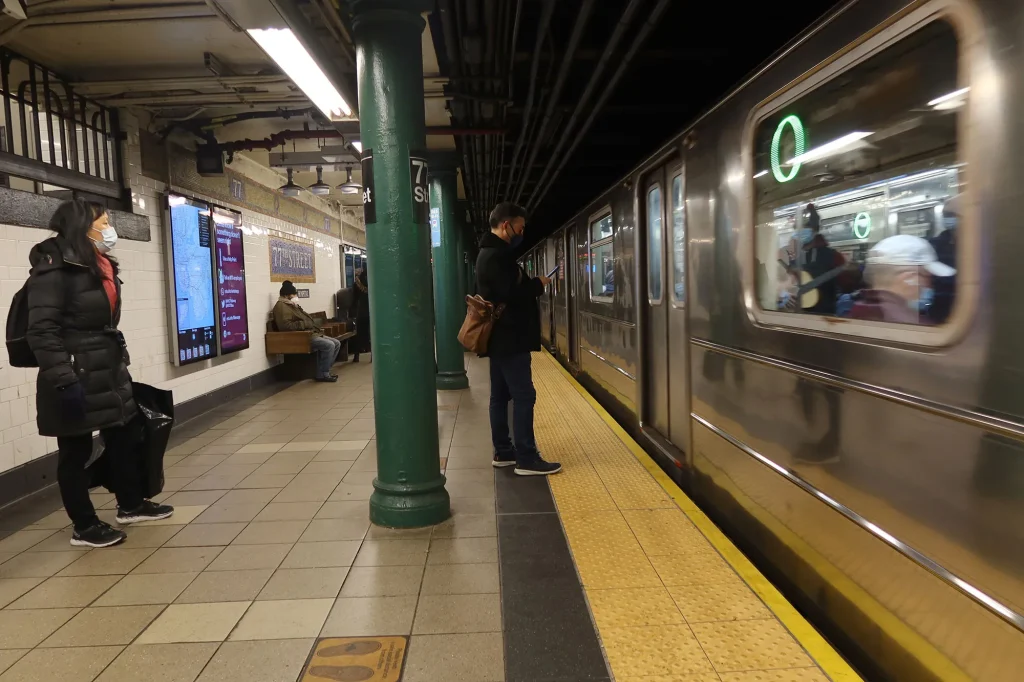
Brooklyn Bridge-City Hall 4/5/6 is one of the hottest stations in the subway system, with average temperatures reaching 96 Fahrenheit during the summer months, in 2025. While the MTA prioritizes reliable service in the short-term to get customers on air-conditioned trains and spend less time on platforms, this study will help identify ways to reduce heat, improve rider comfort, and mitigate heat-related issues that can lead to service delays.
The revitalization of Chambers Street J/Z, which will rebuild structures, replace tiles, upgrade stairways and restore the station from top to bottom, is being funded through congestion pricing. The project provides the MTA and City with a unique opportunity to study TENs as a tool to cool subway platforms while capturing and reusing excess heat in nearby municipal buildings during the winter, lowering energy costs over the long term.
“There are few feelings worse than escaping the extreme summer heat only to find yourself on a subway platform that is even hotter. Unfortunately, for millions of commuters that is the reality of our transit system — with some stations soaring up to 20 degrees hotter than the outside temperatures,” said Mayor Mamdani. “We now have an opportunity to do more than rebuild Chambers Street top to bottom. We can make our subway platforms cooler and more comfortable while putting wasted heat to work during the winter. That means lower energy costs, a more resilient subway system and a cleaner energy future for New York City.”
“For years, New Yorkers have suffered through sweltering summer heat on subway platforms, with seemingly no hope for a cooler ride in sight. Today, I can assure riders during this hot summer week that help is on the way,” said Governor Hochul. “Working with Mayor Mamdani and the MTA, we are harnessing cutting-edge climate technology for a truly cool purpose: making our subway stations tolerable during the summer and heating critical city buildings during the winter. This is what effective partnership between city and state government can yield – innovative solutions that have the potential to help millions of subway riders.”
“Bringing down the temperature is a real challenge in a century-old system with open entrances and vents everywhere,” said MTA Chair and CEO Janno Lieber. “Together with Governor Hochul and Mayor Mamdani, we’re exploring solutions — previously untested in transit — to make stations more comfortable while helping to reduce energy costs. Everybody wins.”
“Every time New Yorkers are stuck on a hot subway platform, we are confronted with the reality of the climate crisis,” said Chief Climate Officer Louise Yeung. “Advancing a thermal energy network that will sustainably cool the Chambers Street subway station and heat the surrounding city buildings is a testament to our administration’s bold and innovative agenda to deliver climate solutions that protect New Yorkers. From advancing the nation’s first subway thermal energy network to piloting heat-resilient bus shelters and outdoor cooling centers, the City is committed to making our transit systems safer and more comfortable as New York City faces rising temperatures.”
“The City of New York is meeting the realities of climate change head-on by investing in infrastructure that is both resilient and innovative,” said Department of Citywide Administrative Services Commissioner Yume Kitasei. “DCAS is proud to partner on this study to identify the next generation of upgrades that will make our public buildings and infrastructure more efficient, sustainable, and prepared for the future.”
TENs, already in use at several hospitals and universities, move heat between buildings, significantly reducing reliance on fossil fuels. The MTA and City will assess the feasibility of using TENs and geothermal infrastructure to absorb, store and transport excess heat between subway stations and adjacent municipal buildings.
The initial feasibility study will help determine how much cooling can be achieved and the potential energy cost savings for the City.
The proposed geothermal network would capture, store and redirect excess heat that accumulates in the Brooklyn Bridge-City Hall and Chambers Street station complex to municipal buildings. Radiant cooling technology would absorb heat from Brooklyn Bridge-City Hall platforms, and potentially Chamber Street as well, and transfer it through pipes to geothermal boreholes drilled beneath the abandoned center platform at Chambers Street. The excess heat could then be stored in the boreholes and used during colder months to heat nearby municipal buildings.